
A lot of people think that expensive skincare products are always better for their skin, but that is not necessarily true. The best dermatologist recommended skin care products are those that match your skin type, address your concerns, and contain ingredients that support healthy-looking skin.
Whether you struggle with dryness, acne, sensitivity, or uneven skin tone, choosing the right products can help you build a simple and effective skincare routine.
In this guide, you’ll discover how to choose suitable skincare products, which ingredients are worth considering, and what to look for when comparing different options.
We’ve also included recommended skincare products that you can explore and purchase if they fit your needs. From gentle facial cleansers and hydrating moisturizers to daily sunscreens and targeted serums, you’ll find practical options to help you make informed choices for your skin.
What Are Dermatologist Recommended Skin Care Products?
Dermatologist recommended skin care products are products that dermatologists suggest or consider suitable for particular skin types and concerns based on their ingredients, formulation, and available evidence.
These products may include gentle cleansers, moisturizers, sunscreens, acne treatments, and serums designed to address concerns such as dryness, clogged pores, uneven skin tone, and visible signs of aging. However, a product that works well for one person may not suit another, so your skin type and individual needs should always guide your choice.
What Makes a Skincare Product Dermatologist Recommended?
A skincare product may be recommended because its ingredients and formulation suit a specific skin concern. For example, ceramides can help support the skin barrier, glycerin helps attract moisture, and broad-spectrum sunscreen helps protect skin from harmful ultraviolet rays.
Salicylic acid may help unclog pores, while certain retinoids can improve the appearance of fine lines and uneven texture.
Dermatologists also consider how a product may affect the skin. A gentle, fragrance-free moisturizer may be a sensible option for someone with sensitive skin, while a non-comedogenic formula may suit someone prone to clogged pores.
Still, no single ingredient or product works for everyone. Your skin’s tolerance, the product’s formulation, and how you use it all matter.
It is also important to understand product labels. Terms such as dermatologist tested, dermatologist recommended, and dermatologist approved do not necessarily mean the same thing. Check the product’s ingredient list, directions, and supporting information rather than relying on marketing claims alone.
Dermatologist-Approved vs. Dermatologist-Tested Skincare Products
You may see phrases such as dermatologist tested, dermatologist approved, or dermatologist recommended when shopping for skincare. Although they sound similar, they can describe different things.
Dermatologist tested generally means a product has undergone some form of testing involving dermatological assessment. However, the phrase alone does not tell you how extensive the testing was or whether the product will suit every skin type.
Dermatologist recommended means a dermatologist recommends the product, potentially for a particular skin type or concern. The recommendation may depend on the product’s ingredients, available evidence, and the person’s individual needs.
Dermatologist approved is often used in marketing, but it does not automatically mean that a product has received formal approval from a medical authority or that its effectiveness has been independently established.
When comparing dermatologist-approved skincare products, focus on what the formula actually offers. Look for suitable ingredients, clear directions, and evidence supporting the product’s intended benefits.
If you have persistent acne, eczema, rosacea, or another skin condition, a dermatologist can help you select products appropriate for your situation.
Are Dermatologist Recommended Skincare Products Better?
Dermatologist recommended skincare products can be useful because they may offer practical solutions for common skin concerns. However, they are not automatically better than every other skincare product on the market.
An affordable moisturizer with suitable ingredients may work just as well for your needs as a more expensive alternative.
The most important factors are your skin type, the ingredients, and the purpose of each product. For example, someone with dry skin may benefit from a moisturizer containing ceramides and glycerin, while someone with oily skin may prefer a lightweight, non-comedogenic formula.
People dealing with acne may need targeted treatments rather than simply adding more moisturizers or serums.
You should also consider how easily a product fits into your routine. A straightforward combination of cleanser, moisturizer, and sunscreen is often a useful starting point. You can add treatments for specific concerns gradually, giving your skin time to adjust.
Best Dermatologist Recommended Skin Care Products
Many people believe that the best skincare products must come from expensive brands, but effective skincare does not have to cost a fortune. The right product depends on its ingredients, formulation, and how well it suits your skin.
When choosing dermatologist recommended skin care products, focus on options that address your specific concerns, whether you want to manage acne, improve hydration, protect against sun damage, or maintain a smoother complexion.
Here are 15 skincare product options worth considering for different needs. The recommendations focus on well-known products and useful ingredients, so you can compare your options and decide what may fit your routine.
Remember that individual results vary, and a product’s suitability depends on your skin type and tolerance.
Best Gentle Facial Cleanser
A gentle facial cleanser is one of the most useful products in any skincare routine. It removes dirt, excess oil, sweat, sunscreen, and makeup without unnecessarily stripping the skin. If your face feels tight or uncomfortable after washing, your cleanser may be too harsh.
Product to Consider: CeraVe Hydrating Facial Cleanser
This cleanser is designed for normal to dry skin and contains ceramides and hyaluronic acid. These ingredients help support the skin barrier and maintain hydration. It may be a useful option if your skin feels dry or sensitive after cleansing.
If you have oily skin, you may prefer a foaming cleanser that removes excess oil without leaving your face feeling stripped. Choose a formula based on your skin type rather than assuming one cleanser works for everyone.
When shopping for dermatologist recommended face wash products, look for gentle formulas and avoid cleansers that leave your skin feeling irritated. Wash with lukewarm water and avoid scrubbing too hard. Cleansing should leave your skin comfortable, not tight or squeaky clean.
Best Moisturizer for Dry Skin
Dry skin often feels rough, flaky, or tight, especially after bathing or washing your face. A suitable moisturizer helps soften the skin and reduce moisture loss. Look for ingredients that attract water and support the skin’s natural barrier.
Product to Consider: CeraVe Moisturizing Cream
This moisturizer contains ceramides and hyaluronic acid and is designed to provide lasting hydration. Its richer texture may suit people with dry skin who need more nourishment than a lightweight lotion provides.
Another option to explore is La Roche-Posay Lipikar AP+M Triple Repair Moisturizing Cream, which is formulated for very dry skin. Check the specific product label and availability in your region before purchasing.
When choosing the best dermatologist recommended moisturizer for dry skin, consider both the formula and your daily needs. Apply moisturizer after cleansing, ideally while your skin is slightly damp.
If your skin remains persistently cracked, itchy, or inflamed, consult a dermatologist to check for an underlying condition.
Best Moisturizer for Oily Skin
Oily skin can look shiny throughout the day, especially around the forehead, nose, and chin. Some people avoid moisturizer because they worry it will make their skin greasier. However, oily skin still needs hydration.
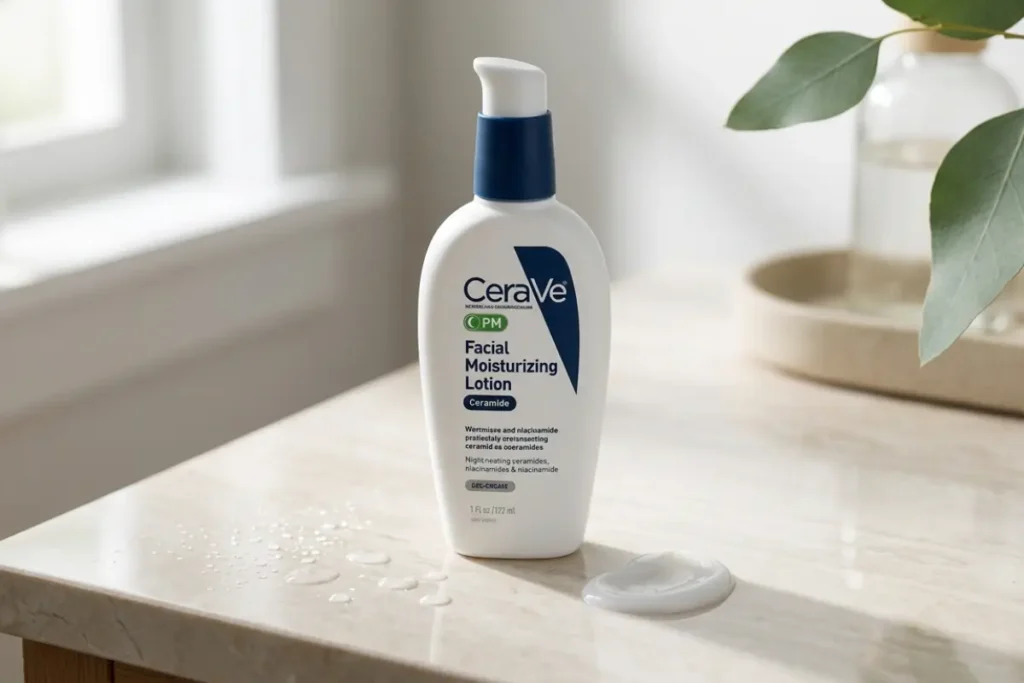
Product to Consider: CeraVe PM Facial Moisturizing Lotion
This lightweight moisturizer contains ceramides, niacinamide, and hyaluronic acid. It may suit people looking for hydration without the feel of a heavy cream. Although it is marketed for nighttime use, follow the product directions and choose the formula that feels comfortable on your skin.
For oily or acne-prone skin, look for lightweight, non-comedogenic moisturizers. This label indicates that a product is formulated to reduce the likelihood of clogging pores, although it cannot guarantee that breakouts will never occur.
Avoid using harsh cleansers to remove every trace of oil. Over-cleansing may irritate your skin and make your routine harder to tolerate. A gentle cleanser, suitable moisturizer, and daily sunscreen provide a more balanced starting point.
Best Sunscreen for Daily Use
Sunscreen is one of the most important products for protecting your skin from ultraviolet radiation. Regular use helps reduce the risk of sunburn and premature skin aging and lowers the risk of certain types of skin cancer.
Even if your main goal is clearer or brighter-looking skin, sun protection should remain part of your routine.
Product to Consider: EltaMD UV Clear Broad-Spectrum SPF 46
This sunscreen is a popular option for people with acne-prone or sensitive skin. Its formula includes niacinamide, and it provides broad-spectrum protection. However, individual preferences vary, so consider the finish, texture, and ingredients before choosing it.
If you prefer a mineral sunscreen, look for formulas containing zinc oxide, titanium dioxide, or both. Chemical sunscreens are another option and can provide effective protection when used correctly.
Choose a broad-spectrum sunscreen with SPF 30 or higher. Apply it generously to exposed skin and reapply about every two hours when outdoors, as well as after swimming or sweating according to the label.
The best dermatologist recommended sunscreen for daily use is one you can apply consistently and comfortably.
Best Vitamin C Serum
Vitamin C is an antioxidant ingredient used in skincare to help improve the appearance of dullness and uneven skin tone. Depending on the formula, it may help reduce the appearance of some dark spots and support protection against environmental damage. It is not an overnight solution, and results depend on the formulation and consistent use.
Product to Consider: La Roche-Posay Pure Vitamin C10 Serum
This serum is formulated with vitamin C and is designed to target visible signs of aging and dull-looking skin. It may appeal to people who want to add an antioxidant serum to their morning routine.
Vitamin C products vary in concentration, stability, and supporting ingredients. If your skin is sensitive, introduce the serum gradually and stop using it if you experience persistent irritation.
You can generally apply a suitable vitamin C serum after cleansing and before moisturizer and sunscreen, following the product directions. Daily sunscreen is particularly important when your goal is to improve the appearance of uneven skin tone.
Best Niacinamide Skincare Product
Niacinamide is a form of vitamin B3 used in many skincare products. It may help support the skin barrier, improve the appearance of uneven skin tone, and reduce visible oiliness in some people. It is available in serums, moisturizers, and other formulas.
Product to Consider: The Ordinary Niacinamide 10% + Zinc 1%
This serum is designed for people concerned about excess oil and the appearance of enlarged pores. Its relatively high niacinamide concentration may not suit everyone, particularly people whose skin reacts easily to active ingredients.

If you are new to niacinamide, consider introducing it slowly rather than applying it several times a day from the start. A lower concentration may be sufficient for your needs, and using more does not automatically produce better results.
For oily or combination skin, niacinamide can be a useful addition to a balanced routine. However, it should not replace moisturizer or sunscreen, and persistent acne may require a more targeted treatment.
Best Dermatologist Recommended Skin Care Products for Every Skin Type
Many people believe that dermatologist recommended skin care products work equally well for everyone, but your skin type makes a real difference. A product that feels comfortable on dry skin may feel too heavy on oily skin, while a strong acne treatment may irritate a sensitive complexion.
The key is to choose skincare that matches your skin’s needs instead of following every popular trend.
Before buying a new product, consider whether your skin is dry, oily, combination, sensitive, or acne-prone. Your skin can also change with the weather, age, hormones, and the products you use.
Once you understand these differences, it becomes easier to choose suitable formulas and build a skincare routine that supports healthy-looking skin.
Best Skincare Products for Dry Skin
Dry skin often feels tight after cleansing and may look flaky, rough, or dull. It can also become uncomfortable in cold weather or in rooms with low humidity.
If this sounds familiar, choose skincare products that help your skin retain moisture rather than relying on products that simply make it feel soft for a short time.
Look for ingredients such as ceramides, glycerin, hyaluronic acid, and petrolatum. Ceramides help support the skin barrier, glycerin attracts moisture, and petrolatum helps reduce water loss. A cream-based moisturizer may provide more lasting comfort than a lightweight lotion.
Avoid cleansers that leave your face feeling stripped or products containing ingredients that repeatedly trigger irritation. You may also benefit from applying moisturizer immediately after washing your face, while your skin is still slightly damp.
When searching for the best dermatologist recommended skin care products for dry skin, focus on hydration and barrier support. If dryness continues despite using gentle products, or you notice deep cracks, severe itching, or persistent redness, speak with a dermatologist because an underlying skin condition may need treatment.
Best Skincare Products for Oily Skin
Oily skin produces more sebum, the natural oil that helps protect the skin. Excess sebum can create a shiny appearance and may contribute to clogged pores and breakouts. However, having oily skin does not mean you should remove every trace of oil from your face.
Choose lightweight moisturizers, gentle cleansers, and products labeled non-comedogenic. Ingredients such as niacinamide may help improve the appearance of excess oil, while salicylic acid can help unclog pores in people prone to blackheads and certain types of acne.
Gel moisturizers and light lotions may feel more comfortable than rich creams, especially during hot or humid weather. Still, the texture that works best depends on your skin’s individual needs.
One common mistake is washing your face too often or using several strong acne products at once. These habits can cause irritation and make your routine difficult to maintain. A balanced approach is usually more helpful: cleanse gently, moisturize regularly, and apply broad-spectrum sunscreen every day.
Best Skincare Products for Combination Skin
Combination skin usually has more than one pattern. Your forehead, nose, and chin may become oily, while your cheeks feel normal or dry. Because different areas have different needs, choosing one heavy or overly drying product may not provide the right balance.
Start with a gentle cleanser that removes dirt and excess oil without leaving your face tight. Follow with a lightweight moisturizer that provides enough hydration without feeling greasy.
If some areas are noticeably drier, you can apply a little more moisturizer to those spots instead of changing your entire routine.
You may also use targeted products where they are needed. For example, a salicylic acid product may help with clogged pores in your T-zone, while a richer moisturizer may be useful on dry patches. Introduce active ingredients gradually to reduce the risk of irritation.
When choosing dermatologist recommended skincare for combination skin, look for formulas that offer hydration without unnecessary heaviness. You do not need separate products for every area of your face, but adjusting how much moisturizer you use can help you feel more comfortable.
Best Skincare Products for Sensitive Skin
Sensitive skin may react to certain ingredients, fragrances, weather changes, or even products that other people tolerate comfortably. You might notice redness, stinging, itching, burning, or tightness after applying skincare.
For this skin type, keep your routine simple. Choose a gentle cleanser, a moisturizer with skin-supporting ingredients, and a sunscreen that you can tolerate. Fragrance-free products may be worth considering if fragrance has caused irritation in the past
. Ingredients such as ceramides and glycerin can help support hydration without requiring a complicated routine.

Be careful when introducing exfoliating acids, retinoids, or highly concentrated serums. These ingredients can be useful for particular concerns, but they may not be suitable for every sensitive skin type. Introduce only one new product at a time and follow its directions.
Patch-testing a new product can help you notice a possible reaction before applying it more widely, although it cannot guarantee that irritation will not occur.
If you experience persistent burning, swelling, a rash, or ongoing redness, stop using the suspected product and seek medical advice. A dermatologist can help identify whether a condition such as eczema or rosacea may be contributing to your symptoms.
Best Skincare Products for Acne-Prone Skin
Acne-prone skin needs products that address clogged pores and breakouts without causing excessive dryness. You may notice blackheads, whiteheads, inflamed pimples, or recurring spots. The most suitable treatment depends on the type and severity of your acne.
Salicylic acid can help loosen dead skin cells and unclog pores. Benzoyl peroxide can help treat inflammatory acne by reducing acne-causing bacteria. Some people may also benefit from retinoid treatments, such as adapalene, which help prevent clogged pores.
However, these ingredients can irritate the skin, so use them according to their directions and avoid starting several strong treatments together.
Choose a gentle cleanser and a non-comedogenic moisturizer to help maintain skin comfort. You should also avoid picking or squeezing pimples because this can increase inflammation and the risk of scarring or dark marks.
When looking for dermatologist recommended skin care products for acne, remember that more products do not necessarily mean better results. Give a suitable treatment time to work, and consult a dermatologist if your acne is painful, leaves scars, or does not improve with over-the-counter options.
Frequently Asked Questions About Dermatologist Recommended Skin Care Products
What Are the Best Dermatologist Recommended Skin Care Products?
The best products depend on your skin type and concerns. A gentle cleanser, a suitable moisturizer, and broad-spectrum sunscreen are useful starting points for most people. You can add targeted products containing ingredients such as salicylic acid, niacinamide, or retinol when appropriate for your needs.
Are Dermatologist Recommended Skincare Products Better Than Regular Products?
Not always. Some dermatologist recommended products contain well-studied ingredients and gentle formulations, but many affordable skincare products can also work well. Check the ingredients, consider your skin type, and choose products that address your concerns rather than relying only on marketing claims.
Which Skincare Products Do Dermatologists Recommend for Beginners?
Beginners can start with three essentials: a gentle facial cleanser, a moisturizer, and broad-spectrum sunscreen with SPF 30 or higher. Once your skin adjusts to this routine, you can introduce a targeted treatment for concerns such as acne, uneven skin tone, or fine lines.
What Are the Best Dermatologist Recommended Products for Acne-Prone Skin?
Products containing salicylic acid or benzoyl peroxide may help manage certain types of acne. A gentle cleanser and non-comedogenic moisturizer can also support your routine. If your acne is painful, severe, or causing scars, consult a dermatologist for personalized treatment.
Which Dermatologist Recommended Products Are Best for Sensitive Skin?
Sensitive skin often benefits from simple, fragrance-free products with gentle formulations. Look for moisturizers containing ingredients such as ceramides and glycerin, and choose a cleanser that does not leave your skin feeling tight. Introduce new products gradually and discontinue anything that causes persistent irritation.
Are Expensive Dermatologist Recommended Skincare Products Worth It?
Expensive products are not automatically more effective than affordable alternatives. A reasonably priced cleanser or moisturizer may provide everything your skin needs. Compare ingredients, product performance, and suitability for your skin rather than choosing a product based on price alone.
How Long Does It Take for Dermatologist Recommended Skincare Products to Work?
Results depend on the product and the concern being treated. A moisturizer may improve dryness fairly quickly, while acne treatments and products for uneven skin tone can take several weeks or longer. Follow the product directions consistently, and seek professional advice if your condition worsens or does not improve.
Can I Use Several Dermatologist Recommended Products Together?
Yes, some skincare products work well together, but combining too many active ingredients may cause irritation. A basic routine can include a cleanser, moisturizer, and sunscreen, with one targeted treatment added as needed. Introduce new products one at a time and check their instructions before combining them.
Do Dermatologist Recommended Products Work for All Skin Types?
No single product works equally well for everyone. Dry, oily, combination, sensitive, and acne-prone skin can have different needs. Choose products according to your skin type, personal concerns, and tolerance, and consult a dermatologist if you have a persistent skin condition.
Where Can I Buy Dermatologist Recommended Skin Care Products?
You can usually find these products through official brand websites, authorized online retailers, pharmacies, and reputable skincare stores. Check the packaging, ingredient list, expiration date, and seller information before purchasing. Availability varies by location, so compare trusted sellers to find suitable options.
Conclusion:
Choosing the best dermatologist recommended skin care products does not mean buying the most expensive items or following every skincare trend. It means understanding your skin type, selecting suitable ingredients, and building a routine that supports your skin’s needs.
A gentle cleanser, a good moisturizer, and daily sunscreen are useful foundations for healthy-looking skin.
Whether you want to manage acne, reduce the appearance of dark spots, improve hydration, or address fine lines, introduce targeted products gradually and use them consistently.
Remember that every person’s skin is different, so a product that works well for someone else may not suit you. If you experience persistent irritation or have a skin condition that needs treatment, consult a qualified dermatologist.
Most importantly, keep your routine simple and focus on products that serve a clear purpose. Compare the recommended options in this guide, check their ingredients, and purchase from reputable sellers when you find a suitable match.
With informed choices and consistent care, you can build a practical skincare routine without spending money on products you do not need.

Name: Shahzadi
I’m passionate about skincare, beauty, and simple self-care. I share practical skincare tips, beauty routines, product insights, and easy ways to build healthy-looking, glowing skin.
My goal is to make beauty and skincare easier to understand, so you can discover routines that fit your everyday life.


Pingback: 16+ Best Face Wash For Aging Skin: Powerful Picks For Smoother Glowing Skin