

One of the biggest myths about oily skin is that you should wash your face as often as possible and avoid moisturizer completely. It sounds logical, but it’s actually one of the fastest ways to make oily, acne-prone skin worse.
Overwashing strips away your skin’s natural oils, causing it to produce even more oil to compensate. At the same time, skipping moisturizer can weaken your skin barrier and leave your skin dehydrated, irritated, and more prone to breakouts.
The truth is that clear skin doesn’t come from using dozens of products or harsh acne treatments. It comes from following a dermatologist recommended skin care routine for oily acne-prone skin that focuses on gentle cleansing, oil control, hydration, and protecting the skin barrier.
If you’ve been trying random skincare products without seeing results, you’re not alone. Many people with oily and acne-prone skin buy products based on social media trends or marketing claims instead of choosing ingredients that dermatologists actually recommend.
This often leads to irritation, clogged pores, and even more acne.

The good news is that you don’t need an expensive 10-step skincare routine to improve your skin. A simple, consistent routine built around proven ingredients can help reduce excess oil, prevent clogged pores, calm inflammation, and support healthier-looking skin over time.
In this guide, you’ll learn how to build a dermatologist recommended skincare for oily acne-prone skin using products that work together instead of against your skin.
We’ll cover the best morning and nighttime routines, explain which ingredients help control acne, discuss what to avoid, and share expert-backed tips for maintaining clearer skin.
Whether you’re looking for a skin care routine for oily acne-prone skin, dealing with frequent pimples, or searching for an effective oily acne-prone skin routine, this guide will help you understand exactly what your skin needs.
By the end of this article, you’ll have a complete roadmap for creating a routine that supports healthier skin while reducing breakouts and excess oil without damaging your skin barrier.
Understanding Oily Acne-Prone Skin
Before choosing skincare products, it’s important to understand why your skin behaves the way it does. Many people think oily skin automatically causes acne, but that’s only part of the picture.
Oil production is completely natural and actually helps protect your skin. Problems begin when excess oil mixes with dead skin cells, dirt, and bacteria inside your pores. This combination creates the perfect environment for blackheads, whiteheads, and inflamed pimples.
Understanding how oily, acne-prone skin works will help you choose better products and build a routine that delivers long-term results instead of temporary improvements.
What Is Oily Acne-Prone Skin?
Oily acne-prone skin is a skin type that produces more sebum, or natural oil, than necessary while also being more likely to develop clogged pores and acne breakouts.
Sebum itself isn’t harmful. In fact, it helps keep your skin soft and protected. The problem occurs when your oil glands produce too much of it. Excess oil combines with dead skin cells inside the pores, making it easier for acne-causing bacteria to grow.
This is why many people with oily skin experience recurring blackheads, whiteheads, and inflamed acne.
It’s also important to understand that oily skin and acne-prone skin aren’t exactly the same thing. Someone can have oily skin without developing acne, while another person may have combination or even dry skin and still experience frequent breakouts.
Common signs of oily acne-prone skin include a shiny appearance within a few hours of washing your face, enlarged pores, frequent blackheads around the nose, recurring pimples, and makeup that doesn’t stay in place for long.
If these signs sound familiar, following a proper facial routine for oily skin can help improve your skin’s appearance while reducing future breakouts.
A well-planned skincare for oily skin focuses on balancing oil production instead of trying to remove every trace of oil from your face.
What Causes Oily Acne-Prone Skin?
Several factors contribute to oily skin and acne. Some are beyond your control, while others can be improved by changing your skincare routine and daily habits.
One of the biggest factors is genetics. If oily skin runs in your family, you’re naturally more likely to produce excess sebum. Although you can’t change your genetics, you can manage your skin with the right skincare products and consistent care.
Hormonal changes are another major cause of acne. During puberty, menstruation, pregnancy, or periods of hormonal imbalance, your body may produce more oil than usual. This is why many people experience breakouts during certain stages of life. Following a hormonal acne routine recommended by a dermatologist can help reduce these flare-ups.
Stress also plays an important role. When you’re stressed, your body releases hormones that stimulate your oil glands. Increased oil production often leads to clogged pores and more frequent acne breakouts.
Poor skincare habits can make the situation even worse. Using harsh cleansers, skipping moisturizer, sleeping with makeup on, or trying too many acne treatments at once may irritate your skin and damage its natural barrier.
Using products that aren’t suitable for your skin type is another common mistake. Heavy creams, pore-clogging ingredients, or products that aren’t labeled as non-comedogenic can contribute to breakouts instead of preventing them.

Diet may also influence acne in some individuals. While food isn’t the sole cause of acne, some people notice that high-sugar foods or dairy products seem to trigger more breakouts. Paying attention to your personal triggers can be helpful alongside a good skincare routine.
Environmental factors such as pollution, humidity, and sweat can also contribute to clogged pores if your skin isn’t cleansed properly at the end of the day.
The good news is that most of these factors can be managed. Choosing products that help control oily skin, keeping your pores clean, and following a consistent skincare routine can significantly reduce acne over time.
Instead of trying harsh treatments that promise overnight results, focus on building healthy skincare habits that support your skin every day. Small improvements made consistently often produce much better results than constantly switching products.
Dermatologist Recommended Skin Care Routine for Oily Acne-Prone Skin: Why a Structured Routine Matters
Many people believe that using more skincare products means better results. In reality, applying too many products or constantly switching between different acne treatments can do more harm than good.
A dermatologist recommended skin care routine for oily acne-prone skin is not about having the longest routine. It’s about using the right products in the correct order and staying consistent.
Dermatologists focus on protecting your skin barrier while treating acne, helping you achieve healthier skin without unnecessary irritation.
A structured skincare routine gives your skin exactly what it needs at the right time. Instead of overwhelming your skin with harsh ingredients, it balances oil production, keeps pores clean, and supports the skin’s natural healing process.
This simple approach often delivers better long-term results than chasing every new skincare trend.
Dermatologist Recommended Skin Care Routine for Oily Acne-Prone Skin: Benefits of Following a Dermatologist-Approved Routine
Following a dermatologist recommended skin care routine for oily acne-prone skin helps you build healthy habits that support clear skin every day.
Rather than treating only visible pimples, a dermatologist-approved routine addresses the underlying causes of acne while protecting your skin from further damage.
Controls Excess Oil
One of the biggest advantages of a dermatologist skincare routine for oily skin is better oil control. Many people assume oily skin needs to be completely oil-free, but your skin actually needs a balanced amount of natural oil to stay healthy.
Using gentle cleansers, lightweight moisturizers, and ingredients like niacinamide can help control oily skin without triggering even more oil production. Over time, your skin becomes more balanced, reducing that constant greasy feeling throughout the day.
Reduces Acne Breakouts
A proper routine also helps reduce acne by preventing the conditions that allow pimples to form. Regular cleansing removes excess oil, dirt, and impurities, while acne-fighting ingredients work to unclog pores and reduce inflammation.
This consistent approach forms the foundation of an effective acne prevention routine, helping minimize both active breakouts and future flare-ups.
Prevents Clogged Pores
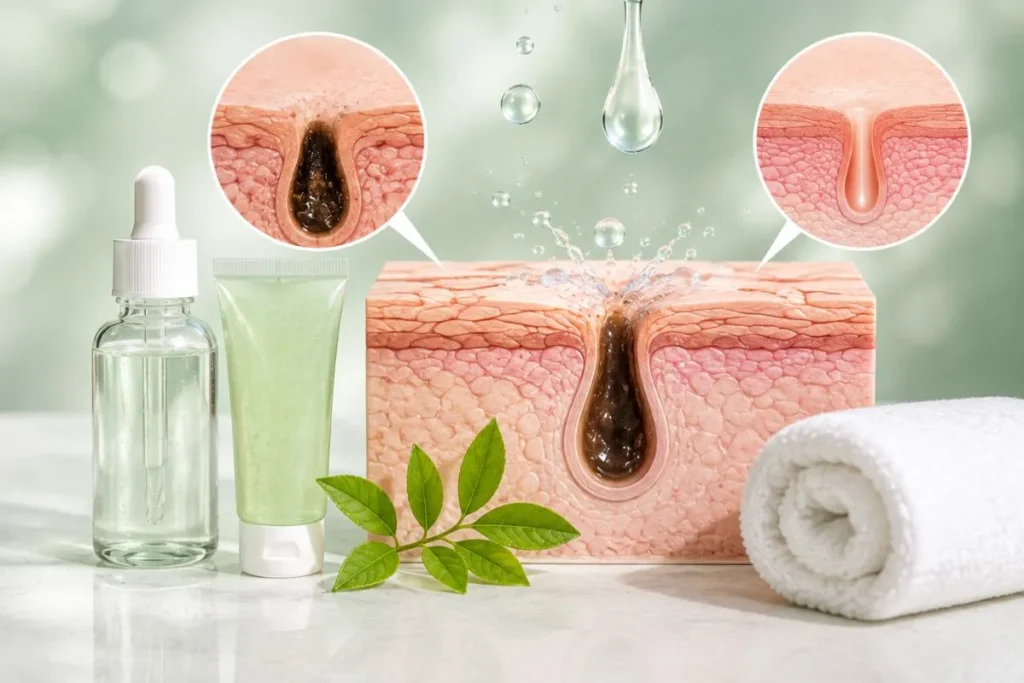
Clogged pores are one of the leading causes of blackheads and whiteheads. A structured skincare routine keeps pores cleaner by removing excess sebum, dead skin cells, and product buildup before they create blockages.
Using non-comedogenic skincare products and gentle exfoliating ingredients can further improve pore care without irritating your skin.
Protects the Healthy Skin Barrier
Many people unknowingly damage their skin barrier by using strong cleansers, harsh scrubs, or too many active ingredients at once.
A dermatologist approved skincare routine for acne-prone skin focuses on maintaining a healthy skin barrier, which is your skin’s natural defense against bacteria, pollution, and moisture loss.
When your skin barrier stays healthy, your skin becomes less irritated, more hydrated, and better able to recover from acne.
Improves Overall Skin Texture
Acne doesn’t only cause pimples. It can also leave your skin feeling rough and uneven.
A consistent skincare routine gradually improves skin texture by keeping your skin hydrated, reducing inflammation, and supporting healthy cell turnover. As breakouts become less frequent, your complexion often appears smoother and more even.
Helps Prevent Acne Scars
While no skincare routine can guarantee scar prevention, treating acne early greatly reduces the risk of permanent marks.
Keeping inflammation under control, avoiding picking at pimples, and following dermatologist skincare tips consistently can help minimize post-acne marks and improve your skin’s appearance over time.
The biggest lesson dermatologists emphasize is consistency. Healthy skin develops through daily care, not overnight treatments.
Dermatologist Recommended Skin Care Routine for Oily Acne-Prone Skin: Morning vs Night Skincare Routine
Another common misconception is that the same skincare routine works equally well in the morning and at night. In reality, your skin faces different challenges throughout the day, which is why a dermatologist recommended skin care routine for oily acne-prone skin separates morning care from nighttime care.
Each routine has a specific purpose, and together they create a complete system for healthier skin.
Morning Skincare Routine
The goal of a morning dermatologist recommended skin care routine for oily acne-prone skin is to prepare your skin for everything it will face during the day.
During the morning, your skincare routine should focus on removing the excess oil produced overnight while providing lightweight hydration and protection from environmental damage.

A typical morning routine includes a gentle cleanser to wash away oil and impurities, followed by a lightweight serum containing ingredients like niacinamide to help regulate oil production.
An oil-free moisturizer keeps the skin hydrated without clogging pores, while sunscreen protects against harmful UV rays that can worsen acne marks and increase skin sensitivity.
This simple morning routine helps your skin stay fresh, balanced, and protected throughout the day.
Night Skincare Routine
A nighttime dermatologist recommended skin care routine for oily acne-prone skin has a different purpose. Instead of protecting your skin from the environment, it focuses on repairing and renewing the skin while you sleep.
At night, your skin naturally begins its repair process. This is the ideal time to remove sunscreen, makeup, excess oil, and daily pollutants before applying treatment products.
Nighttime routines often include acne-fighting ingredients such as salicylic acid, benzoyl peroxide, adapalene, or retinoids, depending on your skin’s needs and your dermatologist’s advice. These ingredients work more effectively overnight because they aren’t exposed to sunlight.
A lightweight moisturizer should always be the final step to help strengthen the healthy skin barrier and reduce dryness caused by acne treatments.
Why Both Routines Matter
Skipping either your morning or evening routine limits your progress.
Your morning routine protects your skin from new damage, while your nighttime routine helps repair existing damage and treat acne. Together, they create a balanced daily skincare routine for oily acne-prone skin recommended by dermatologists.
Staying consistent with both routines allows your skincare products to work more effectively and gives your skin the time it needs to improve naturally.
By following a dermatologist recommended skin care routine for oily acne-prone skin, you’re giving your skin a structured plan instead of relying on trial and error. A balanced routine helps control excess oil, reduce breakouts, protect your skin barrier, and improve overall skin health over time.
In the next section, we’ll walk through a complete morning dermatologist recommended skin care routine for oily acne-prone skin, explaining each step, the best ingredients to look for, and how to build a routine that supports clearer, healthier skin every day.
Dermatologist Recommended Skin Care Routine for Oily Acne-Prone Skin: Morning Routine
Many people believe that if they have oily, acne-prone skin, they should skip their morning skincare routine because their face already produces enough oil. This is one of the biggest misconceptions about skincare.
In reality, a dermatologist recommended skin care routine for oily acne-prone skin starts in the morning because your skin needs protection from excess oil, dirt, pollution, and UV rays throughout the day. A proper morning routine helps control shine, prevents clogged pores, and creates the perfect foundation for healthier, clearer skin.
Dermatologist Recommended Skin Care Routine for Oily Acne-Prone Skin: Cleanse with a Gentle Face Wash
Cleansing is the first and most important step in a dermatologist recommended skin care routine for oily acne-prone skin. While you sleep, your skin continues to produce oil and collects sweat, bacteria, and dead skin cells. Washing your face every morning removes these impurities and prepares your skin for the products that follow.
Choosing the best cleanser for oily skin can make a noticeable difference in controlling excess oil and preventing acne.
Dermatologists often recommend a salicylic acid cleanser because it penetrates deep into the pores, dissolves excess sebum, and removes dead skin cells that contribute to blackheads and whiteheads.
This ingredient also helps reduce inflammation, making it ideal for people with frequent breakouts.
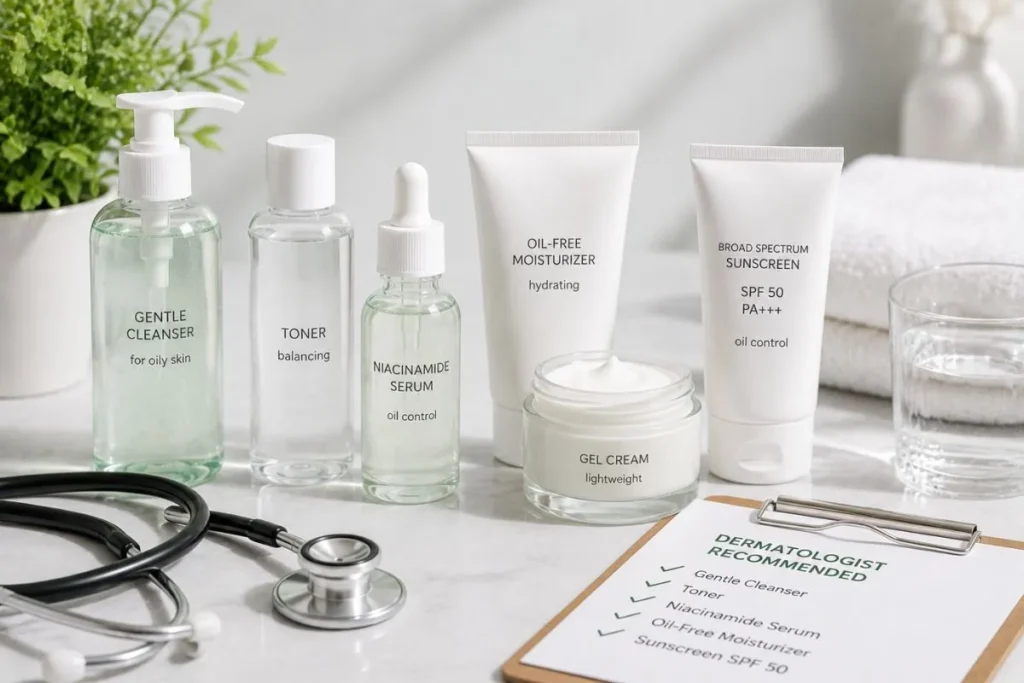
If your skin is easily irritated, a gentle facial cleanser with soothing ingredients is a better option. It cleans your skin effectively without stripping away natural moisture or damaging the skin barrier.
Always choose a face wash for oily skin that is non-comedogenic, oil-free, and fragrance-free to reduce the risk of clogged pores and irritation.
Dermatologist Recommended Skin Care Routine for Oily Acne-Prone Skin: Apply a Lightweight Serum
After cleansing, the next step in a dermatologist recommended skin care routine for oily acne-prone skin is applying a lightweight serum. Serums contain concentrated active ingredients that target specific skin concerns without feeling heavy or greasy.
One of the best ingredients for oily and acne-prone skin is niacinamide. A niacinamide serum helps regulate excess oil production, minimize enlarged pores, reduce redness, and strengthen the skin barrier. With regular use, it can also improve skin texture and reduce the appearance of acne marks.
Another excellent ingredient is hyaluronic acid. Many people assume oily skin doesn’t need hydration, but oily skin can still become dehydrated. Hyaluronic acid for oily skin attracts moisture without adding oil, keeping your skin hydrated while maintaining a lightweight feel.
Dermatologist Recommended Skin Care Routine for Oily Acne-Prone Skin: Moisturize
Skipping moisturizer is one of the most common mistakes people with oily skin make. A dermatologist recommended skin care routine for oily acne-prone skin always includes a moisturizer because hydration is essential for maintaining healthy skin.
When your skin becomes dehydrated, it often responds by producing even more oil to compensate. This excess oil can clog pores and increase the likelihood of acne breakouts. Using the right moisturizer helps maintain balance and supports a healthier complexion.
The ideal moisturizer for oily skin should be lightweight, oil-free, and non-comedogenic.
Gel-based or water-based formulas absorb quickly and provide hydration without leaving a greasy residue. Ingredients such as ceramides help repair and strengthen the skin barrier, while glycerin and hyaluronic acid lock in moisture.
An oil-free moisturizer not only keeps your skin hydrated but also reduces irritation caused by acne treatments. Over time, consistent moisturizing improves skin texture, making your skin appear smoother, softer, and healthier.
Dermatologist Recommended Skin Care Routine for Oily Acne-Prone Skin: Never Skip Sunscreen
The final step in a dermatologist recommended skin care routine for oily acne-prone skin is applying sunscreen every morning. Many people believe sunscreen is unnecessary unless they spend hours outdoors, but harmful UV rays are present every day, even when it’s cloudy or you’re indoors near windows.
If you’re using acne-fighting ingredients such as salicylic acid, benzoyl peroxide, or retinoids, your skin becomes more sensitive to sunlight. Without proper protection, UV exposure can worsen acne marks, increase irritation, and speed up signs of premature aging.
Choose a sunscreen for oily skin that offers broad-spectrum protection with SPF 30 or higher. It should also be lightweight, oil-free, and non-comedogenic so it protects your skin without clogging pores or making your face feel greasy.
Gel-based and fluid sunscreens are excellent choices because they absorb quickly and leave a comfortable finish.
A high-quality SPF for acne-prone skin helps prevent sun damage while reducing the risk of post-inflammatory hyperpigmentation caused by acne. Apply sunscreen as the last step of your morning routine every single day, and reapply every two hours if you’re spending extended time outdoors.
Why Following a Morning Routine Is Essential
A morning dermatologist recommended skin care routine for oily acne-prone skin does much more than wash away overnight oil.
It prepares your skin for the day ahead by cleansing away impurities, balancing oil production, providing lightweight hydration, and protecting your skin from environmental damage and harmful UV rays.
When you follow this routine consistently, you’ll notice that your skin feels fresher, looks less oily, and becomes more resilient over time. More importantly, you’ll create the ideal foundation for reducing breakouts and maintaining a healthier complexion.

In the next section, we’ll cover the complete nighttime dermatologist recommended skin care routine for oily acne-prone skin, including the best acne treatments, proper cleansing techniques, and overnight skincare steps that help repair and renew your skin while you sleep.
Dermatologist Recommended Skin Care Routine for Oily Acne-Prone Skin: Night Routine
Many people believe that applying more acne products at night will clear their skin faster. This is one of the biggest mistakes you can make. Using too many active ingredients or layering several treatments together can irritate your skin, damage the skin barrier, and even trigger more breakouts
A dermatologist recommended skin care routine for oily acne-prone skin focuses on using the right products in the right order. The nighttime routine is when your skin repairs itself, making it the perfect time to use targeted acne treatments and nourishing products.
Dermatologist Recommended Skin Care Routine for Oily Acne-Prone Skin: Double Cleanse (If Wearing Makeup or Sunscreen)
The first step in a dermatologist recommended skin care routine for oily acne-prone skin at night is to remove everything that has built up on your skin throughout the day.
If you’ve worn sunscreen, makeup, or spent time outdoors, a single cleanse may not completely remove all the dirt, excess oil, and product residue from your pores. That’s why dermatologists often recommend double cleansing.
The first cleanse helps dissolve makeup, sunscreen, and excess sebum. You can use a gentle cleansing balm, oil cleanser, or micellar water that is suitable for acne-prone skin.
Despite the name, a cleansing oil designed for oily skin won’t make your skin oilier. Instead, it helps lift away oil-based impurities without clogging pores.
The second cleanse should be done with a gentle facial cleanser or a salicylic acid cleanser. This removes any remaining impurities, sweat, and bacteria while deeply cleaning your pores.
Salicylic acid is especially beneficial because it penetrates the pores and helps prevent blackheads, whiteheads, and future acne breakouts.
Dermatologist Recommended Skin Care Routine for Oily Acne-Prone Skin: Apply Acne Treatment
Once your skin is clean, it’s time to apply targeted acne treatments. This is one of the most important parts of a dermatologist recommended skin care routine for oily acne-prone skin because active ingredients work best overnight while your skin naturally repairs itself.
The treatment you choose should depend on your skin’s needs.
If you experience frequent pimples and inflamed acne, benzoyl peroxide treatment helps reduce acne-causing bacteria and calm inflammation. It is highly effective for treating active breakouts and preventing new ones from forming.

If clogged pores and blackheads are your main concern, products containing salicylic acid or BHA for acne help remove excess oil and dead skin cells from deep inside the pores. Regular use keeps pores cleaner and reduces congestion.
For long-term acne management, many dermatologists recommend retinol for acne or adapalene. These vitamin A derivatives increase skin cell turnover, prevent clogged pores, improve uneven texture, and gradually reduce post-acne marks.
However, retinoids should be introduced slowly to allow your skin time to adjust.
Dermatologist Recommended Skin Care Routine for Oily Acne-Prone Skin: Moisturize Before Bed
Many people assume they should skip moisturizer after using acne treatments because their skin already feels oily. In reality, moisturizing is a crucial step in every dermatologist recommended skin care routine for oily acne-prone skin.
Acne treatments like benzoyl peroxide, salicylic acid, and retinoids can dry out your skin. Without proper hydration, your skin barrier becomes weaker, making your skin more prone to irritation and inflammation.
Choose a moisturizer for oily skin that is lightweight, oil-free, and non-comedogenic. These formulas provide hydration without clogging pores or leaving a greasy finish.
Why Following a Night Routine Is Essential
A nighttime dermatologist recommended skin care routine for oily acne-prone skin gives your skin the opportunity to recover from daily stress while treating the root causes of acne.
Double cleansing removes makeup, sunscreen, pollution, and excess oil that accumulate throughout the day. Applying acne treatments helps unclog pores, reduce acne-causing bacteria, and prevent future breakouts.
Finishing with a lightweight moisturizer restores hydration and strengthens the skin barrier, allowing your skin to heal more efficiently overnight.
The key to seeing long-term improvements is consistency. Following the same routine every evening allows your skincare products to work effectively without overwhelming your skin.
Rather than searching for overnight miracles, focus on building healthy habits that support your skin every day.
In the next section, we’ll explore the best ingredients for a dermatologist recommended skin care routine for oily acne-prone skin and explain how each one helps control excess oil, reduce acne, and promote healthier, clearer skin.
Frequently Asked Questions About the Best Shampoo for Silky Hair
Should oily acne-prone skin use moisturizer every day?
Yes. Oily skin still needs daily hydration. Skipping moisturizer can cause your skin to become dehydrated, leading it to produce even more oil. Dermatologists recommend using a lightweight, oil-free, and non-comedogenic moisturizer that hydrates the skin without clogging pores.
A good moisturizer also helps strengthen the skin barrier and reduces irritation caused by acne treatments.
Which ingredients are best for oily acne-prone skin?
Some of the most effective ingredients include salicylic acid, niacinamide, hyaluronic acid, ceramides, benzoyl peroxide, adapalene, retinol, and zinc PCA. These ingredients help unclog pores, reduce excess oil, calm inflammation, improve hydration, and support a healthy skin barrier.
Choosing products with these ingredients can make your dermatologist recommended skincare for oily acne-prone skin more effective.
How many times should I wash oily acne-prone skin?
Most dermatologists recommend washing oily acne-prone skin twice a day once in the morning and once before bed. Cleansing more frequently can strip away natural oils and increase oil production, while washing too little allows dirt, sweat, and oil to build up inside the pores.
A gentle cleanser used consistently is usually enough to keep the skin clean and balanced.
Is salicylic acid better than benzoyl peroxide?
Both ingredients are effective, but they work differently. Salicylic acid penetrates deep into the pores to remove excess oil and dead skin cells, making it ideal for blackheads and whiteheads.
Benzoyl peroxide works by reducing acne-causing bacteria and calming inflamed pimples. Many dermatologists recommend choosing the ingredient that matches your skin concern, while some people may benefit from using both at different times under professional guidance.
Can oily skin become dehydrated?
Yes. This is one of the biggest misconceptions about oily skin. Oil and hydration are not the same thing. Your skin can produce excess oil while still lacking water. Dehydrated oily skin often feels tight after cleansing but becomes greasy later in the day.
Using a lightweight moisturizer and hydrating ingredients such as hyaluronic acid helps restore moisture without making the skin feel oily.
What sunscreen is best for oily acne-prone skin?
The best sunscreen is one that is lightweight, oil-free, non-comedogenic, and provides broad-spectrum protection with SPF 30 or higher. Gel-based and fluid sunscreens are often the most comfortable choices because they absorb quickly and leave little residue.
Wearing sunscreen every day protects your skin from UV damage and helps prevent acne marks from becoming darker.
How long does it take to see results from a dermatologist recommended skin care routine for oily acne-prone skin?
Most people begin noticing small improvements within four to six weeks of following a dermatologist recommended skin care routine for oily acne-prone skin consistently. Significant improvements in acne, oil control, and skin texture usually take eight to twelve weeks.
Everyone’s skin is different, so patience and consistency are essential. Frequently changing products or expecting overnight results often delays progress.
Conclusion
Many people spend months trying different skincare products, hoping they’ll find a quick solution for oily, acne-prone skin. Unfortunately, there isn’t a single product that can completely eliminate acne overnight.
The real secret to healthier skin is following a dermatologist recommended skin care routine for oily acne-prone skin consistently and choosing products that match your skin’s needs.
Throughout this guide, we’ve covered everything you need to build an effective skincare routine for oily and acne-prone skin. You learned what causes excess oil production, why acne develops, and why following a structured routine is much more effective than constantly changing products. Understanding your skin is the first step toward making better skincare decisions.
We also discussed how a dermatologist recommended skin care routine for oily acne-prone skin should be divided into a morning and nighttime routine.
Your morning routine focuses on cleansing, hydration, and protecting your skin from environmental damage, while your nighttime routine removes impurities, treats acne, and supports your skin’s natural repair process.
Another important takeaway is choosing skincare products based on ingredients rather than marketing claims. Ingredients such as salicylic acid, niacinamide, hyaluronic acid, ceramides, benzoyl peroxide, adapalene, and retinol are commonly recommended by dermatologists because they help control excess oil, unclog pores, reduce inflammation, and strengthen the skin barrier.
At the same time, avoiding harsh scrubs, alcohol-heavy products, and pore-clogging ingredients can prevent unnecessary irritation and future breakouts.
Remember that oily skin still needs hydration. A lightweight, non-comedogenic moisturizer is an essential part of every dermatologist recommended skincare for oily acne-prone skin because it helps maintain a healthy skin barrier without making your skin greasy.
Likewise, applying sunscreen every morning protects your skin from UV damage and reduces the risk of dark acne marks becoming more noticeable.
Consistency is what truly delivers results. Even the best dermatologist recommended skin care routine for oily acne-prone skin requires time before you notice significant improvements.
Most people begin seeing positive changes after several weeks of regular use. Switching products too often or expecting immediate results can slow your progress and make your skin more sensitive.

Name: Shahzadi
I’m passionate about skincare, beauty, and simple self-care. I share practical skincare tips, beauty routines, product insights, and easy ways to build healthy-looking, glowing skin.
My goal is to make beauty and skincare easier to understand, so you can discover routines that fit your everyday life.


