

Most people believe that back acne (bacne) only happens because of poor hygiene. That’s simply not true. You can shower every day, use expensive soaps, and still struggle with stubborn breakouts on your back.
The real problem usually comes from a mix of excess oil, clogged pores, sweat, hormones, friction, and sometimes even the products you use on your hair and skin.
If you’ve been searching for the perfect bacne skin care routine, you’re in the right place.
The good news is that back acne is treatable. You don’t need dozens of products or complicated skincare steps. What you do need is the right routine, the right ingredients, and a little consistency.
Once you understand what causes bacne and how to care for your skin properly, you can start seeing real improvements.
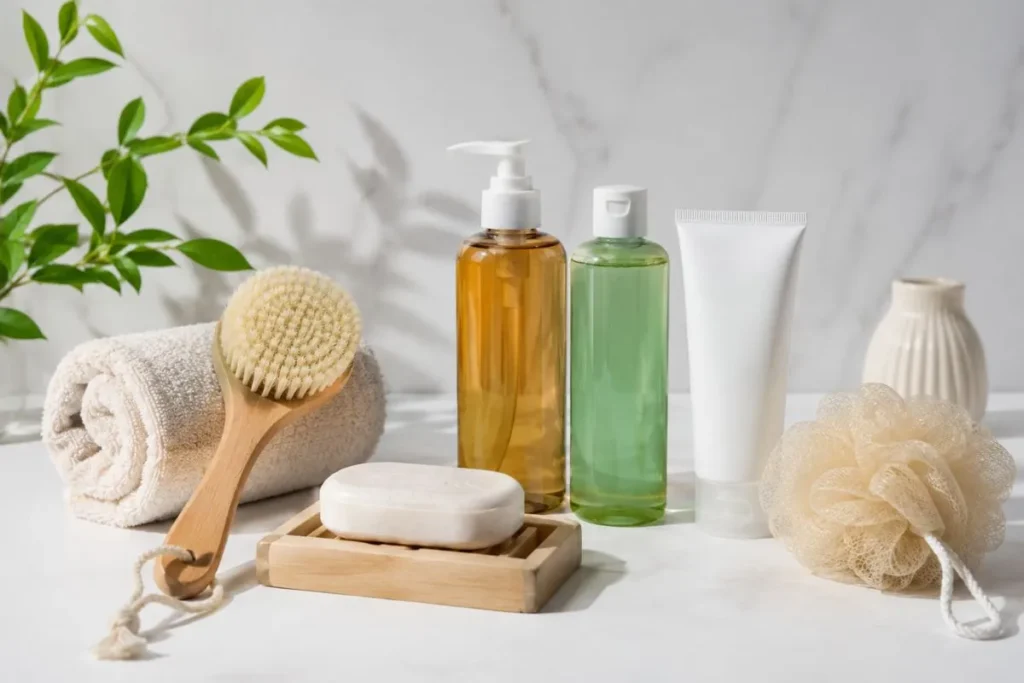
In this complete guide, you’ll learn what bacne actually is, why it happens, how to build the best back acne skin care routine, which ingredients work best for treating body acne, the common mistakes that make breakouts worse, and the simple lifestyle habits that help prevent future acne.
Whether you’re dealing with a few occasional pimples or persistent body acne, this guide is designed to help you create a skincare routine for bacne that fits your skin type and daily life.
If your goal is smoother, healthier skin without constantly worrying about back breakouts, keep reading.
What Is Bacne?
Bacne is simply a short name for back acne. Just like acne on your face, it develops when your skin’s pores become blocked with oil, dead skin cells, bacteria, and sweat.
The result is pimples, blackheads, whiteheads, or even painful cysts that appear on your back.
Although it isn’t usually dangerous, bacne can affect your confidence. Many people avoid wearing tank tops, swimsuits, or backless outfits because they feel embarrassed about their skin.
The good news is that a consistent body acne skin care routine can help reduce breakouts and improve your skin over time.
Let’s understand it a little better.
Understanding Back Acne
Your back contains one of the highest concentrations of oil glands on your body. These glands naturally produce sebum, an oily substance that keeps your skin moisturized.
The problem begins when too much oil mixes with dead skin cells. This combination blocks your pores. Once bacteria become trapped inside those clogged pores, inflammation develops, leading to acne.
Unlike your face, your back experiences extra challenges every day. Sweat often stays on your skin after workouts, tight clothing creates constant friction, backpacks rub against your shoulders, and hair products like conditioners or styling creams can run down your back while showering.
On top of that, cleaning your back thoroughly is much more difficult than washing your face.
This is why following a dedicated back acne skin care routine is often more effective than simply using your facial skincare products on your body.
If you’ve been wondering how to build a bacne skin care routine that works, understanding these causes is the first step. Once you know why your pores become clogged, it’s much easier to choose products that actually target the problem instead of making it worse.
Is Bacne the Same as Facial Acne?
The basic process is very similar, but back acne usually requires a slightly different approach.
Your back has thicker skin than your face, produces more oil, covers a much larger surface area, and experiences more sweating and friction throughout the day.
Because of these differences, products made specifically for body acne skincare often contain stronger acne-fighting ingredients like salicylic acid or benzoyl peroxide. These ingredients are designed to penetrate thicker skin and help unclog pores more effectively.
That doesn’t mean you should use the strongest product available. A balanced daily bacne skin care routine for clear skin works much better than using harsh treatments that leave your skin dry or irritated.
Can Anyone Get Bacne?
Absolutely.
Back acne doesn’t only affect teenagers. It can develop at almost any age.
Teenagers often experience bacne because of hormonal changes during puberty. Adults with naturally oily skin are also more likely to develop back acne.
Athletes and gym-goers may notice more breakouts because sweat stays on the skin longer and workout clothes create friction. Hormonal fluctuations, genetics, and even daily lifestyle habits can also contribute to recurring breakouts.
Even people who maintain excellent hygiene can still struggle with bacne. That’s why preventing breakouts requires much more than simply washing your body. A consistent skincare routine and the right products make a much bigger difference.
Common Signs of Bacne
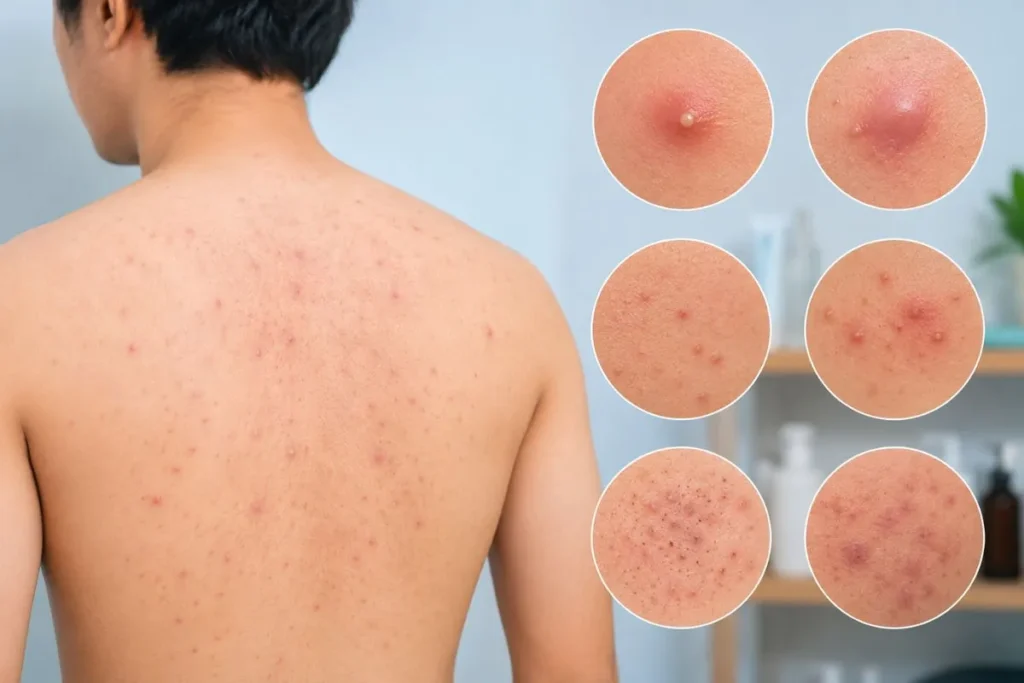
Not every breakout looks the same. Knowing the different types of acne can help you understand how severe your condition is and which treatments are most likely to work.
Whiteheads
Whiteheads develop when clogged pores remain closed beneath the skin. They usually appear as small white bumps with little or no inflammation. These are often one of the earliest signs that excess oil and dead skin cells are blocking your pores.
Blackheads
Blackheads form when clogged pores stay open. Many people think the dark color comes from dirt, but that’s actually a myth. The dark appearance happens when trapped oil and dead skin cells react with oxygen in the air.
People with oily skin commonly experience blackheads, and they often improve with regular exfoliation and a quality body acne cleanser.
Papules
Papules are small, red, inflamed bumps that feel tender when touched. They don’t contain pus, but they indicate that the blocked pore has become irritated and inflamed.
Pustules
Pustules are the classic pimples that most people recognize. They usually have a red base with a white or yellow center filled with pus. Although they may be tempting to squeeze, doing so can spread bacteria deeper into the skin and increase the risk of permanent scarring.
Nodules and Cysts
Nodules and cysts are the most severe forms of back acne. These painful breakouts develop deep beneath the surface of the skin and often take much longer to heal than ordinary pimples.
If you’re dealing with frequent cystic acne, following a dermatologist recommended bacne skin care routine may be necessary because over-the-counter products alone may not be enough to control severe inflammation.
Acne Scars
Even after pimples heal, they can leave behind dark marks or permanent scars. This usually happens when acne is severe, left untreated for a long period, or repeatedly picked and squeezed.
Starting an effective bacne skin care routine early can significantly reduce your chances of developing long-lasting acne scars while helping your skin heal more evenly.
Why Identifying Your Type of Bacne Matters
Not every type of acne needs the same treatment. Mild whiteheads may respond well to a salicylic acid body wash, while inflamed pimples often improve with products containing benzoyl peroxide.
More stubborn breakouts usually require a complete body acne routine that includes proper cleansing, gentle exfoliation, targeted treatment products, and lightweight moisturizers. Severe cystic acne, however, often requires professional care from a dermatologist.

Understanding your type of bacne helps you choose the right products instead of wasting time and money on treatments that aren’t suitable for your skin.
As you continue reading this guide, you’ll learn exactly how to build the best bacne skin care routine for beginners, which ingredients deliver the best results, and the daily habits that can help keep your back clear for the long term.
What Causes Bacne?
A lot of people think that eating chocolate or oily foods is the only reason they get back acne. While diet may play a role for some people, it is not the main cause of bacne. In reality, back acne usually develops because several factors work together.
Excess oil, clogged pores, hormones, sweat, friction, and certain daily habits can all trigger breakouts. That’s why even someone with a good hygiene routine can still struggle with recurring acne on their back.
If you’ve been trying different products without success, understanding what causes bacne is one of the most important steps. Once you identify the real reason behind your breakouts, it becomes much easier to build a bacne skin care routine that actually works.
Excess Oil Production
Your skin naturally produces an oil called sebum. This oil keeps your skin soft and protects it from drying out. However, when your body produces too much sebum, it starts creating problems.
The extra oil mixes with dead skin cells inside your pores. Over time, the pores become blocked, creating the perfect environment for acne-causing bacteria to grow. As the bacteria multiply, the skin becomes inflamed, leading to pimples and other types of body acne.
The back contains more oil glands than many other parts of the body, which is one reason back acne treatment often requires products designed specifically for thicker, oilier skin.
A good body acne skin care routine focuses on controlling excess oil without stripping your skin completely. Using products with ingredients like salicylic acid can help keep pores clear while maintaining a healthy skin barrier.
Sweat and Friction
Sweating itself doesn’t cause acne. The problem begins when sweat stays on your skin for a long time.
After exercising or spending time in hot weather, sweat mixes with oil, bacteria, and dead skin cells. If this mixture remains trapped under tight clothing, it can clog your pores and trigger new breakouts.
Friction makes the situation even worse. Constant rubbing from backpacks, sports equipment, tight bras, or fitted shirts can irritate your skin and increase inflammation. This type of acne is sometimes called acne mechanica and is especially common among athletes and gym enthusiasts.
If you’re following a bacne skin care routine to prevent breakouts, try showering as soon as possible after sweating. Wearing loose, breathable fabrics and changing out of sweaty clothes quickly can also make a noticeable difference.
These simple habits are often overlooked, but they play a major role in body acne prevention.
Hormonal Changes
Hormones are one of the biggest reasons people develop bacne.
During puberty, pregnancy, menstruation, or periods of increased stress, your body produces hormones called androgens. These hormones stimulate your oil glands, causing them to produce more sebum than usual.
More oil means a greater chance of clogged pores and inflamed breakouts.
This is why teenagers commonly experience body acne, but adults are not immune either. Many people in their twenties, thirties, and even forties continue to struggle with hormonal back acne.
If your breakouts seem to appear around the same time every month or suddenly become worse without changing your skincare products, hormones may be contributing to the problem.
A consistent daily bacne skin care routine for clear skin can help control symptoms, but severe hormonal acne may require treatment recommended by a dermatologist.
Dirty Gym Clothes and Tight Clothing
Your workout clothes can have a bigger impact on your skin than you might think.
When clothes absorb sweat, oil, and bacteria, they create a warm and moist environment that encourages clogged pores. Wearing the same gym clothes for too long after exercising gives acne-causing bacteria more time to irritate your skin.
Tight clothing can also trap heat and moisture while increasing friction against your back. Over time, this repeated rubbing can lead to more frequent breakouts.
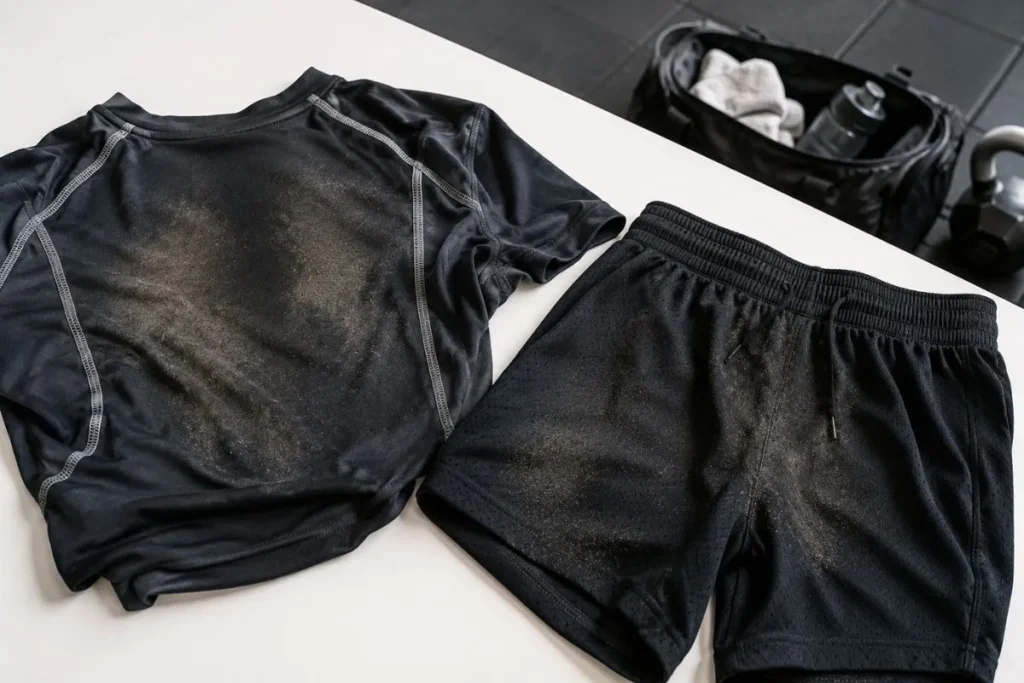
If you exercise regularly, make it a habit to change into clean clothes immediately after your workout. Washing your activewear after every use is another simple but effective body acne prevention tip.
Choosing loose-fitting, breathable fabrics can also reduce irritation and help your skin recover more quickly.
Poor Shower Habits
Your shower routine can either help control bacne or make it worse.
Many people delay showering after workouts, allowing sweat and bacteria to remain on the skin for hours. Others wash their back too aggressively, believing that scrubbing harder will remove acne faster.
Unfortunately, harsh scrubbing often damages your skin barrier and increases irritation, making breakouts even worse.
Instead, focus on a gentle but consistent shower routine for bacne. Cleanse your back with a body wash formulated for acne-prone skin, rinse thoroughly, and avoid using rough brushes or abrasive scrubs every day.
Another helpful habit is washing your hair before cleansing your body. This prevents leftover conditioner or styling products from sitting on your back after you finish showering.
Small changes like these can improve the effectiveness of your back acne skin care routine over time.
Hair Products That Trigger Breakouts
Most people don’t know that the products they use on their hair can contribute to bacne.
Conditioners, leave-in treatments, hair oils, and styling creams often contain rich ingredients that can clog pores when they come into contact with your back.
As you rinse your hair, these products naturally flow over your shoulders and upper back. If they aren’t completely washed away, they may leave behind residue that blocks pores and contributes to acne.
If you regularly notice breakouts on your upper back or shoulders, your hair products could be part of the problem.
Try rinsing your hair thoroughly before washing your body. If possible, clip long hair up after showering so wet hair doesn’t continue resting against your skin.
Switching to lightweight, non-comedogenic hair products may also help reduce future breakouts as part of an effective body acne routine.
Genetics and Lifestyle
Sometimes, your genes play a role in your skin health.
If one or both of your parents experienced frequent acne, you may naturally have a higher chance of developing bacne as well. While you can’t change your genetics, you can control many lifestyle factors that influence your skin.
Lack of sleep, chronic stress, smoking, poor hydration, and inconsistent skincare habits can all make existing acne worse. Some people may also notice that certain foods trigger breakouts, although this varies from person to person.
Rather than looking for a single cause, it’s better to think of bacne as the result of several small factors working together.
The good news is that most of these triggers can be managed with healthy daily habits and a well-planned skincare routine for bacne.
Why Understanding the Cause of Bacne Matters
There’s a common belief that buy random acne products hoping one of them will solve the problem. Unfortunately, this approach often leads to disappointment because it doesn’t address the real cause of the breakouts.
For example, if friction from workout clothes is triggering your acne, simply applying stronger creams won’t completely solve the issue. Likewise, if hormonal changes are increasing oil production, your skincare routine may need to focus on controlling excess sebum while protecting your skin barrier.
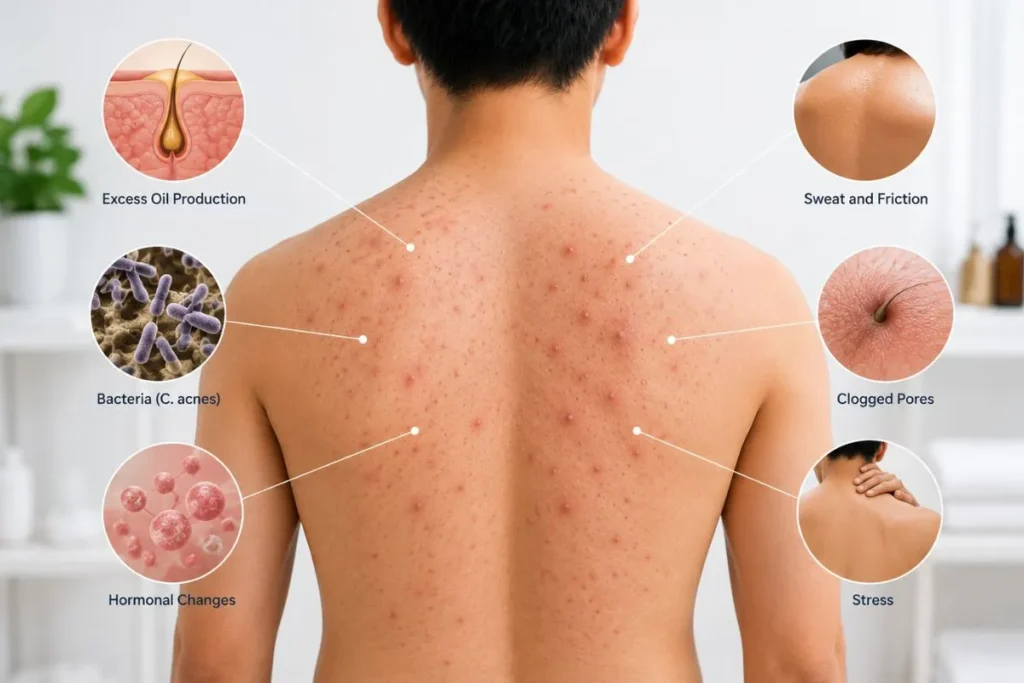
The most effective bacne skin care routine starts by identifying your personal triggers. Once you understand what is causing your breakouts, you can choose products and daily habits that work together to support healthier, clearer skin.
In the next section, you’ll learn how to build a step-by-step bacne skin care routine using dermatologist-recommended practices and proven ingredients that help reduce body acne, prevent clogged pores, and keep future breakouts under control.
Bacne Skin Care Routine: Step-by-Step Guide
Many people believe that the fastest way to get rid of back acne is by using the strongest acne products they can find. Unfortunately, that’s one of the biggest mistakes you can make.
Using harsh products too often can strip your skin, weaken its natural barrier, and leave it irritated. Instead of clearing your skin faster, it may actually lead to more inflammation and persistent breakouts.
The truth is that the best bacne skin care routine isn’t complicated. It’s all about using the right products in the right order and staying consistent. Whether you’re just starting or looking to improve your current routine, these five simple steps can help you achieve healthier, smoother skin over time.
Cleanse Your Back Properly
Every effective back acne skin care routine starts with cleansing.
Throughout the day, your back collects sweat, excess oil, dead skin cells, sunscreen, and environmental dirt. If these impurities stay on your skin for too long, they can block your pores and increase the chances of new breakouts.
That’s why cleansing your back properly is the foundation of any successful body acne skin care routine.
However, cleansing isn’t about washing your skin multiple times a day. Overwashing can dry out your skin and encourage your oil glands to produce even more oil. For most people, cleansing once or twice daily is enough.
Choose the Right Body Wash
Not every body wash is designed for acne-prone skin. Regular shower gels often focus on fragrance rather than treating clogged pores.
If you’re dealing with bacne, look for ingredients that target acne directly.
Salicylic Acid Body Wash
A salicylic acid body wash is one of the best choices for mild to moderate bacne.
Salicylic acid is a beta hydroxy acid (BHA) that works deep inside your pores. It dissolves excess oil, removes dead skin cells, and helps prevent future blockages before they turn into pimples.
Because it penetrates into the pores, it’s especially helpful for people with oily or acne-prone skin.
Benzoyl Peroxide Cleanser
Another highly effective option is a benzoyl peroxide cleanser.
Unlike salicylic acid, benzoyl peroxide focuses on reducing acne-causing bacteria while also helping calm inflammation.
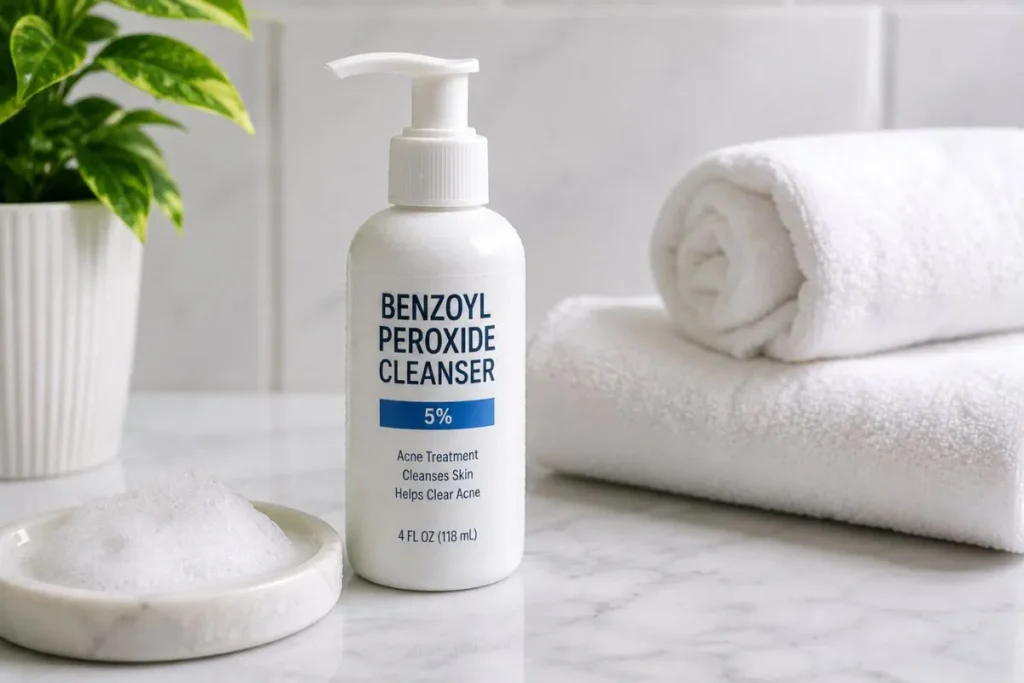
If your back acne includes red, inflamed pimples, a benzoyl peroxide wash may deliver better results.
Keep in mind that benzoyl peroxide can bleach towels and clothing, so rinse thoroughly and use white towels if possible.
Cleansing Tips for Better Results
Allow your acne cleanser to stay on your back for about one to two minutes before rinsing. This gives the active ingredients enough time to work.
Use lukewarm water instead of hot water because very hot showers can dry out your skin.
Finally, pat your skin dry with a clean towel instead of rubbing it aggressively. Gentle care helps reduce unnecessary irritation.
Exfoliate the Right Way
Many people think exfoliating every day will clear acne faster. In reality, too much exfoliation often causes redness, dryness, and irritation.
The goal isn’t to scrub your skin harder. The goal is to remove dead skin cells without damaging your skin barrier.
That’s why proper exfoliating for bacne is an important part of an effective skincare routine for bacne.
Physical vs Chemical Exfoliation
Physical exfoliation uses scrubs, brushes, or textured gloves to remove dead skin cells manually.
Although these products may leave your skin feeling smooth, rough scrubs can create tiny tears in acne-prone skin and make inflammation worse.
Chemical exfoliation is usually a better option.
Instead of scrubbing, chemical exfoliants dissolve the bond between dead skin cells, allowing them to shed naturally.
Glycolic Acid for Bacne
One of the most popular chemical exfoliants is glycolic acid for bacne.
Glycolic acid belongs to the alpha hydroxy acid (AHA) family. It helps smooth rough skin, improve skin texture, fade post-acne marks, and reduce clogged pores over time.
If your bacne has left behind dark spots, glycolic acid can also help improve your skin’s overall appearance.
How Often Should You Exfoliate?
Most people only need to exfoliate two or three times each week.
If you have sensitive skin, start with once a week and gradually increase the frequency if your skin tolerates it well.
Remember, consistency is much more important than overdoing it.
A gentle body acne exfoliator used regularly is far more effective than aggressive scrubbing.
Use Acne Treatment Products
After cleansing and exfoliating, it’s time to treat active breakouts.
This step focuses on reducing inflammation, preventing future pimples, and speeding up healing.
Treatment products stay on the skin longer than cleansers, giving active ingredients more time to work.
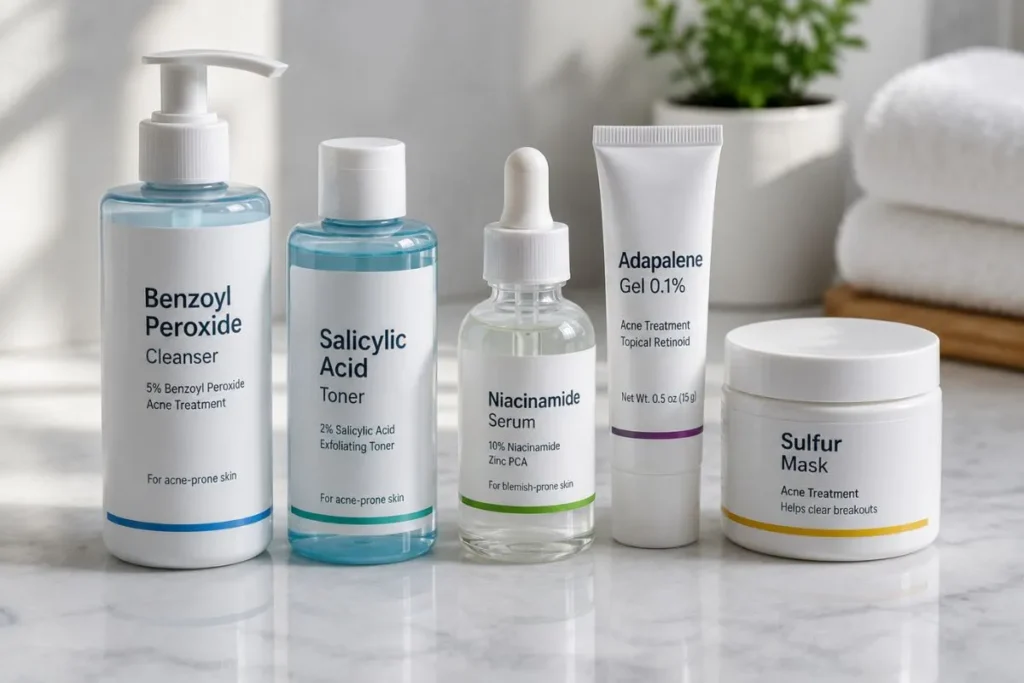
Spot Treatments
Spot treatments are useful for targeting individual pimples.
Instead of applying acne medication all over your back, concentrate stronger treatments directly on inflamed areas when necessary.
Acne Body Spray
Reaching the middle of your back isn’t always easy.
That’s where an acne body spray becomes extremely useful.
Body sprays are designed to evenly distribute acne-fighting ingredients across hard-to-reach areas. They’re lightweight, quick to apply, and especially convenient after workouts.
Many dermatologists recommend body sprays as part of a complete body acne routine, particularly for people with frequent shoulder and upper back breakouts.
Leave-On Exfoliants
Unlike rinse-off cleansers, leave-on treatments continue working throughout the day or night.
These products often contain ingredients like salicylic acid or glycolic acid, helping to unclog pores while improving overall skin texture.
If you’re creating the best bacne skin care routine for beginners, adding one leave-on treatment can significantly improve your results without making your routine complicated.
Moisturize Without Clogging Pores
One of the biggest myths in skincare is that people with acne shouldn’t use moisturizer.
In reality, skipping moisturizer can actually make your skin produce more oil.
When your skin becomes too dry, it tries to compensate by increasing oil production, which may contribute to even more clogged pores.
That’s why moisturizing is an essential step in every body acne skin care routine.
Choose a Non-Comedogenic Moisturizer
Look for products labeled as non-comedogenic body lotion.
This simply means the formula is designed not to clog pores.
A lightweight moisturizer helps restore your skin barrier while reducing dryness caused by acne treatments.
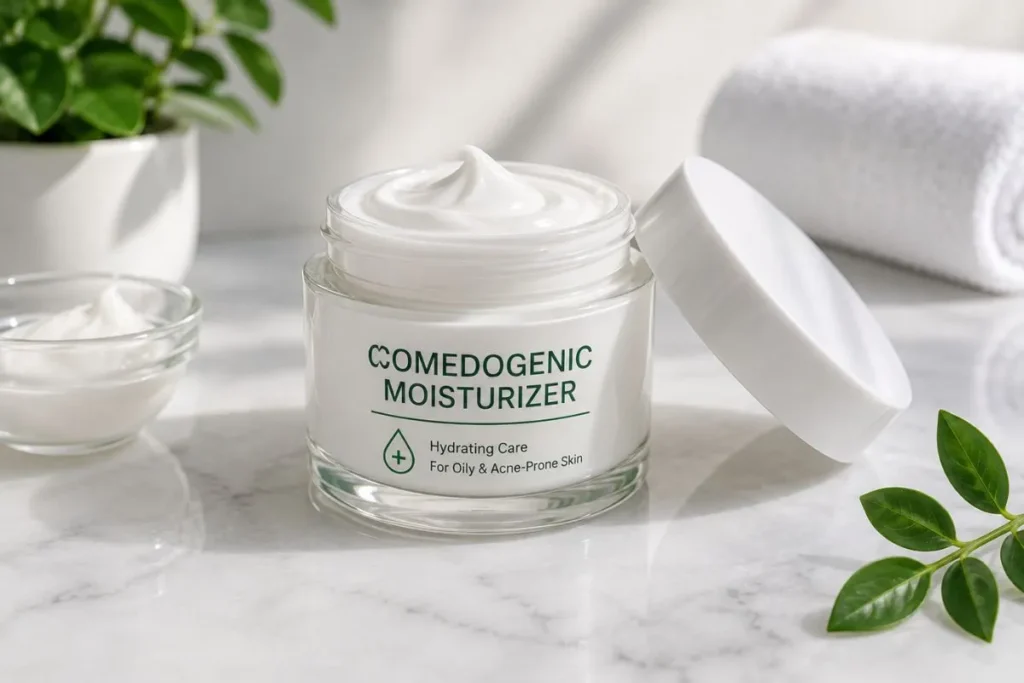
Body Moisturizer for Acne-Prone Skin
The ideal body moisturizer for acne-prone skin should feel lightweight, absorb quickly, and contain soothing ingredients without heavy oils.
Ingredients like ceramides, glycerin, and niacinamide can help hydrate your skin while supporting its natural protective barrier.
Healthy, balanced skin is much better at recovering from acne than skin that’s constantly dry and irritated.
Protect Your Skin
Many people stop their routine once the pimples begin to disappear.
However, protecting your skin is just as important as treating active acne.
Without proper care, healed breakouts can leave behind stubborn dark marks and scars that take months to fade.
Wear Sunscreen
If your back is exposed during outdoor activities, apply a broad-spectrum sunscreen.
Sun exposure can make post-acne marks appear darker and last much longer.
Choose lightweight, non-comedogenic sunscreens that won’t clog your pores.
Prevent Acne Scars
Avoid picking or squeezing pimples, even if they’re tempting.
Touching acne increases inflammation and raises the risk of permanent bacne scars treatment becoming necessary later.
Allow your skin to heal naturally while continuing your regular routine.
Stay Consistent
Clear skin doesn’t happen overnight.
An effective bacne skin care routine to prevent breakouts requires patience and consistency.
Most people begin noticing improvements after several weeks of regular care. Stopping your routine too early often allows acne to return.
The Ideal Order of a Bacne Skin Care Routine
If you’re wondering how everything fits together, the order is actually very simple.
Start by cleansing your back with an acne-friendly body wash. Next, exfoliate on the days your skin needs it instead of doing it daily. After that, apply your acne treatment products to target active breakouts and prevent new ones from forming.

Once the treatments have absorbed, apply a lightweight non-comedogenic body lotion to keep your skin hydrated. Finally, if your back will be exposed to sunlight, finish with sunscreen to protect your skin from discoloration and future damage.
Following these steps consistently is one of the easiest ways to build a back acne skin care routine that supports long-term skin health.
Morning Bacne Skin Care Routine
At first glance, it seems like that a morning bacne skin care routine isn’t necessary because they’ll be sweating throughout the day anyway. That’s a common misconception.
In fact, starting your day with clean, protected skin helps reduce the buildup of oil, sweat, and bacteria that can lead to clogged pores later on.
The morning routine doesn’t need to be long or complicated. In just a few minutes, you can prepare your skin for the day and lower the chances of new breakouts. If you’re following a daily bacne skin care routine for clear skin, these simple morning steps should become part of your everyday habit.
Cleanse Your Back Gently
The first step is to cleanse your back.
While you sleep, your skin continues to produce oil and sweat. Dead skin cells also accumulate on the surface overnight. Starting your morning with a gentle cleanse removes this buildup and leaves your skin feeling fresh.
If you exercised early in the morning or woke up feeling sweaty, cleansing becomes even more important.
Choose a body acne cleanser that suits your skin type. If your skin is oily, a salicylic acid body wash can help keep pores clear by removing excess oil. If your acne is more inflamed, a gentle cleanser containing benzoyl peroxide may be a better option.
Avoid using harsh soaps that leave your skin feeling tight or dry. Clean skin should feel comfortable, not stripped of moisture.
Follow Smart Shower Habits
A proper shower routine for bacne can make a noticeable difference over time.
When showering, wash your hair before washing your body. This helps remove any conditioner or hair product residue before you cleanse your back. If you wash your body first, leftover hair products may stay on your skin and contribute to clogged pores.
Use lukewarm water instead of very hot water. Hot showers may feel relaxing, but they can dry out your skin and increase irritation.
When drying off, gently pat your back with a clean towel rather than rubbing your skin. Excessive rubbing creates unnecessary friction that may aggravate acne-prone skin.
Small daily habits like these often support a healthier back acne skin care routine without adding extra effort
Apply a Lightweight Moisturizer
A lot of people believe skip moisturizer because they’re worried it will make their acne worse.
The opposite is often true.
Keeping your skin hydrated helps maintain a healthy skin barrier, allowing acne treatments to work more effectively while reducing dryness and irritation.
Choose a body moisturizer for acne-prone skin that is lightweight, oil-free, and labeled as non-comedogenic. These formulas are designed to hydrate your skin without blocking pores.
Ingredients such as glycerin, ceramides, and niacinamide are excellent choices because they support the skin barrier while calming redness.
Using moisturizer every morning is an important part of a balanced body acne skin care routine, especially if you’re already using active ingredients like salicylic acid or benzoyl peroxide.
Protect Your Skin with Sunscreen
If your back will be exposed to sunlight, sunscreen is a step you shouldn’t skip.
Many acne treatments make your skin more sensitive to UV rays. Without protection, sun exposure can worsen post-acne marks and slow down the healing process.
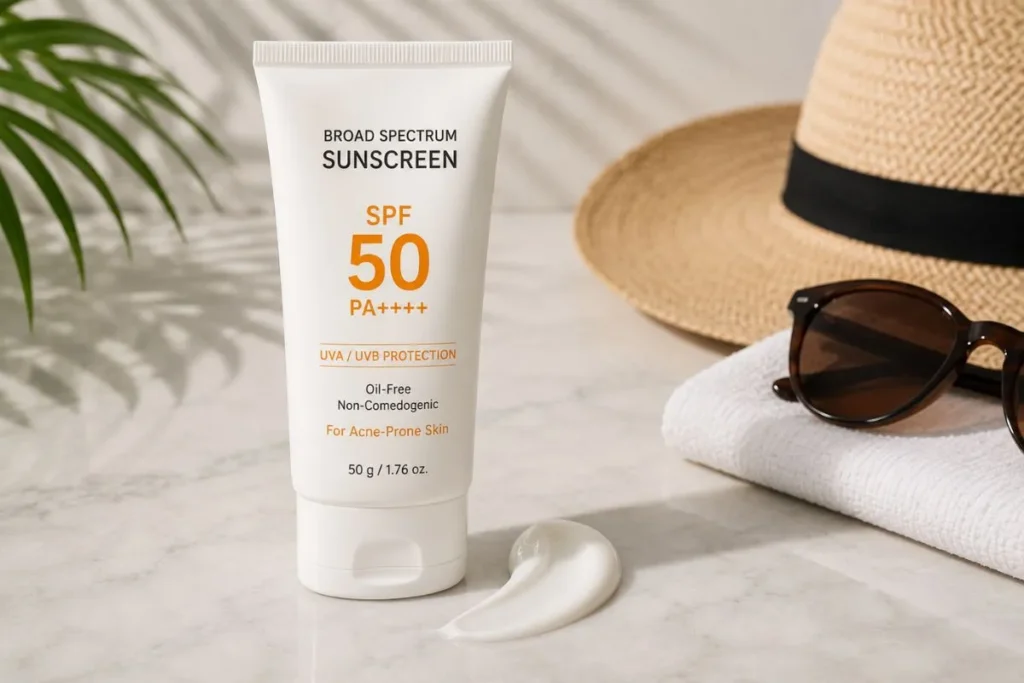
Choose a lightweight, broad-spectrum sunscreen with SPF 30 or higher. Look for formulas that are non-comedogenic so they won’t clog your pores.
Applying sunscreen doesn’t just protect your skin today it also helps prevent dark spots and uneven skin tone in the future.
Including sunscreen in your morning and night bacne skin care routine is one of the easiest ways to maintain healthier-looking skin.
Wear Breathable Clothing
What you wear during the day can affect your skin more than you might expect.
Tight-fitting clothes trap sweat and create friction against your back. This combination increases the risk of clogged pores and irritation.
Instead, choose loose-fitting clothes made from breathable fabrics like cotton or moisture-wicking athletic materials. These allow air to circulate and help keep your skin drier throughout the day.
If you exercise, always change out of sweaty workout clothes as soon as possible. Letting sweat sit on your skin for hours creates an environment where acne-causing bacteria can thrive.
These simple clothing choices support your bacne skin care routine to prevent breakouts without requiring any additional skincare products.
Avoid Touching Your Back Throughout the Day
Some people assume don’t realize how often they touch their skin.
Leaning against dirty surfaces, scratching your back, or constantly adjusting clothing transfers dirt, oil, and bacteria onto your skin.
Although touching your back occasionally won’t cause acne by itself, making it a habit can contribute to irritation and inflammation.
If your back feels itchy, try identifying the cause instead of scratching repeatedly. Dry skin, sweat, or certain fabrics may be responsible.
Reducing unnecessary contact with your skin is another small habit that supports a successful body acne routine.
Stay Hydrated Throughout the Day
Drinking enough water won’t cure bacne overnight, but staying hydrated supports your skin’s overall health.
Well-hydrated skin maintains its protective barrier more effectively, allowing it to recover from inflammation and environmental stress.
Aim to drink water consistently throughout the day instead of waiting until you feel thirsty.
Pair good hydration with a balanced diet, regular exercise, and your skincare routine for bacne for the best long-term results.
Morning Routine at a Glance
A simple morning routine is often more effective than an overly complicated one.
Start by cleansing your back with an acne-friendly body wash. Follow this with a lightweight, non-comedogenic moisturizer to keep your skin hydrated.
If your back will be exposed to the sun, apply sunscreen before getting dressed. Throughout the day, wear breathable clothing, stay hydrated, and avoid leaving sweat on your skin for long periods.
These small daily habits work together to support clearer skin while helping prevent new breakouts from forming.
Best Products for a Bacne Skin Care Routine
You may have heard that buying the most expensive skincare products will automatically clear their bacne. That’s not true. A high price doesn’t always mean better results. In fact, many affordable products contain the same acne-fighting ingredients found in luxury brands.
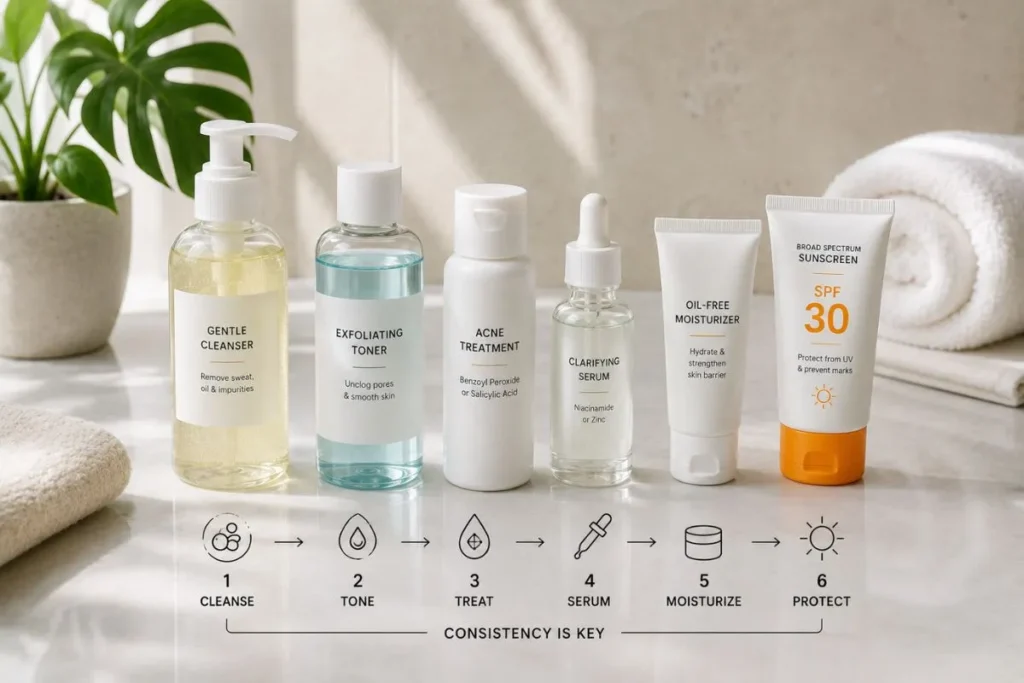
What really matters is choosing products with proven ingredients that suit your skin type. A successful bacne skin care routine is built around products that help unclog pores, reduce bacteria, calm inflammation, and keep your skin hydrated without causing new breakouts.
Below are the product categories that deserve a place in an effective back acne skin care routine.
Best Body Wash
Your body wash is the foundation of your body acne skin care routine. Since it’s the first product that touches your skin during a shower, choosing the right one can make a noticeable difference over time.
Look for body washes that contain ingredients such as salicylic acid or benzoyl peroxide. These ingredients are well-known for treating acne and preventing clogged pores.
Salicylic Acid Body Wash
A salicylic acid body wash is an excellent choice if you experience blackheads, whiteheads, or mild to moderate bacne.
Salicylic acid works by penetrating deep into your pores and dissolving excess oil and dead skin cells. This helps reduce new breakouts while keeping your skin smoother.
It’s also a good option for people with oily skin because it controls excess sebum without making the skin feel overly dry.
Benzoyl Peroxide Body Wash
If your bacne consists of painful, red, inflamed pimples, a benzoyl peroxide cleanser may be a better fit.
Benzoyl peroxide helps kill acne-causing bacteria while reducing inflammation. It can be particularly helpful for moderate to severe body acne.
When using this ingredient, allow it to remain on your skin for about one minute before rinsing thoroughly. Keep in mind that benzoyl peroxide may bleach towels and clothing, so use white fabrics whenever possible.
Best Acne Body Spray
Reaching every part of your back isn’t always easy.
That’s why many dermatologists recommend using an acne body spray as part of a complete body acne routine.
Body sprays are designed to deliver acne-fighting ingredients evenly across large areas of the back and shoulders. They absorb quickly and are especially useful after workouts or during hot weather when sweat increases the risk of clogged pores.
Many sprays contain salicylic acid because it continues working after application to help keep pores clean throughout the day.
If you’re following the best products for a bacne skin care routine, a body spray can be one of the most convenient additions.
Best Exfoliant
Exfoliation helps remove the layer of dead skin cells that can block pores and contribute to breakouts.
However, choosing the right exfoliant is important.
Instead of harsh scrubs that may irritate acne-prone skin, most skincare professionals recommend chemical exfoliants.
Glycolic Acid
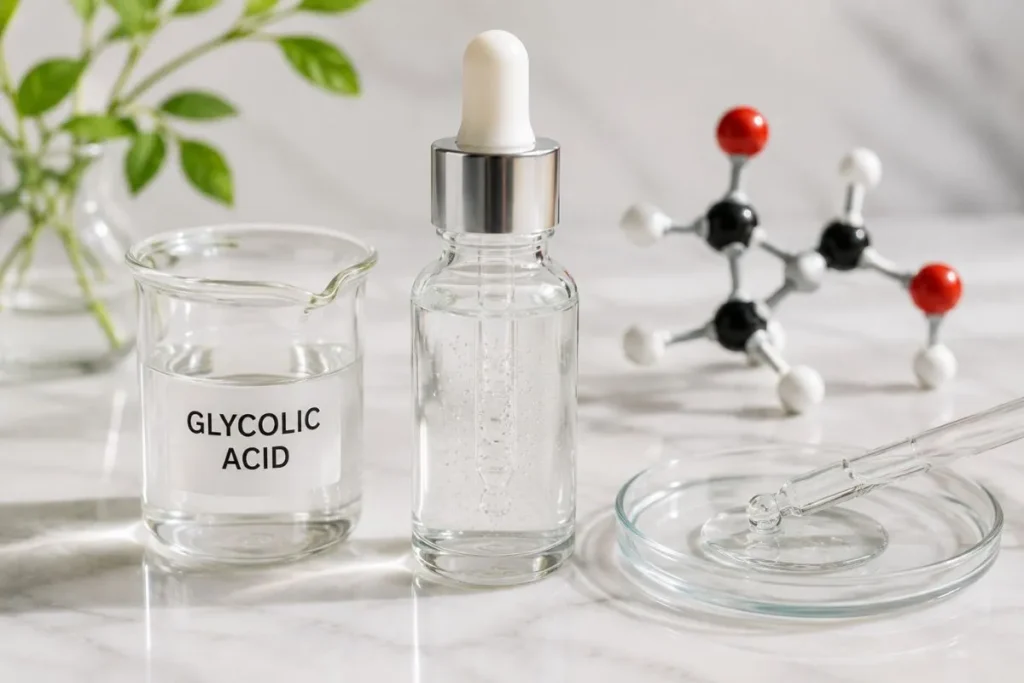
Glycolic acid for bacne is one of the most effective ingredients for improving skin texture and reducing post-acne marks.
It gently dissolves dead skin cells while encouraging healthy skin renewal.
With regular use, glycolic acid can help your skin feel smoother and improve the appearance of discoloration left behind by previous breakouts.
Salicylic Acid Leave-On Exfoliants
Leave-on salicylic acid treatments continue working long after application.
Because they remain on the skin, they provide ongoing pore-clearing benefits and can become an important part of your daily bacne skin care routine for clear skin.
Remember that exfoliation should only be done a few times each week. Using exfoliating products every day can irritate your skin instead of helping it.
Best Moisturizer
One of the biggest skincare mistakes is avoiding moisturizer because you have acne.
Healthy skin still needs hydration.
A good body moisturizer for acne-prone skin keeps your skin barrier strong, reduces irritation, and helps your acne treatments work more effectively.
Look for moisturizers labeled as non-comedogenic, oil-free, and lightweight.
Ingredients to Look For
Some of the best moisturizing ingredients include:
Ceramides help repair and strengthen the skin barrier.
Glycerin attracts water to your skin and improves hydration.
Niacinamide helps reduce redness while balancing oil production.
Hyaluronic acid provides lightweight hydration without clogging pores.
Choosing a quality non-comedogenic body lotion allows your skin to stay hydrated without increasing the risk of new breakouts.
Best Spot Treatment
Sometimes a single pimple appears even when you’re following a consistent routine.
That’s where spot treatments become useful.
Rather than applying strong acne medication across your entire back, spot treatments allow you to focus on active breakouts.
Products containing benzoyl peroxide, sulfur, or salicylic acid are commonly used to reduce inflammation and help pimples heal faster.
If you’re dealing with occasional breakouts instead of widespread acne, adding a spot treatment to your back acne skin care routine may be all you need.
Should You Use Every Product at Once?
Not necessarily.
Many people think using multiple acne products together will speed up results.
Unfortunately, combining too many active ingredients at once often causes dryness, peeling, and irritation.
Instead, introduce new products gradually.
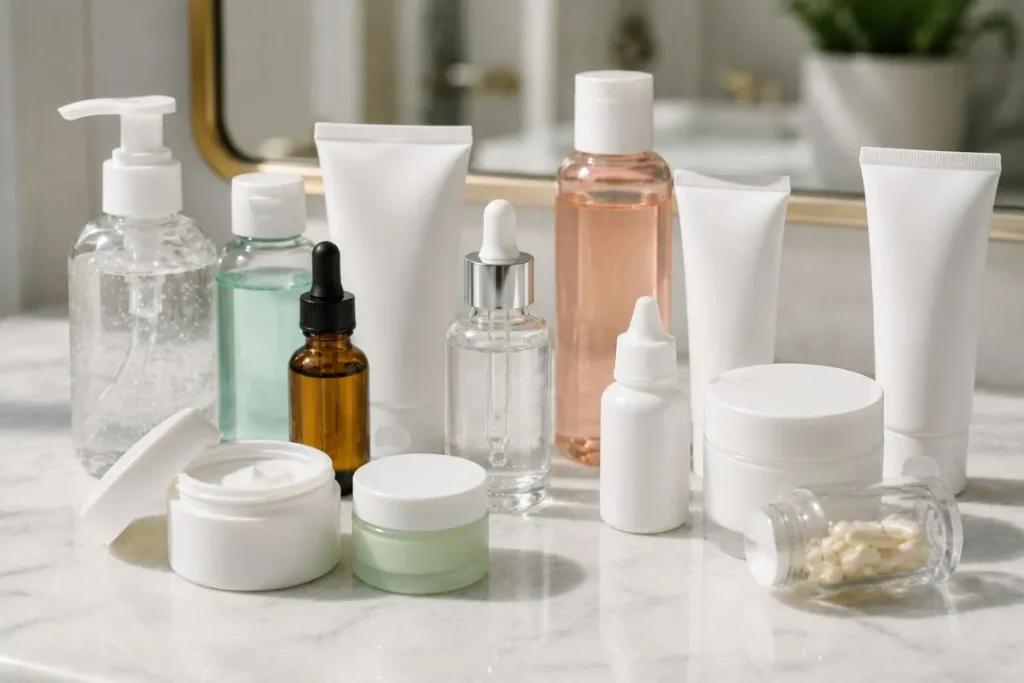
Start with a cleanser.
Once your skin adjusts, add an exfoliant.
Then include a moisturizer and treatment products if needed.
This slower approach allows your skin to adapt while helping you identify which products work best for your individual needs.
How to Choose Products Based on Your Skin Type
Your skin type plays an important role when selecting products.
If you have oily skin, lightweight gel-based products and salicylic acid cleansers usually work well.
If your skin is sensitive, choose fragrance-free formulas with calming ingredients like niacinamide and ceramides.
People with dry skin should prioritize gentle cleansers and hydrating moisturizers to prevent excessive dryness while treating acne.
Combination skin often benefits from balancing products that control oil without over-drying certain areas.
Choosing products that match your skin type makes your skincare routine for bacne much more effective.
Product Ingredients Worth Looking For
Whenever you’re shopping for back acne products, check the ingredient list instead of relying only on marketing claims.
Some of the most effective ingredients include salicylic acid for unclogging pores, benzoyl peroxide for reducing acne-causing bacteria, glycolic acid for improving skin texture, niacinamide for calming inflammation, ceramides for strengthening the skin barrier, hyaluronic acid for hydration, sulfur for reducing excess oil, and tea tree oil for its natural antibacterial properties.
Products containing one or more of these ingredients are often excellent choices for a body acne skin care routine.
Mistakes That Make Bacne Worse
Many people think they need stronger products or more steps to clear bacne. In reality, small everyday mistakes are often the biggest reason why a bacne skin care routine fails. Even the best products won’t give good results if your daily habits keep irritating your skin.
Let’s look at the most common mistakes and how you can avoid them.
Scrubbing Too Hard
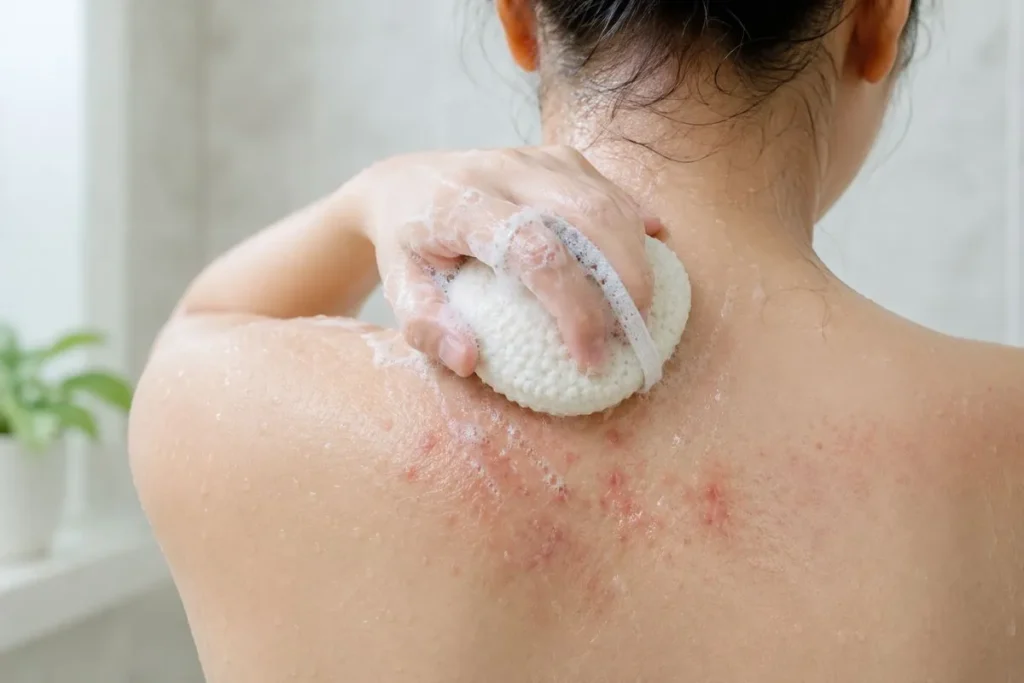
Scrubbing your back aggressively won’t remove acne faster. It only irritates the skin and increases redness. Instead, use a gentle cleanser and let acne-fighting ingredients do the work. A gentle body acne routine is always more effective than harsh scrubbing.
Skipping Moisturizer
Many people believe moisturizer causes more pimples. That’s a myth. Acne treatments can dry out your skin, and skipping moisturizer may actually increase oil production. Always use a lightweight non-comedogenic body lotion to keep your skin balanced.
Wearing Tight Clothes
Tight shirts, sports bras, and fitted workout clothes trap sweat and create friction. This can clog pores and trigger new breakouts. Choose loose, breathable fabrics whenever possible to support your back acne skin care routine.
Picking or Popping Pimples
It can be tempting to squeeze pimples, but doing so pushes bacteria deeper into the skin. This increases inflammation and raises the risk of acne scars. Let your treatment products heal the blemishes naturally.
Staying in Sweaty Clothes
After a workout, don’t stay in sweaty clothes for hours. Sweat, oil, and bacteria sitting on your skin can lead to clogged pores. Shower as soon as you can and change into clean clothes. A proper shower routine for bacne helps prevent future breakouts.
Using Heavy Body Lotions
Thick creams and oily lotions may block pores, especially if they’re not made for acne-prone skin. Choose lightweight products labeled as non-comedogenic. The right body moisturizer for acne-prone skin keeps your skin hydrated without making bacne worse.
Ignoring Workout Hygiene
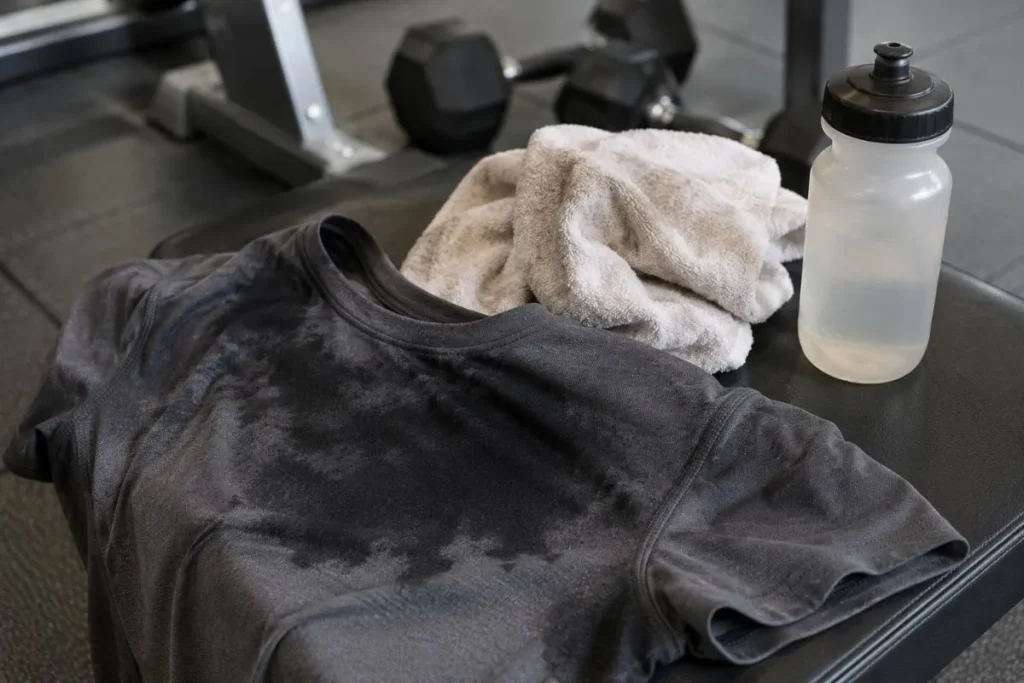
Gym equipment, towels, and workout clothing collect sweat and bacteria. If you don’t clean them regularly, they can contribute to recurring breakouts. Always use a clean towel, wipe down equipment when possible, and wash your gym clothes after every workout.
Using Too Many Acne Products at Once
Applying several acne treatments together won’t clear your skin overnight. In fact, mixing too many active ingredients can cause dryness, peeling, and irritation. Introduce one product at a time and give it a few weeks to show results.
Inconsistent Skincare Routine
Using your products only when you remember won’t give lasting results. A consistent daily bacne skin care routine for clear skin is much more effective than using strong treatments occasionally. Stick to your routine every day, even when your skin starts improving.
Expecting Overnight Results
Bacne doesn’t disappear in a few days. Most people notice visible improvement after several weeks of consistent care. Be patient, trust your bacne skin care routine, and avoid switching products too quickly. Consistency is what delivers long-term, healthy-looking skin.
Frequently Asked Questions (FAQs)
What is the best bacne skin care routine?
The best bacne skin care routine includes cleansing your back with an acne-friendly body wash, exfoliating two to three times a week, applying acne treatment products, moisturizing with a non-comedogenic lotion, and using sunscreen whenever your back is exposed to the sun. Consistency is the key to seeing long-term results.
How do I get rid of bacne quickly?
There’s no overnight cure for bacne. The fastest way to improve your skin is by following a consistent back acne skin care routine, showering after sweating, wearing breathable clothing, and using products with ingredients like salicylic acid or benzoyl peroxide. Most people begin seeing improvements within four to eight weeks.
Can moisturizer make bacne worse?
No, as long as you choose the right moisturizer. A lightweight body moisturizer for acne-prone skin or a non-comedogenic lotion hydrates your skin without clogging pores. Skipping moisturizer may actually cause your skin to produce more oil.
Should I exfoliate bacne every day?
No. Daily exfoliation can irritate your skin and damage its natural barrier. Most people get the best results by exfoliating two or three times a week with a gentle chemical exfoliant like glycolic acid or salicylic acid.
Which ingredient is best for back acne?
There isn’t one ingredient that’s best for everyone. Salicylic acid is excellent for unclogging pores, while benzoyl peroxide works well for inflamed acne. Glycolic acid helps improve skin texture and fade acne marks, making it a great addition to a body acne skin care routine.
Can diet cause bacne?
Diet alone doesn’t usually cause bacne, but it may trigger breakouts in some people. Foods high in sugar or dairy can affect certain individuals. Eating a balanced diet, drinking enough water, and maintaining a healthy lifestyle can support your bacne skin care routine.
How long does it take for bacne to clear?
Most people notice visible improvement after four to eight weeks of following a consistent daily bacne skin care routine for clear skin. More severe acne may take several months and sometimes requires treatment from a dermatologist.
Is salicylic acid or benzoyl peroxide better for bacne?
Both ingredients are highly effective, but they work differently. Salicylic acid removes excess oil and unclogs pores, making it ideal for blackheads and whiteheads.
Benzoyl peroxide targets acne-causing bacteria and is often better for red, inflamed pimples. Many people achieve the best results by using both ingredients at different times in their skincare routine for bacne.
Can I use my facial acne products on my back?
Yes, but it’s not always the most practical option. Since the skin on your back is thicker and covers a larger area, products specifically designed for body acne are often more effective and economical. A dedicated body acne skin care routine usually delivers better results.
When should I see a dermatologist for bacne?
If your bacne is painful, leaves scars, keeps coming back, or doesn’t improve after eight to twelve weeks of consistent treatment, it’s a good idea to see a dermatologist. They can recommend stronger treatments or prescription medications based on your skin’s needs.
Conclusion:
Getting rid of back acne doesn’t have to be confusing. The key isn’t buying the most expensive products or trying every skincare trend you see online. What really makes a difference is following a simple, consistent bacne skin care routine that matches your skin’s needs.
Start with a gentle acne-friendly cleanser, exfoliate a few times each week, use targeted treatment products, moisturize with a lightweight non-comedogenic lotion, and protect your skin from sun damage.
At the same time, don’t overlook healthy daily habits like showering after workouts, wearing breathable clothing, changing sweaty clothes quickly, and avoiding the temptation to pick at your pimples.
Remember that clear skin doesn’t happen overnight. Most people begin seeing noticeable improvements after several weeks of sticking to a regular back acne skin care routine. The more consistent you are, the better your chances of preventing future breakouts and reducing acne scars.
If you’ve followed a body acne skin care routine for a few months without seeing improvement, don’t hesitate to consult a dermatologist. Professional advice can help identify underlying causes and provide treatments that over-the-counter products can’t.
With the right products, healthy habits, and a little patience, smoother and healthier skin is absolutely possible. Stay committed to your skincare routine for bacne, trust the process, and give your skin the time it needs to heal.
We hope this guide has helped you understand how to build the best bacne skin care routine for long-term results. If you found it useful, consider sharing it with someone who struggles with back acne, and explore our other skincare guides for more expert tips on achieving healthy, glowing skin.

Name: Shahzadi
I’m passionate about skincare, beauty, and simple self-care. I share practical skincare tips, beauty routines, product insights, and easy ways to build healthy-looking, glowing skin.
My goal is to make beauty and skincare easier to understand, so you can discover routines that fit your everyday life.


