

Have you ever wondered if applying purple shampoo to dry hair can make your blonde or silver hair look brighter? You’re not alone. Many people try this method because they want stronger toning results without spending extra time at the salon.
The short answer is yes, can you put prple shampoo on dry hair, but it isn’t always the best option. Dry hair may absorb the purple pigments differently from wet hair, which can sometimes lead to uneven color or unwanted purple patches. The results also depend on your hair’s condition, porosity, and the formula you’re using.
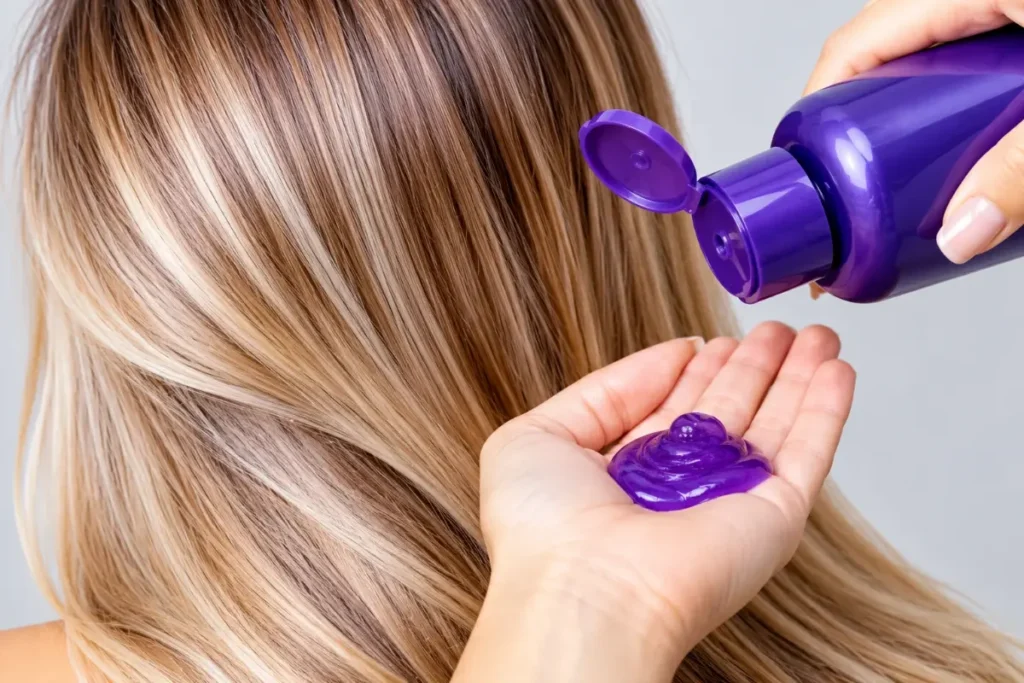
Understanding purple shampoo dry hair application can help you decide whether this method is right for your hair. Let’s look at how it works, how to apply it safely, and when wet application is a better choice.
Can You Put Purple Shampoo on Dry Hair?
Yes, you can apply purple shampoo to dry hair, but you should be careful about how long you leave it on. Some purple shampoos can be used on dry hair as a pre-toning treatment, while others are specifically formulated for wet application.
Purple shampoo contains violet pigments that help neutralize unwanted yellow tones in blonde, gray, silver, and highlighted hair. Since purple sits opposite yellow on the color wheel, these pigments can make brassy-looking hair appear cooler and more balanced.
When you apply purple shampoo to dry hair, the product may deposit more noticeable pigment in certain areas. This can be helpful when your hair needs extra toning, but it can also create uneven results if you use too much.
Always check the product instructions before trying this method. Not every formula is designed for dry application.
How Does Purple Shampoo Work on Dry Hair?
Purple shampoo works by depositing violet-colored pigments onto the hair. These pigments help counteract yellow undertones that can develop after bleaching, highlighting, coloring, or regular exposure to environmental factors.
When your hair is dry, it doesn’t have the added water that normally helps distribute shampoo throughout the strands. As a result, some sections may receive more concentrated product than others.

This is especially important if your hair has different levels of porosity. Damaged, bleached, or chemically treated areas may absorb color more quickly than healthier sections.
For example, if your blonde ends are dry and porous while your roots are in better condition, the ends might pick up more purple pigment. This can leave your hair looking uneven instead of giving it a fresh, cool-toned appearance.
Benefits of Purple Shampoo Dry Hair Application
Applying purple shampoo to dry hair has a few potential advantages, especially for people who struggle with stubborn brassiness.
More Concentrated Pigment Contact
Without water diluting the shampoo, the pigments can have more direct contact with the hair. Depending on the formula, this may help target areas that need additional toning.
However, stronger pigment contact doesn’t automatically mean better results. Too much pigment can leave unwanted violet tones.
Helps Target Brassy Areas
If certain sections of your blonde hair look more yellow than others, carefully applying purple shampoo to those areas may help you target them.
You should still distribute the product evenly and follow the manufacturer’s instructions.
Convenient for Some Hair Routines
Some people prefer applying products before getting into the shower. Dry application may fit into that routine, provided the shampoo specifically allows it.
Remember that convenience shouldn’t come at the expense of healthy-looking hair.
How to Apply Purple Shampoo to Dry Hair Safely
If your purple shampoo is suitable for dry application, follow these steps to reduce the risk of uneven toning.
Check Your Hair Condition
Start by checking whether your hair is healthy, dry, damaged, or highly porous. Bleached and chemically treated hair can absorb purple pigments more quickly.
If your hair is very damaged or already has uneven purple staining, avoid experimenting with dry application.
Read the Product Instructions
Check the bottle to see whether the manufacturer recommends applying the shampoo to dry hair.
Some products are designed to work on wet hair only. Using them differently may produce unpredictable results.
Divide Your Hair Into Sections
Separate your hair into manageable sections so you can distribute the shampoo more evenly.
This is particularly helpful if you have thick, long, highlighted, or naturally curly hair.
Apply a Small Amount
If dry application is approved, begin with a small amount of shampoo. Spread it carefully through the areas that need toning.
Avoid applying a thick layer to your entire head. Pay attention to dry or damaged ends because they may absorb pigment more quickly.
Follow the Recommended Processing Time
Never assume that dry hair requires a longer processing time. In fact, concentrated pigment can sometimes create unwanted color faster.
Follow the instructions on your particular product rather than leaving it on for an extended period.
Rinse Thoroughly
Rinse your hair with lukewarm water until the shampoo is completely removed.
Follow with a moisturizing conditioner to help keep your hair soft and manageable.
Is It Better to Apply Purple Shampoo to Wet or Dry Hair?
For most people, applying purple shampoo to wet hair is the easier and more predictable method.
Wet hair helps the shampoo spread across the strands, making it easier to achieve more even coverage. Dry application may produce stronger pigment contact in certain areas, but it also increases the possibility of uneven results.
Here is a simple comparison:
| Feature | Wet Hair Application | Dry Hair Application |
|---|---|---|
| Product distribution | Usually more even | Can be uneven |
| Pigment contact | More diluted | More concentrated |
| Ease of application | Easier for most people | Requires extra care |
| Risk of purple patches | Generally lower | Can be higher |
| Best for | Regular toning | Specific approved formulas |
If you’re new to purple shampoo, start with wet application. It gives you more control and makes it easier to monitor the toning process.
What Happens If You Leave Purple Shampoo on Dry Hair Too Long?
Leaving purple shampoo on dry hair longer than recommended can cause unwanted color deposits.
Your hair may develop a purple, lavender, or slightly grayish appearance, particularly if it is very light or porous.
You might also notice that some sections look more purple than others. This usually happens when the product isn’t distributed evenly or certain areas absorb pigments more quickly.

Purple shampoo isn’t a permanent hair dye, so unwanted staining generally fades with subsequent washing. However, stubborn deposits may take several washes to disappear.
If your hair develops an unwanted purple tint, stop using the shampoo until the color fades. Use a gentle regular shampoo and a moisturizing conditioner. Avoid harsh cleansing methods that could further dry out bleached hair.
Which Hair Types Can Benefit From Purple Shampoo?
Purple shampoo isn’t necessary for every hair color. It works best on hair with unwanted yellow or warm undertones.
Blonde Hair
Blonde hair can develop yellow or brassy tones after coloring, bleaching, and repeated washing. Purple shampoo helps neutralize those unwanted tones and maintain a cooler blonde appearance.
Bleached Hair
Bleached hair often needs extra toning because the lightening process can reveal warm underlying pigments. Purple shampoo can help maintain a cooler shade between salon appointments.
However, bleached hair is often more porous, so use the product carefully.
Gray and Silver Hair
Gray and silver hair can sometimes develop yellow discoloration. Purple shampoo helps counteract these warm tones and keep the color looking brighter and cooler.
Highlighted Hair
If you have blonde highlights mixed with darker hair, purple shampoo can help maintain the cooler appearance of the lighter sections.
Apply it according to the product instructions to avoid unnecessary pigment deposits on areas that don’t need toning.
Common Mistakes to Avoid When Using Purple Shampoo on Dry Hair
Dry application requires a little extra attention. Avoid these common mistakes if you want more balanced toning results.
Using too much shampoo: A thick layer doesn’t guarantee better toning. Excessive product can leave noticeable purple deposits.
Ignoring product instructions: Not every purple shampoo is suitable for dry application. Always check the label first.
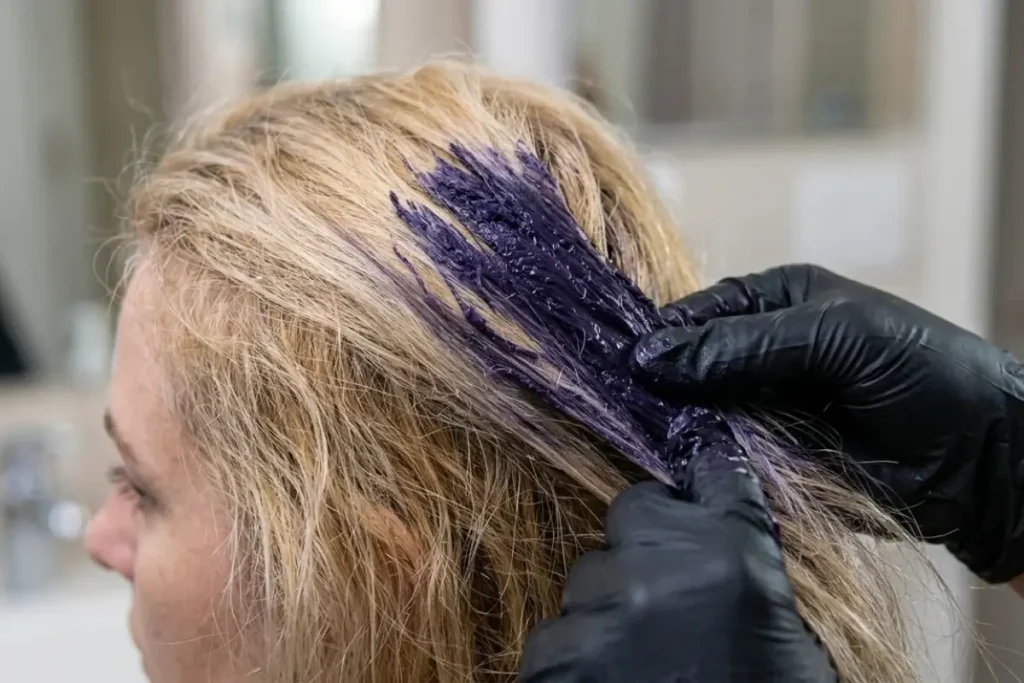
Leaving it on for too long: Longer processing doesn’t necessarily produce better results. It may leave your hair with unwanted violet tones.
Applying unevenly: Missing sections or concentrating too much product on the ends can create patchy results.
Using it too frequently: Purple shampoo is a toning product, not necessarily an everyday cleanser. Overuse can leave hair looking dull or overly cool.
Skipping conditioner: Bleached and color-treated hair may already feel dry. Conditioning after shampooing helps maintain softness and manageability.
How Often Should You Use Purple Shampoo?
How often you should use purple shampoo depends on your hair color, condition, and how quickly unwanted yellow tones return.
Some people only need it once a week, while others may use it less frequently. Your product’s instructions should guide your routine.
If your blonde hair looks slightly yellow, you may not need to use purple shampoo every time you wash it.
Pay attention to how your hair responds. If it starts looking too cool, dull, lavender, or purple, reduce how often you use the product.
You can alternate purple shampoo with a gentle, moisturizing shampoo to avoid unnecessary pigment buildup.
Purple Shampoo Dry Hair Application: Tips for Better Results
A few simple precautions can make your toning routine easier and help prevent unwanted color changes.
Choose a purple shampoo that matches your hair’s needs. Some formulas contain stronger violet pigments than others, so check the product description and instructions.
If you’re unsure how your hair will respond, test the product on a small, less noticeable section first. This helps you see how quickly your hair picks up the pigment.
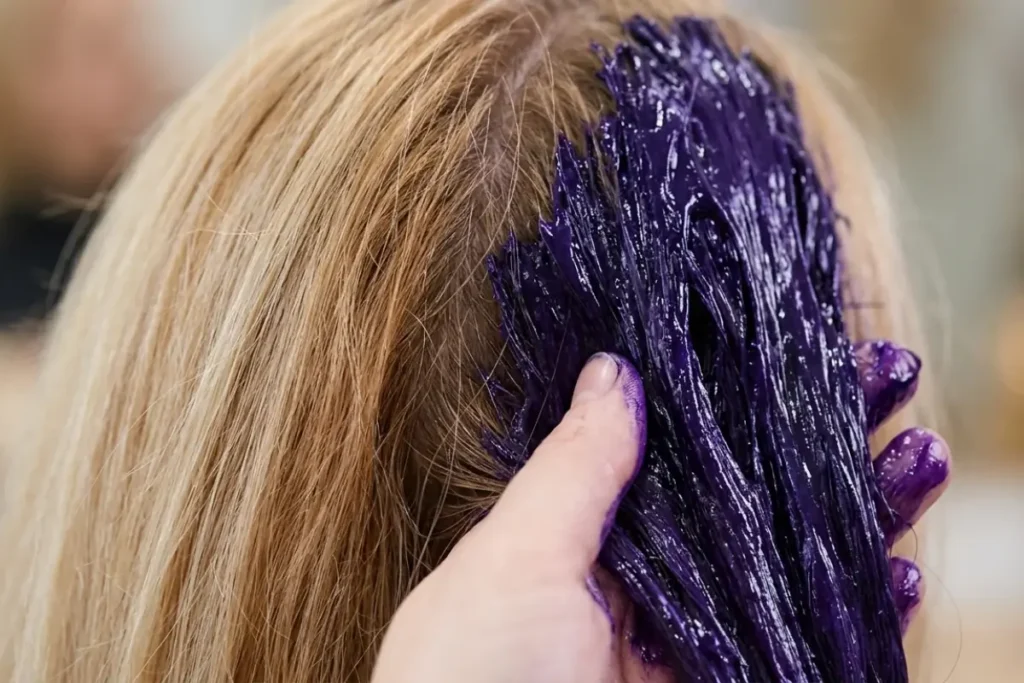
Avoid combining multiple purple toning products during the same wash unless their instructions specifically recommend it.
Most importantly, remember that purple shampoo maintains tone rather than lightening hair. If your hair is noticeably orange rather than yellow, a blue-based toning product may be more appropriate.
Frequently Asked Questions
Can purple shampoo be used on dry hair?
Yes, purple shampoo can be used on dry hair if the manufacturer allows it. However, dry application may result in stronger or uneven pigment deposits, especially on porous or bleached hair.
Should I wet my hair before applying purple shampoo?
For most purple shampoos, yes. Wet hair makes it easier to distribute the product evenly and reduces the risk of concentrated purple patches.
Does purple shampoo work better on dry or wet hair?
Wet application is generally better for regular toning because it provides more even coverage. Dry application may suit certain formulas, but it requires extra care.
Can I put purple shampoo on dry hair overnight?
No. You should not leave purple shampoo on your hair overnight. Extended contact can cause unwanted purple staining and irritation from prolonged product exposure.
Can purple shampoo turn blonde hair purple?
Yes. If your hair absorbs too much violet pigment, it can develop a purple or lavender tint. This is more likely when the hair is very light, porous, or damaged.
Can I use purple shampoo on dry, damaged hair?
You should be cautious. Dry and damaged hair can absorb pigment unevenly. Use a formula according to its instructions, and focus on maintaining moisture and hair condition.
Does purple shampoo lighten your hair?
No. Purple shampoo does not bleach or lighten your natural hair color. It deposits violet pigments to neutralize unwanted yellow tones and make blonde or silver hair appear cooler.
How long should I leave purple shampoo on my hair?
Follow the timing instructions on the product label. Processing times vary between formulas, and leaving the shampoo on longer doesn’t guarantee better results.
Can I apply purple shampoo to dry roots only?
You can target specific areas if your product allows dry application. However, make sure the product is distributed evenly and avoid leaving concentrated pigment in one spot.
Should I condition my hair after using purple shampoo?
Yes. Applying conditioner after rinsing helps keep your hair soft and manageable, particularly if it is bleached, highlighted, or naturally dry.
Conclusion:
Purple shampoo can be applied to dry hair, but that doesn’t mean it’s the right method for everyone. While some formulas allow dry application, others work best on wet hair.
If you have blonde, silver, gray, or highlighted hair, purple shampoo can help control unwanted yellow tones and maintain a cooler appearance. However, applying too much product or leaving it on for too long can create uneven purple deposits.
For the safest and most predictable results, follow your shampoo’s instructions and start with wet application unless the manufacturer specifically recommends using it on dry hair. A little care can help you maintain fresh-looking color without putting unnecessary stress on your hair.

Name: Shahzadi
I’m passionate about skincare, beauty, and simple self-care. I share practical skincare tips, beauty routines, product insights, and easy ways to build healthy-looking, glowing skin.
My goal is to make beauty and skincare easier to understand, so you can discover routines that fit your everyday life.


Pingback: 8+How To Use Purple Shampoo: Powerful Tips For Brighter Beautiful Blonde Hair
Pingback: 15+ What Is Purple Shampoo :Powerful Secrets For Brighter Beautiful Blonde Hair