

Many individuals assume that if their hair feels dry or frizzy, they automatically have high porosity hair. But that is not always true. Hair dryness can also come from heat styling, harsh shampoos, weather, or using the wrong products.
Learning how to check porosity of hair helps you understand how your hair absorbs and retains moisture, so you can choose a hair care routine that actually suits its needs.
In this guide, you’ll discover simple ways to identify your hair porosity, understand the differences between low, medium, and high porosity hair, and avoid common testing mistakes.
You’ll also learn how to recognize your hair’s needs and choose suitable products without wasting money on things that may not work for you.
Throughout this article, you’ll find recommended hair care products that you can explore and purchase if they match your hair type and budget.
Whether your hair is straight, wavy, or curly, understanding your hair porosity can help you make smarter choices for softer, healthier-looking hair.
What Is Hair Porosity and Why Does It Matter?
What Does Hair Porosity Mean?
Hair porosity refers to how easily your hair absorbs moisture and how well it holds onto that moisture. Your hair has an outer protective layer called the cuticle, which consists of tiny overlapping scales.
The condition and structure of this layer affect how water and hair care products interact with each strand.
When you understand your hair porosity, you can make better decisions about shampoo, conditioner, leave-in treatments, and deep conditioning products. For example, some hair takes longer to become fully wet, while other hair absorbs water quickly but may struggle to retain moisture.
These differences can help you understand your hair’s behavior and build a more suitable hair care routine.
What Are the Three Main Hair Porosity Levels?
Hair porosity is generally grouped into three levels: low, medium, and high. Each level describes how your hair tends to absorb and retain moisture.
Low porosity hair has a cuticle structure that makes it harder for water and some products to penetrate quickly. This hair may take longer to become wet, and heavy products can build up on the strands. Lightweight conditioners and gentle cleansing may help keep it manageable.

Medium porosity hair generally absorbs and retains moisture more easily. It may feel soft and manageable when cared for properly. However, excessive heat styling, chemical treatments, and poor hair care habits can still cause damage.
High porosity hair allows moisture to enter more easily, but it may also lose moisture quickly. This can happen naturally or because of bleaching, chemical treatments, and heat damage. Such hair may benefit from suitable conditioning products and gentle handling to help reduce dryness and breakage.
Keep in mind that these are general patterns, not strict rules. Your hair can show a mix of characteristics, especially if the roots are healthier than the ends.
How Does Hair Porosity Affect Your Hair Care Routine?
Your hair porosity can influence how your hair responds to water, conditioners, styling products, and moisturizing treatments. Choosing products based on these responses can make your routine simpler and more effective.
For example, if you have low porosity hair, using too many heavy oils, butters, or creams may leave your hair feeling coated. A lightweight conditioner and occasional clarifying wash may work better.
If you have high porosity hair, a good conditioner or leave-in product may help improve softness, reduce tangling, and support moisture retention.
Medium porosity hair often responds well to a balanced routine that includes gentle cleansing, regular conditioning, and heat protection. However, hair porosity alone does not determine which product will work best.
Your scalp condition, hair thickness, curl pattern, damage level, and personal preferences also matter.
Understanding these differences can help you avoid buying products simply because they are popular. Instead, pay attention to how your hair feels after washing, how quickly it dries, and whether it stays soft between washes.
How to Check Porosity of Hair at Home: Simple Methods
Many people think they need a special hair porosity kit or a complicated salon test to understand their hair. The truth is that you can learn useful things about your hair at home without spending money on testing products.
The key is to observe how your hair behaves under normal conditions and avoid drawing conclusions from a single sign. These seven methods will help you understand your hair’s moisture needs and make more informed decisions about your hair care routine.
Try the Hair Float Test With Water
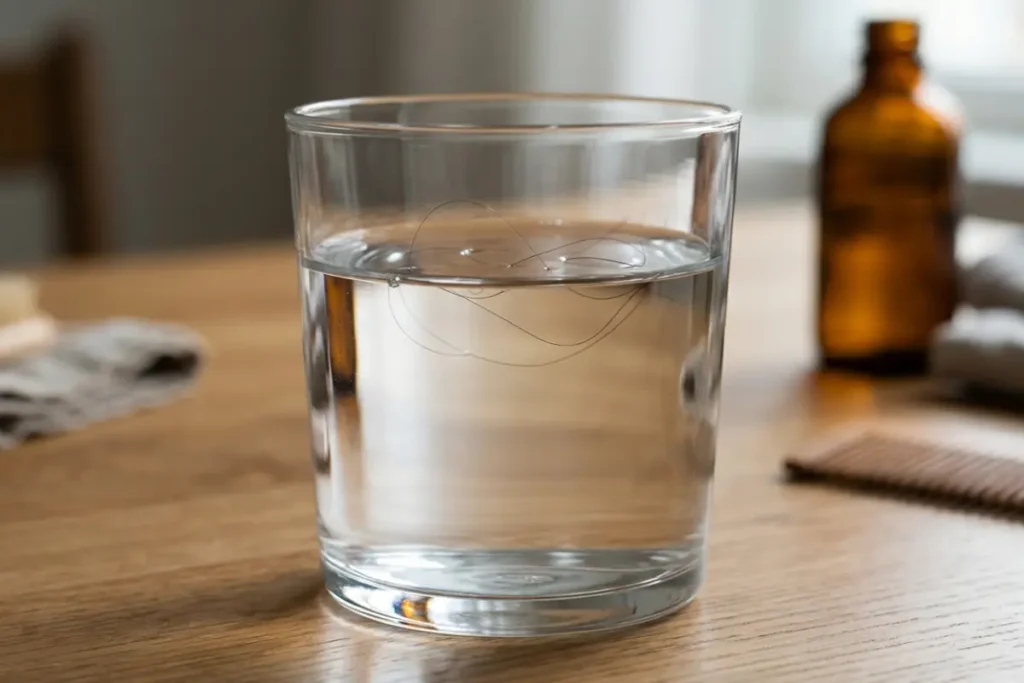
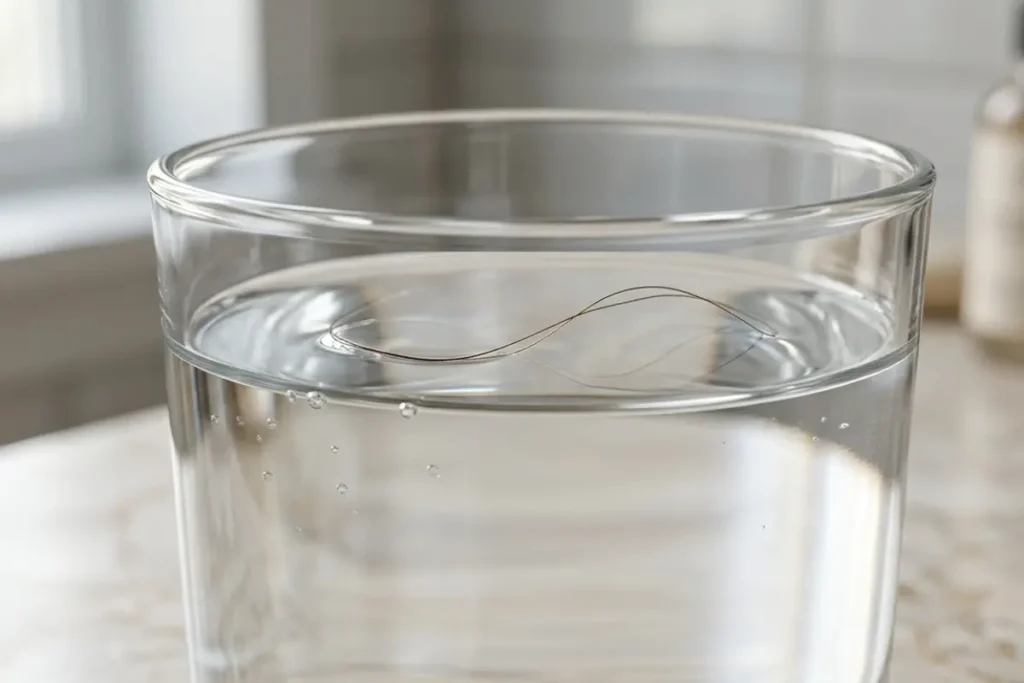
The hair float test is a popular home method for checking hair porosity. It involves placing a strand of hair in water and observing whether it floats or sinks. Although this test is easy to perform, it cannot reliably confirm your hair porosity on its own.
To try it, collect a clean strand of shed hair from your brush. Remove any visible product residue, fill a clear glass with room-temperature water, and gently place the strand on the surface. Leave it undisturbed for a few minutes and watch what happens.
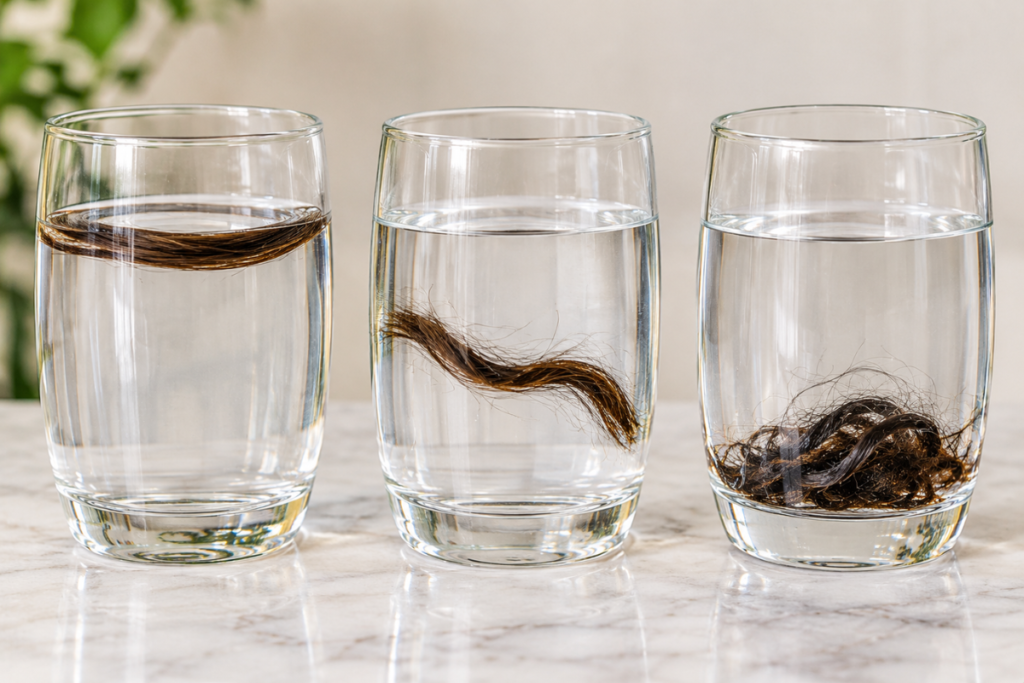
People often associate floating hair with low porosity, a strand suspended in the water with medium porosity, and sinking hair with high porosity. However, these interpretations are not dependable rules.
Oils, styling products, trapped air, and water surface tension can all affect the result. Even a clean strand may behave differently depending on its structure and condition.
If you’re wondering how to test hair porosity with water, you can try this experiment out of curiosity. Just don’t choose your entire hair care routine based on whether one strand floats or sinks.
Your hair’s behavior during washing and conditioning can provide more useful clues when considered together.
Check How Quickly Your Hair Absorbs Water
Another way to learn how to determine your hair porosity is to notice how your hair responds when you wash it. This gives you a chance to observe your own strands rather than relying on a single strand in a glass.
During your next wash, wet your hair with lukewarm water. Notice whether water spreads through your hair easily or whether you need extra time to get it thoroughly wet. Avoid rubbing or pulling your strands while checking.
Low porosity hair may take longer to become fully wet. High porosity hair may absorb water more readily, while medium porosity hair often wets without much difficulty.
Still, there are other things to consider. Thick strands, dense hair, and tightly packed curls can take longer to wet because water needs to reach more of the hair. Product buildup may also prevent water from spreading evenly.
For a better result, observe your hair over several washes. If it consistently takes extra time to become wet, that may be one clue of low porosity. If water enters quickly but your hair becomes rough or dry afterward, pay attention to moisture retention as well.
Observe How Long Your Hair Takes to Dry
Drying time can provide another clue when you’re learning how to check hair porosity at home. Some people notice that their hair remains damp for hours, while others find that it dries relatively quickly.
Low porosity hair may take longer to dry because water can be slower to enter and move through the strands. High porosity hair may absorb and release water more readily, although this does not mean every high porosity strand dries quickly.
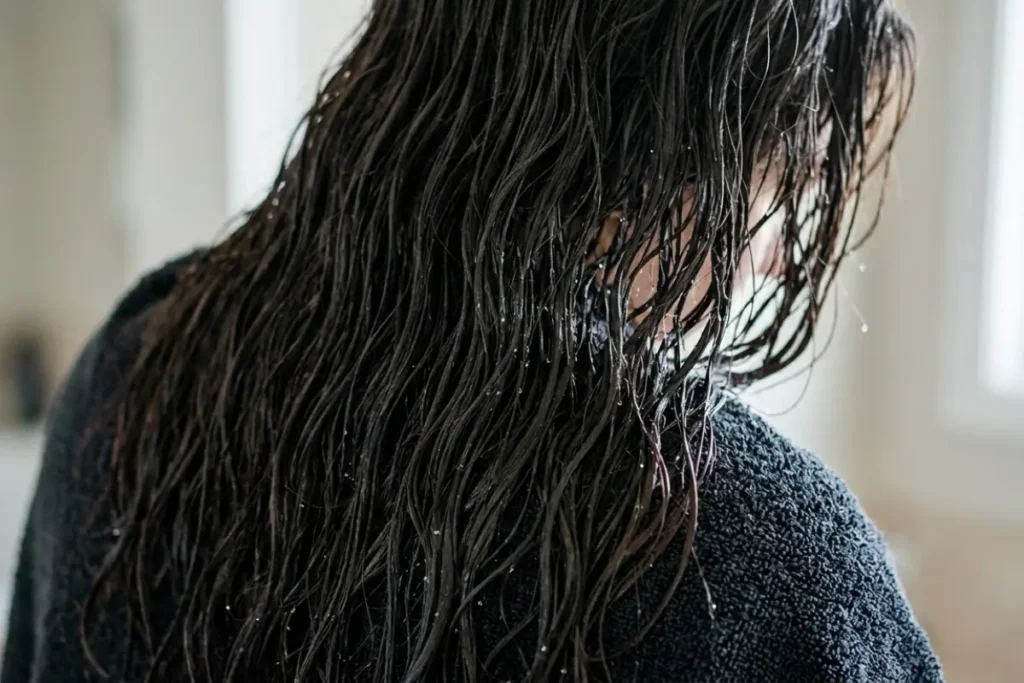
To observe your drying time, wash your hair as usual and gently squeeze out excess water using a soft towel or cotton T-shirt. Let it air-dry without a blow-dryer and note approximately how long it takes to dry completely.
Remember that hair length, density, individual strand thickness, humidity, and styling products can all affect drying time. Longer and denser hair may hold more water, while humid weather can slow evaporation. Try to compare your hair under similar conditions each time.
A single slow or fast drying session doesn’t tell you much by itself. Combine this observation with water absorption and the way your hair feels after conditioning.
Notice How Your Hair Responds to Conditioner
Your conditioner can reveal useful information about how your hair responds to different products. However, conditioner performance depends on its ingredients, your application technique, and your hair’s current condition, so it isn’t a direct porosity test.
After shampooing, apply conditioner to your hair lengths and ends according to the product instructions. Notice whether it spreads easily, helps with detangling, and leaves your strands feeling soft after rinsing.
If you have low porosity hair, a rich conditioner may sometimes leave a heavy or coated feeling, especially when you apply too much. A lightweight formula may be more comfortable for everyday use.
If you have high porosity hair, a richer conditioner or leave-in treatment may help improve softness and reduce tangling. Hair that has been bleached or heat-damaged may need extra conditioning to feel manageable.
Medium porosity hair often responds well to a balanced conditioner without requiring a complicated routine.
What if your conditioner doesn’t seem to work? Before assuming you have a particular hair porosity level, check whether you’re using too much product, rinsing properly, or choosing a formula that suits your hair.
The goal is to find products that leave your hair feeling clean, soft, and manageable rather than selecting products based only on a porosity label.
Check How Well Your Hair Retains Moisture
Absorbing water and retaining moisture are two different things. Hair can become wet easily but still feel dry after a short time. That’s why moisture retention is an important part of understanding your hair.
After washing and conditioning, notice how your hair feels once it has dried. Does it remain soft and flexible, or does it become rough, stiff, or difficult to detangle? Pay attention to these changes between washes, too.
High porosity hair, especially when damaged, may struggle to retain moisture. You might notice that your hair feels soft immediately after conditioning but becomes dry and tangled later.
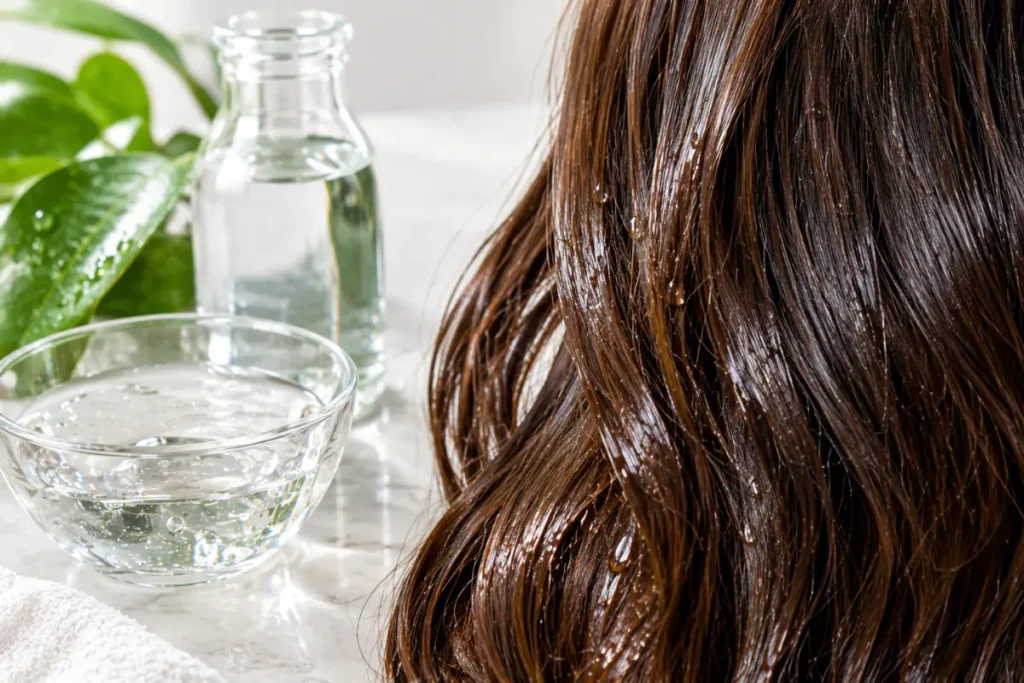
Low porosity hair can also feel dry, even if it retains moisture relatively well. Harsh cleansing products, product buildup, and insufficient conditioning can all affect how your hair feels.
To support moisture retention, use a conditioner suited to your hair, avoid excessive heat, and detangle gently. If your ends are severely damaged, a trim may help remove the roughest sections.
Don’t assume that every dry strand indicates high porosity. Instead, look at the pattern over time and consider whether your products, styling habits, or environment could be contributing to the problem.
How to Know If You Have Low, Medium, or High Porosity Hair
You don’t need to match every characteristic of one hair porosity level to understand your hair better. Some people notice signs of more than one level, especially when their roots are healthy but their ends have been exposed to heat or chemical treatments.
Use the following comparisons to identify the patterns that best describe your hair rather than treating them as strict diagnostic rules.
How to Identify Low Porosity Hair at Home
Low porosity hair often resists water absorption at first. Its cuticle structure can make it harder for water and certain ingredients to penetrate the strands quickly.
You may notice that your hair takes extra time to become thoroughly wet, heavy creams or oils leave a coated feeling, and styling products build up easily. Your hair may also take a long time to air-dry or feel weighed down when you use too much conditioner.
These signs may suggest low porosity, but they can also have other causes. For example, dense hair may take longer to wet and dry regardless of its porosity.
If you suspect you have low porosity hair, start with a simple routine. Choose a gentle shampoo and a lightweight conditioner that leaves your hair soft without making it feel greasy or coated. Apply products evenly and rinse thoroughly.
If buildup becomes a problem, an occasional clarifying shampoo may help. You can also follow the directions on your conditioner to get the intended results without leaving unnecessary residue on your hair.
You don’t need to force your hair to absorb products with excessive heat or complicated treatments. The aim is to find products that work comfortably with your hair’s natural behavior.
How to Identify Medium Porosity Hair Naturally
Medium porosity hair generally absorbs and retains moisture without major difficulty. It often responds well to regular cleansing and conditioning, although its needs can change with the weather, styling habits, and hair damage.
Your hair may become wet without much effort, conditioner may spread through your strands relatively easily, and your hair may remain manageable after washing. It may maintain a reasonable balance between softness and dryness without requiring excessive amounts of product.
These signs can help you understand your hair, but they don’t guarantee that you have medium porosity. Even healthy hair can become dry or frizzy because of unsuitable products or environmental conditions.
A balanced hair care routine is a good starting point. Use shampoo suited to your scalp, condition your lengths and ends, and protect your hair from excessive heat.
There’s no need to add several treatments just to maintain a particular porosity level. Focus on keeping your hair clean, manageable, and protected from avoidable damage.
How to Identify High Porosity Hair Naturally
High porosity hair allows water to enter more readily but may have difficulty retaining moisture. This can be a natural characteristic, although bleaching, chemical treatments, and excessive heat can also increase porosity by damaging the cuticle.
You may notice that your hair becomes wet quickly, dries relatively quickly under similar conditions, or feels rough and dry after washing. Frizz and tangling may occur frequently, your ends may feel more damaged than your roots, and your hair may break easily when handled roughly.
Not everyone with high porosity hair experiences all these signs. Quick drying, frizz, and breakage can also be affected by hair texture, density, weather, and styling practices.
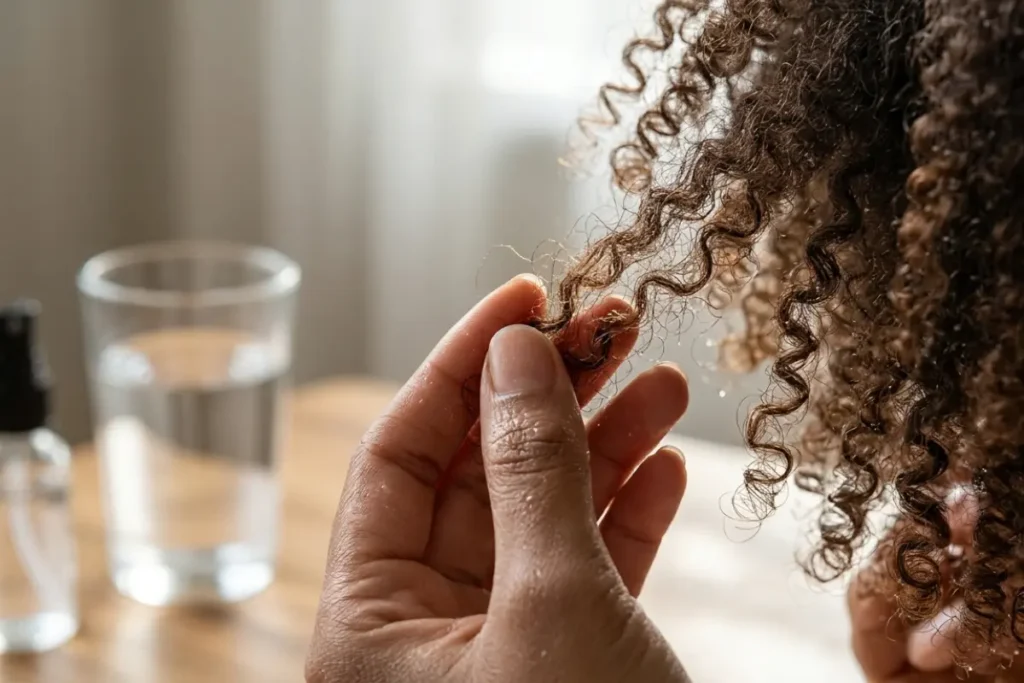
If your hair appears highly porous, focus on gentle handling and conditioning. A rinse-out conditioner, leave-in conditioner, or moisturizing treatment may improve softness and reduce tangling. Choose products according to how your hair responds rather than assuming that every product marketed for high porosity hair will suit you.
Limit unnecessary heat styling and handle wet hair carefully. If your strands have significant chemical damage, conditioning can improve their feel, but it cannot fully restore severely damaged hair to its original condition.
Hair Porosity Chart: Compare the Three Levels
This hair porosity chart gives you a quick way to compare common characteristics. Use it as a reference rather than a definitive test.
| Hair characteristic | Low porosity | Medium porosity | High porosity |
| Water absorption | Often slower | Usually moderate | Often quicker |
| Moisture retention | Can be good | Often balanced | May be reduced, especially if damaged |
| Drying time | May be longer | Varies | May be shorter |
| Product buildup | Heavy products may build up | Depends on product use | Buildup is still possible |
| Frizz and tangling | Possible | Possible | Common, especially with damage |
| Conditioning approach | Lightweight products may help | Balanced conditioning | Conditioning to improve softness and manageability |
Hair thickness, density, curl pattern, product buildup, and environmental conditions can all influence these observations. That’s why two people with the same porosity level may have different hair care needs.
You may also notice that your roots fit one column while your ends fit another. This is especially common when the ends have experienced more heat styling or chemical processing.
Rather than focusing only on a label, use the chart to decide what to investigate next. If your hair feels coated, try adjusting your product use. If it feels dry and tangles easily, review your conditioning and handling habits.
What Is the Easiest Way to Check Hair Porosity?
The easiest way to check hair porosity is to observe how your hair behaves during your normal washing and styling routine. You don’t need special equipment, and you don’t have to perform every available test.
Start by considering whether your hair becomes wet easily, how long it takes to air-dry under similar conditions, whether it remains soft after conditioning, whether heavy products leave buildup, and whether it frequently becomes rough, tangled, or frizzy.
Look for repeated patterns instead of relying on one observation. For example, hair that consistently resists getting wet and becomes weighed down by heavy products may show characteristics associated with low porosity.
Hair that wets readily but repeatedly feels rough and dry may have high porosity, particularly if it has been chemically treated. However, dryness can also result from damage or an unsuitable routine.
If your observations don’t clearly match one category, that’s fine. Hair porosity exists alongside other characteristics, and you don’t need a perfect label to make useful improvements to your hair care routine.
Frequently Asked Questions About Hair Porosity
How Can I Check My Hair Porosity at Home?
You can check your hair porosity at home by observing how your hair absorbs water, how long it takes to dry, and how it responds to conditioner. Low porosity hair may resist water at first, while high porosity hair may absorb water quickly but struggle to retain moisture.
Look for repeated patterns instead of relying on one test, because hair thickness, product buildup, and damage can affect the results.
What Is the Most Accurate Way to Test Hair Porosity?
There isn’t one simple home test that accurately determines hair porosity in every case. Observing your hair during washing, conditioning, and drying can provide useful clues.
The popular hair float test is not scientifically reliable enough to confirm your porosity level on its own. Consider several signs together, including moisture retention, product buildup, and your hair’s overall condition.
Can I Check Hair Porosity Without Water?
Yes, you can look for signs of hair porosity without performing a water test. Notice whether your hair becomes dry quickly, tangles easily, feels rough, or responds well to conditioning products. However, these signs can also result from heat damage, chemical treatments, weather, or unsuitable products. For a better understanding, combine these observations with how your hair behaves during your regular washing routine.
How Do I Know If I Have Low or High Porosity Hair?
Low porosity hair often takes longer to become fully wet and may feel weighed down by heavy products. High porosity hair may absorb water readily but struggle to retain moisture, especially when the cuticle is damaged.
Frizz, dryness, and drying time can offer additional clues, but none of these signs proves your porosity level by itself. Observe your hair over several washes before deciding which characteristics fit best.
Can Hair Porosity Change Over Time?
Yes, your hair’s porosity can change, particularly when the hair cuticle becomes damaged by bleaching, coloring, chemical treatments, or excessive heat styling.
Your roots may have different characteristics from your older ends because the ends have experienced more wear and tear. Gentle handling, suitable conditioning, and reduced heat exposure can help protect your hair from further damage, although severely damaged strands cannot be completely restored.
Does High Porosity Hair Mean My Hair Is Damaged?
Not necessarily. Some people naturally have hair that is more porous, while others develop higher porosity because of chemical processing or heat damage.
If your hair has become unusually rough, brittle, tangled, or prone to breakage, damage may be contributing to its condition. However, dryness alone does not confirm high porosity. Consider your styling habits and overall hair health when evaluating these signs.
How Often Should I Check My Hair Porosity?
You don’t need to test your hair porosity every week. Check your hair’s behavior when you change your routine, try new products, or notice a consistent change in its condition
. If your hair remains manageable and your products work well, there is usually no need to keep testing it. Focus on maintaining a routine that supports softness, strength, and healthy-looking hair.
Can I Have More Than One Hair Porosity Level?
Yes, different sections of your hair can behave differently. For example, your roots may be relatively healthy while your mid-lengths and ends have higher porosity because of heat styling, coloring, or environmental wear.
Hair texture, density, and product buildup can also create differences in how individual sections respond to water and conditioner. Adjust your hair care routine according to the needs of each section rather than assuming every strand is identical.
Conclusion:
Learning how to check porosity of hair can help you understand why your hair absorbs moisture, responds to conditioner, and behaves differently with certain products.
Whether you have low, medium, or high porosity hair, the key is to observe how your strands respond to water, how long they take to dry, and how well they retain moisture. Remember that no single home test, including the popular hair float test, can confirm your porosity level on its own.
Once you understand your hair’s needs, you can build a simple hair care routine that works for you. Choose suitable shampoos, conditioners, and moisturizing products, avoid excessive heat styling, and handle your strands gently.
You can also explore the recommended hair care products throughout this guide to find options that fit your hair type and budget. With consistent care and a little patience, you’ll be better prepared to keep your hair soft, manageable, and healthy-looking.

Name: Shahzadi
I’m passionate about skincare, beauty, and simple self-care. I share practical skincare tips, beauty routines, product insights, and easy ways to build healthy-looking, glowing skin.
My goal is to make beauty and skincare easier to understand, so you can discover routines that fit your everyday life.


