
Many people believe that a vegan moisturizer is automatically the best choice for every skin type just because it is vegan.
That is not quite true. Vegan simply means the formula does not contain animal-derived ingredients; your skin still needs the right level of hydration, texture, and ingredients.
The best vegan moisturizer for dry skin may feel too rich on oily skin, while a lightweight formula may not give enough moisture to very dry skin.
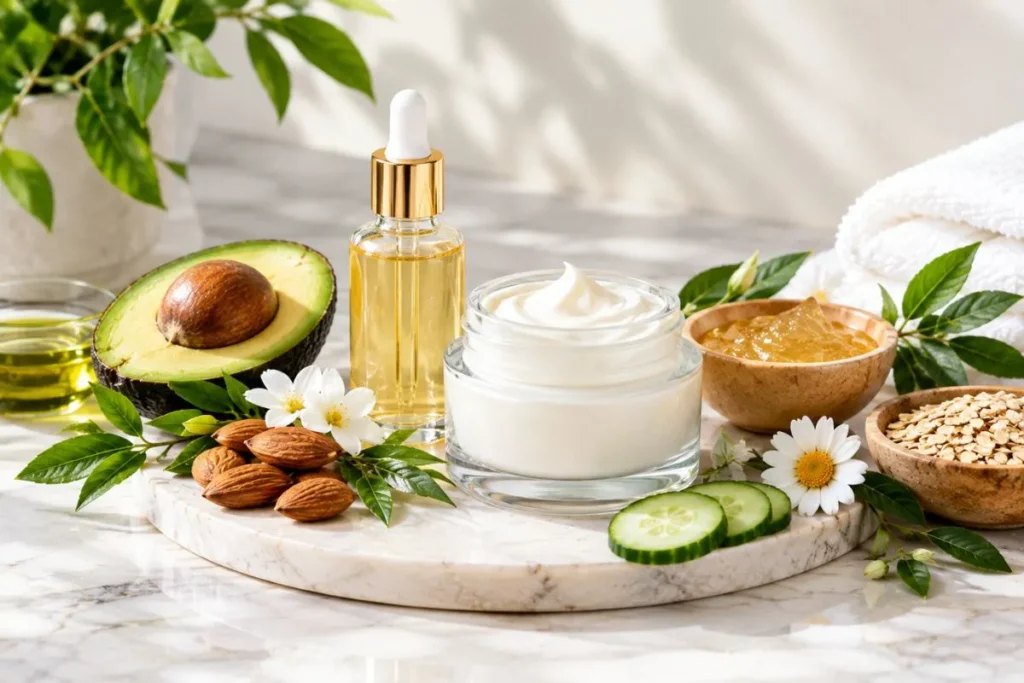
The good news is that finding a natural vegan moisturizer, plant-based moisturizer, or vegan face moisturizer does not have to be complicated.
In this guide, we’ll look at what makes these formulas different, how vegan skincare fits into a simple routine, and what to consider before choosing one.
Whether you want a best vegan moisturizer for dry skin, sensitive skin, or daily use, understanding the label can help you make a smarter choice.
What Is a Vegan Moisturizer?
A vegan moisturizer is a skincare product formulated without ingredients derived from animals. Instead, brands may use plant-based, synthetic, or mineral ingredients to create the moisturizing formula.
Common ingredients you may see include aloe vera, glycerin, hyaluronic acid, plant oils, shea butter, and squalane.
What Makes a Moisturizer Vegan?
The key point is the source of the ingredients, not simply whether the product looks natural or contains plants. A vegan face cream can contain ingredients made in a laboratory as long as they are not animal-derived.
This is why it is useful to read the product information instead of assuming that words such as “botanical” or “natural” automatically mean vegan.
If you are shopping for vegan skincare, look for a clear vegan claim from the brand and check the ingredient information when available.
Some shoppers also prefer a clean vegan moisturizer with a shorter or more familiar ingredient list, but clean beauty terms can vary between brands.
Your skin type should still guide the final choice.
Are Vegan Moisturizers Always Cruelty-Free?
Not necessarily. Vegan and cruelty-free describe two different things. A vegan moisturizer does not use animal-derived ingredients, while a cruelty-free moisturizer refers to animal testing practices.
So, if you specifically want a cruelty-free vegan moisturizer, check for both claims rather than assuming one guarantees the other. The same applies when shopping for cruelty-free vegan skincare. Looking at the brand’s own product information and certification details can help you understand exactly what you are buying.
Vegan vs. Natural vs. Organic Moisturizers
These terms can sound similar, but they are not interchangeable. A natural vegan moisturizer generally emphasizes ingredients or sourcing associated with nature, while an organic vegan moisturizer may use ingredients that meet particular organic standards.
“Vegan” focuses specifically on avoiding animal-derived ingredients.
For example, a plant-based face cream may contain several botanical ingredients, but that alone does not tell you whether it is organic or cruelty-free. Likewise, an organic vegan moisturizer may still contain ingredients that do not suit your particular skin type.
That is why the smartest approach is simple: look beyond the front of the package. Check the ingredient list, consider your skin’s needs, and verify the claims that matter to you.
This makes it easier to find a best natural vegan face cream that actually fits your routine rather than choosing one based on a label alone.
How to Choose the Best Vegan Moisturizer for Your Skin
Many people believe that finding the best vegan moisturizer is simply about picking the product with the most natural ingredients. That is not always the case.
Even a well-formulated plant-based moisturizer may not work well for your skin if the texture is too heavy, too light, or contains ingredients your skin does not tolerate. Your skin type and current needs should come first.
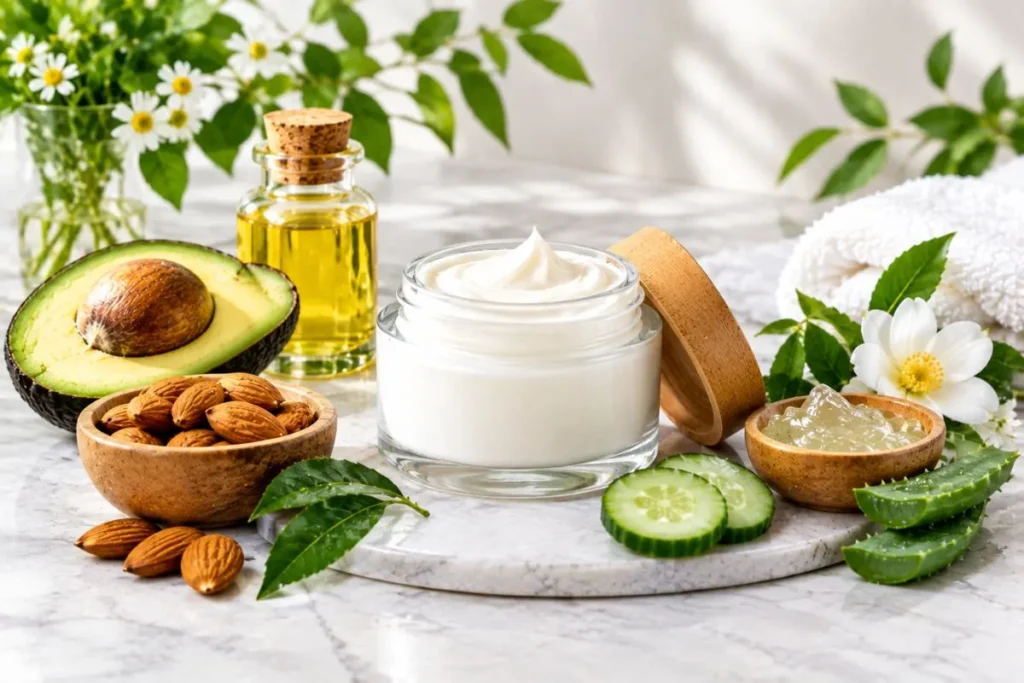
The easiest way to choose is to look at three things: your skin type, the moisturizing ingredients, and the overall formula. Once you know what your skin needs, comparing vegan face moisturizers becomes much easier.
Consider Your Skin Type
Your skin type is one of the most useful starting points when choosing a vegan face moisturizer. A product that feels perfect on dry skin can feel greasy on oily skin, while a lightweight lotion may leave very dry skin wanting more.
Best Vegan Moisturizer for Dry Skin
Dry skin usually needs more lasting moisture. Look for a richer vegan moisturizer for dry skin with ingredients such as glycerin, hyaluronic acid, squalane, shea butter, or ceramides. These can help give the skin a softer and more comfortable feel.
Best Vegan Moisturizer for Oily Skin
Oily skin still needs hydration, even when the skin already produces plenty of oil. A lightweight vegan moisturizer with a lotion or gel texture may feel more comfortable than a thick cream. If you are prone to breakouts, you may also want to look for a non-comedogenic vegan moisturizer.
Best Vegan Moisturizer for Combination Skin
Combination skin can be a little tricky because some areas may feel dry while others become oily. A balanced, lightweight formula can work well. You can also adjust how much moisturizer you apply to different parts of your face.
Best Vegan Moisturizer for Sensitive Skin
Sensitive skin often does better with a simple routine and a formula with fewer potential irritants. A fragrance-free vegan moisturizer for sensitive skin may be worth considering, especially if fragrance tends to bother your skin.
Always check the complete ingredient list and patch-test new products when appropriate.
Best Vegan Moisturizer for Acne-Prone Skin
Acne-prone skin needs hydration without feeling excessively heavy. Look for lightweight textures and consider vegan moisturizer for acne-prone skin options labeled non-comedogenic. Remember that “vegan” by itself does not mean a product will prevent or treat acne.
Mature skin may benefit from comfortable, consistent hydration. Ingredients such as ceramides, hyaluronic acid, and squalane can be useful additions when choosing a vegan moisturizer for mature skin.
Check the Moisturizing Ingredients
Once you know your skin type, take a closer look at the ingredients. You do not need to memorize a huge skincare dictionary. Understanding a few common ingredients can make shopping much easier.
Hyaluronic Acid
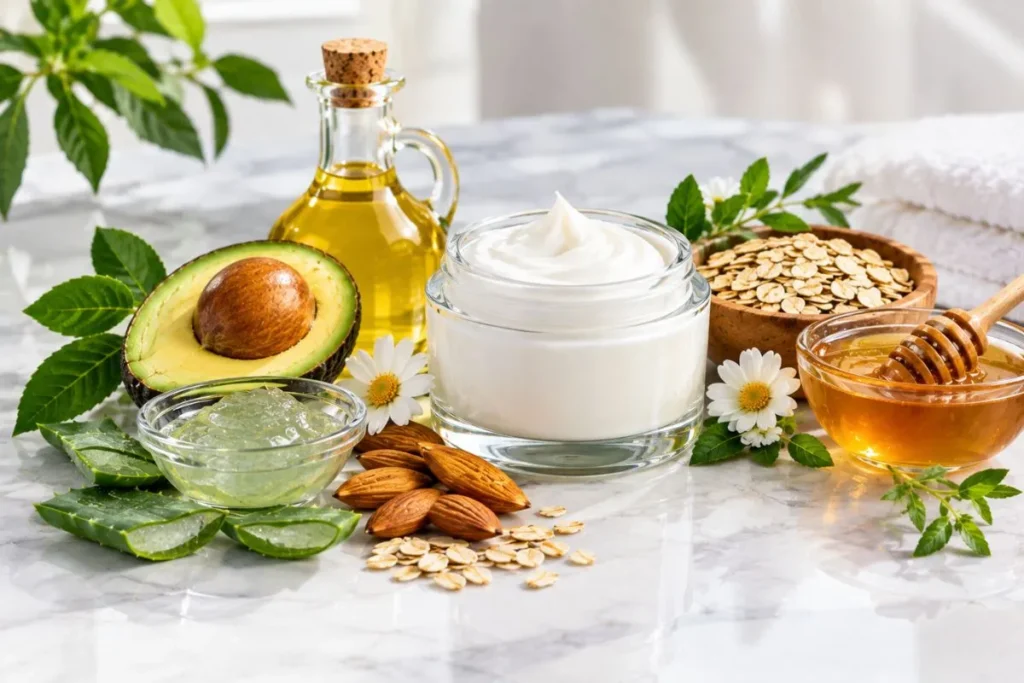
Hyaluronic acid is a popular humectant that helps attract and hold water in the skin. If your main goal is hydration, a vegan moisturizer with hyaluronic acid can be a useful option.
Aloe Vera
Aloe vera is commonly found in lightweight and soothing-feeling skincare formulas. A vegan moisturizer with aloe vera may appeal to people who prefer a fresh, lighter texture.
Ceramides
Ceramides are lipids naturally found in the skin. They are often included in moisturizers designed to support the skin barrier. If your skin frequently feels dry or tight, a vegan moisturizer with ceramides may be worth considering.
Squalane
Squalane is another popular moisturizing ingredient. It can give formulas a smooth, soft feel without necessarily making them extremely heavy. You will find it in many modern vegan skincare products.
Shea Butter
Shea butter is commonly used in richer creams because it provides a nourishing, emollient feel. It may be particularly appealing when looking for a moisturizer for dry skin.
Glycerin and Plant-Based Ingredients
You may also see glycerin, plant oils, botanical extracts, and other ingredients in a natural vegan moisturizer. The important thing is to consider the complete formula rather than judging a product by one trendy ingredient.
Look for Skin-Friendly Formulas
Ingredients matter, but the overall formula matters just as much. Two moisturizers can contain similar ingredients and still feel completely different on the skin.
If you dislike heavy products, consider a lightweight vegan moisturizer that absorbs comfortably and works well under sunscreen or makeup. This can be especially useful for oily or combination skin.
If your pores tend to become clogged easily, a non-comedogenic vegan moisturizer may be worth exploring. However, non-comedogenic labeling is not a guarantee that a product will suit everyone, so pay attention to how your own skin responds.
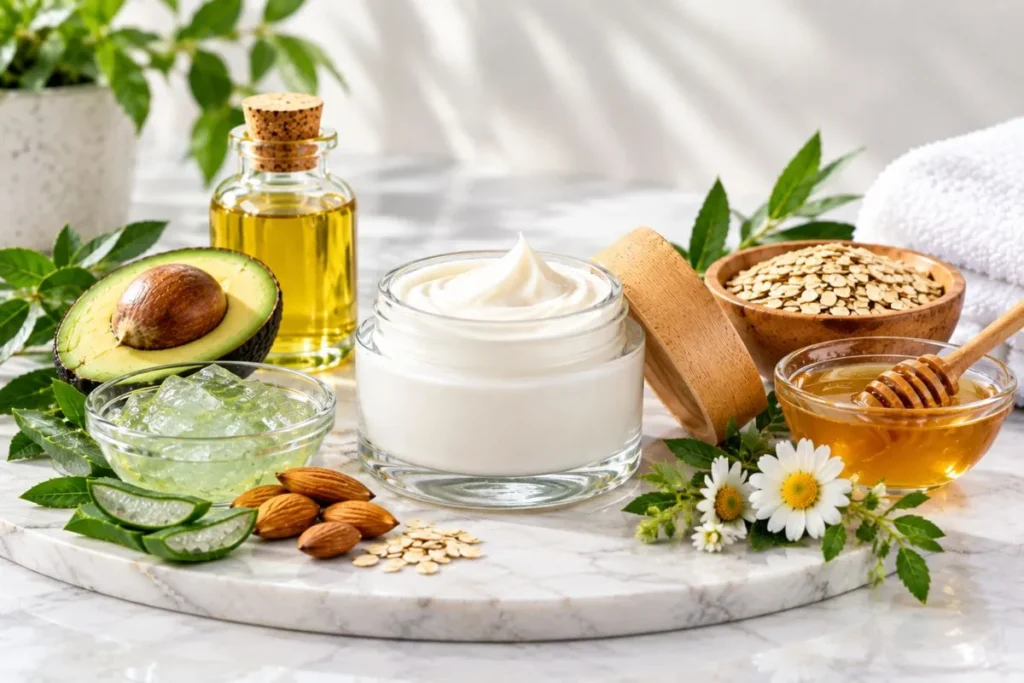
For easily irritated skin, a fragrance-free vegan moisturizer can be a sensible choice. Fragrance is not automatically bad for everyone, but removing unnecessary fragrance may simplify your routine if you know your skin does not tolerate it well.
Finally, consider your skin barrier. If your skin often feels rough, tight, or uncomfortable, a moisturizer designed to support the skin barrier may be more useful than simply choosing the product with the most impressive marketing claims.
The goal is not to find the moisturizer with the longest ingredient list or the most “natural” label. It is to find a formula that gives your skin the hydration it needs, feels comfortable, and fits easily into your everyday routine.
Best Vegan Moisturizer for Dry Skin
Many people believe that the best vegan moisturizer for dry skin must be a very thick cream that leaves the face feeling greasy. That is not always true.
Dry skin needs enough moisture and a formula that helps reduce water loss, but the right texture depends on how dry your skin is and what other ingredients the product contains.
What Dry Skin Really Needs
Dry skin often feels tight, rough, flaky, or uncomfortable, especially after cleansing. In some cases, the skin may also look dull because it lacks enough surface moisture.
When choosing a vegan moisturizer for dry skin, look for a formula that combines hydrating and moisturizing ingredients. Humectants such as glycerin and hyaluronic acid can help attract water, while richer emollient ingredients can help soften the skin.
A deeply hydrating vegan moisturizer can be especially useful during colder weather or whenever your skin feels unusually dry. However, you do not necessarily need the heaviest cream available. A comfortable formula that you can use consistently may work better for your everyday routine.
Look for Hydrating Ingredients
A good vegan face moisturizer for dry skin may contain several ingredients that work together rather than relying on just one star ingredient.
Glycerin is a common humectant that helps draw water toward the skin. It is found in many affordable and premium moisturizing formulas.
Hyaluronic acid is another popular option for hydration. If your skin often feels dehydrated, a vegan moisturizer with hyaluronic acid may be worth considering.
You may also find aloe vera in lighter formulas. It can add a fresh, hydrating feel without making the moisturizer overly rich.
The key is to look at the whole ingredient list. One ingredient does not automatically make a moisturizer suitable for dry skin.
Choose Emollient Ingredients for Softer Skin
Dry skin can benefit from ingredients that make the skin feel softer and smoother. These are often called emollients because they help soften the skin and improve its feel.
Squalane is popular in modern plant-based skincare because it gives many formulas a smooth, silky texture. It can be a useful choice if you want hydration without an extremely heavy finish.
Shea butter is often used in richer creams and can be appealing when the skin feels rough or very dry. Plant-based oils and other botanical ingredients may also appear in a natural vegan moisturizer.
If you have very dry skin, a richer vegan face cream may feel more comfortable than a lightweight gel moisturizer.
Consider Ceramides for the Skin Barrier
When dry skin also feels tight or easily irritated, it can be helpful to consider products designed to support the skin barrier.
Ceramides are lipids naturally present in the skin and are commonly used in moisturizers. A vegan moisturizer with ceramides can be an option for people who want both hydration and barrier-supporting ingredients.
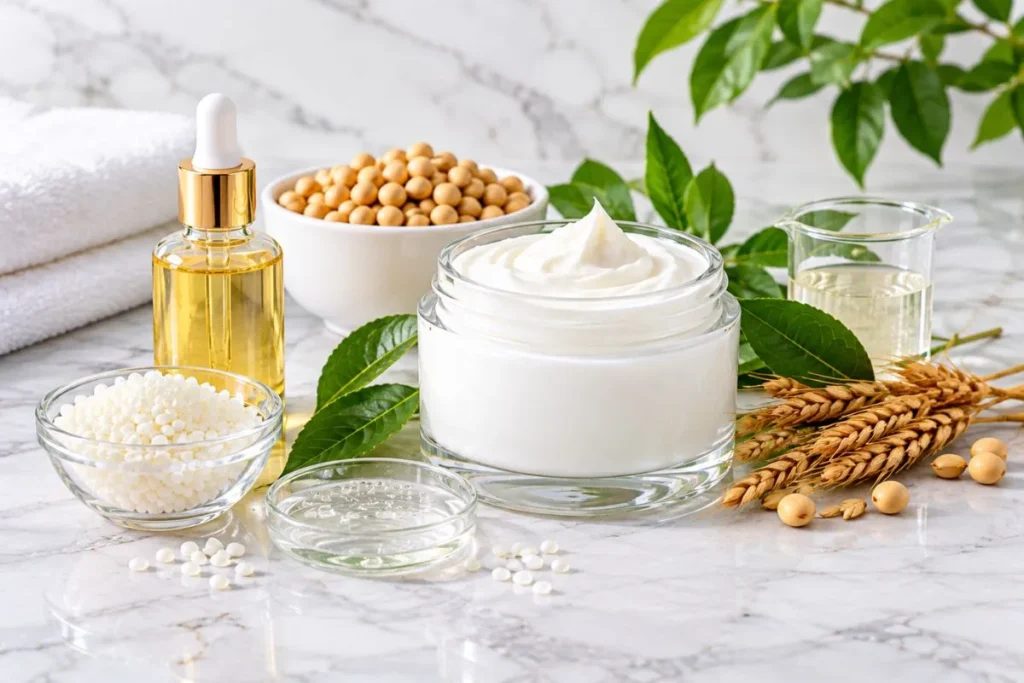
You can also look for formulas that combine ceramides with ingredients such as glycerin, squalane, or hyaluronic acid. This gives you several moisturizing components instead of relying on a single ingredient.
Pick the Right Texture for Your Skin
Not every person with dry skin needs the same texture. A lightweight lotion may be enough during the day, while a richer cream may feel better at night.
If your skin is mildly dry, try a medium-weight vegan daily moisturizer that spreads easily and does not feel uncomfortable under sunscreen or makeup.
For very dry skin, look for a richer vegan hydrating cream with emollient ingredients. If you regularly experience flaking, you may prefer a cream rather than a watery gel.
Texture also matters because you are more likely to use a moisturizer consistently when it feels comfortable on your skin.
Best Vegan Moisturizer for Dry and Sensitive Skin
Dryness and sensitivity can sometimes occur together, so ingredient simplicity may matter more than having a long list of botanical extracts.
If your skin is easily irritated, consider a fragrance-free vegan moisturizer for sensitive skin with a simple formula. Avoid assuming that every natural or plant-based ingredient will automatically suit sensitive skin.
A patch test can also be a sensible step when trying a new product, particularly if your skin reacts easily.
4.7 Best Vegan Moisturizer for Dry Skin in Winter
Cold weather, dry indoor air, and frequent hot showers can make skin feel drier. During winter, you may prefer a richer moisturizer that leaves the skin feeling comfortable for longer.
A best plant-based moisturizer for dry skin can contain humectants for hydration along with emollients that provide a softer finish. Applying moisturizer soon after cleansing can also help maintain comfortable skin moisture.
You do not have to completely change your skincare routine every winter. Sometimes, simply switching from a lightweight lotion to a richer cream is enough.
How to Use a Vegan Moisturizer for Dry Skin
Start with clean skin and apply your moisturizer while the skin is still slightly damp. Use enough product to cover the face and neck comfortably without rubbing aggressively.
In the morning, follow your moisturizer with sunscreen. At night, you can use a slightly richer formula if your skin needs extra comfort.
If your face still feels tight after moisturizing, look at the entire routine. A harsh cleanser, very hot water, or too many exfoliating products can also contribute to dryness.
The goal is not to apply the thickest cream possible. It is to build a simple routine that keeps your skin feeling comfortable and hydrated.
What to Avoid When Choosing a Vegan Moisturizer for Dry Skin
The word vegan does not tell you everything about how a moisturizer will perform. A vegan product can still contain ingredients that do not suit your particular skin.
If your skin is dry and sensitive, you may want to be cautious with heavily fragranced formulas or products that contain ingredients you already know irritate your skin.
Also, do not choose a moisturizer only because it contains a trendy ingredient. Read the complete ingredient list and consider the texture, your skin type, and how your skin responds after application.
A well-formulated vegan moisturizer for dry skin should fit comfortably into your routine rather than creating another skincare problem.
Frequently Asked Questions About the Best Vegan Moisturizer
Many people believe that choosing the best vegan moisturizer is only about finding a product with a vegan label. In reality, your skin type, ingredient preferences, texture, and skincare routine all matter when choosing a moisturizer.
What Is the Best Vegan Moisturizer for Dry Skin?
The best vegan moisturizer for dry skin should provide comfortable hydration without leaving your skin feeling tight or rough. Look for ingredients such as glycerin, hyaluronic acid, squalane, shea butter, or ceramides, depending on the formula and your preferences.
What Is the Best Vegan Moisturizer for Sensitive Skin?
A vegan moisturizer for sensitive skin should have a formula that you can comfortably tolerate. If your skin reacts easily, you may prefer a simple, fragrance-free formula with moisturizing ingredients. Always check the ingredient list and consider patch testing a new product.
Is Vegan Moisturizer Good for Oily Skin?
Yes, a vegan moisturizer can work well for oily skin. Look for a lightweight lotion or gel that feels comfortable without adding an overly heavy layer. If you are acne-prone, you may also prefer a non-comedogenic formula when available.
Can I Use a Vegan Moisturizer Every Day?
Yes. A suitable vegan daily moisturizer can be used regularly as part of a simple skincare routine. Apply it after cleansing, and during the morning follow with sunscreen.
Is a Vegan Moisturizer the Same as a Cruelty-Free Moisturizer?
No. Vegan and cruelty-free refer to different product qualities. Vegan generally describes the ingredients, while cruelty-free refers to animal testing practices. If both matter to you, check for information supporting both claims.
What Ingredients Should I Look for in a Vegan Moisturizer?
Popular moisturizing ingredients include hyaluronic acid, glycerin, aloe vera, ceramides, squalane, and shea butter. The best combination depends on your skin type and the texture you prefer.
Is a Plant-Based Moisturizer Always Vegan?
Not necessarily. The terms plant-based and vegan can have different meanings. If you specifically want a vegan product, check the manufacturer’s information or product labeling rather than assuming that plant-based wording guarantees a completely vegan formula.
Is a Natural Vegan Moisturizer Better for Your Skin?
Not automatically. A natural vegan moisturizer may contain plant-derived ingredients, but natural does not always mean that a formula will suit every person’s skin. Consider the complete ingredient list and your individual skin needs.
What Is the Best Vegan Moisturizer for Mature Skin?
The best vegan moisturizer for mature skin is one that provides comfortable hydration and suits your skin’s changing needs. Formulas containing ingredients such as glycerin, hyaluronic acid, squalane, and ceramides may be worth considering.
Can Vegan Moisturizer Help With Glowing Skin?
A moisturizer can help keep skin hydrated and make it look smoother and more comfortable. If you prefer a dewy finish, choose a hydrating formula that works well with your skin type. Hydration is only one part of achieving a healthy-looking glow.
Can I Use a Vegan Moisturizer at Night?
Yes. A vegan night moisturizer can be used after cleansing and other nighttime skincare steps. If your skin tends to feel dry overnight, you may prefer a richer cream than the one you use during the day.
Is an Affordable Vegan Moisturizer Worth Buying?
Yes. An affordable vegan moisturizer for daily use can be a practical choice if its ingredients and texture suit your skin. Price alone does not determine whether a moisturizer is right for you.
How Much Vegan Moisturizer Should I Apply?
Use enough to spread a comfortable, even layer across your face and neck. You do not need to apply a very thick coating. If your skin still feels dry after application, you can adjust the amount or consider whether your overall routine is contributing to dryness.
Should I Use Vegan Moisturizer Before Sunscreen?
For a typical morning routine, moisturizer is generally applied before sunscreen. If your sunscreen already feels sufficiently moisturizing, you may not need a separate moisturizer underneath it.
How Do I Choose the Best Vegan Face Moisturizer?
Start by identifying your skin type and then consider the formula, ingredients, texture, and finish. Look for moisturizing ingredients that match your needs and avoid choosing a product solely because it is popular or has a vegan label.
The right best vegan face moisturizer should be comfortable, practical, and easy to include in your regular skincare routine.
Conclusion:
Many people believe that finding the best vegan moisturizer means choosing the product with the longest ingredient list or the most popular vegan label. In reality, a good moisturizer should fit your skin type, daily routine, texture preference, and hydration needs.
A vegan formula can be a great choice if avoiding animal-derived ingredients is important to you. However, do not stop at the vegan claim. Check the complete formula and look for moisturizing ingredients that make sense for your skin.
If your skin is dry, you may prefer a richer vegan moisturizer for dry skin with ingredients such as shea butter or squalane. Oily and combination skin may feel more comfortable with a lightweight formula, while sensitive skin may benefit from a simpler, fragrance-free option.
You can also consider ingredients such as hyaluronic acid, glycerin, aloe vera, and ceramides when comparing different products. A vegan moisturizer with hyaluronic acid, for example, may be useful when hydration is your main concern.
Most importantly, choose a moisturizer that feels comfortable enough to use consistently. Whether you want a natural vegan moisturizer, a plant-based face cream, or an affordable option for everyday use, focus on what actually works for your skin rather than following every skincare trend.
With the right formula and a simple routine, choosing your next vegan moisturizer can be much easier. Take your time, compare the ingredients, and choose the option that best matches your personal skincare needs.

Name: Shahzadi
I’m passionate about skincare, beauty, and simple self-care. I share practical skincare tips, beauty routines, product insights, and easy ways to build healthy-looking, glowing skin.
My goal is to make beauty and skincare easier to understand, so you can discover routines that fit your everyday life.


