

It’s often said that Organic Skincare Brands are automatically better and safer for everyone simply because their products use natural or organic ingredients. That is not always true.
Organic, natural, clean, and non-toxic are different terms, and a product can still irritate your skin even when it contains plant-based ingredients. The better approach is to look at the full formula, your skin type, and how transparent the brand is about its ingredients.
Finding the best organic skincare brands can make choosing products much easier, especially if you want simpler, plant-based, or environmentally conscious options.
From organic facial cleansers and natural face moisturizers to organic serums and body care, there are plenty of choices. In this guide, we’ll look at what makes a brand worth considering and how to find trusted organic skincare brands that fit your skin, routine, and budget.
What Are Organic Skincare Brands?
What Does “Organic” Mean in Skincare?
The word organic usually refers to how certain ingredients are grown and processed, rather than being a guarantee that the entire skincare product is better. Organic ingredients may come from plants grown under specific agricultural standards, depending on the certification or regulations involved.
This is why it helps to look beyond the word “organic” printed on a package. A good product should also have a well-designed formula, suitable ingredients, and clear information about what is actually inside the bottle or jar.
When comparing organic skincare products, check whether the brand explains its sourcing, certifications, and ingredient standards clearly.
Organic vs. Natural Skincare
Organic and natural skincare are often treated as the same thing, but they are not identical. Natural skincare generally focuses on ingredients derived from natural sources, such as plants, minerals, or other naturally sourced materials.
Organic skincare places more emphasis on ingredients that meet particular organic production standards.
For example, a botanical extract may be naturally derived without being certified organic. On the other hand, an organic ingredient can be part of a formula that also contains other ingredients that are not organic.
That is why the terms best natural skincare brands, natural and organic skincare products, and organic beauty brands should not be used as if they all mean exactly the same thing.
Organic vs. Clean Beauty
You may also see brands described as clean skincare brands or clean beauty brands. The problem is that “clean beauty” does not have one universal definition used by every company. Different brands may use the term to describe different ingredient standards or formulation policies.
Because of that, don’t choose a product only because it says “clean” or “organic.” Read the ingredient list and learn what the brand actually means by its claims.
This is especially useful when looking for best clean organic skincare brands or comparing clean beauty products with traditional skincare.
Why Ingredient Transparency Matters
Ingredient transparency is one of the most useful things to look for when comparing organic skincare brands. A trustworthy company should make it reasonably easy to understand what its products contain and what its major claims are based on.
Look for clear ingredient lists, product descriptions, sourcing information, and details about certifications when they are available. This can help you compare organic skincare ingredients with conventional formulas and decide whether a product makes sense for your routine.
Plant-based and botanical ingredients can be valuable parts of skincare, but “natural” does not automatically mean irritation-free. Essential oils, botanical extracts, and fragrances can bother some people, particularly those with sensitive skin.
If your skin reacts easily, introduce new products slowly and consider patch testing before applying them widely.
Ultimately, the best natural organic skincare brands are not simply the ones with the most impressive claims. Look for brands that are clear about their ingredients, honest about what their products can do, and consistent with the needs of your skin.
How to Choose the Best Organic Skincare Brands
Many people believe that choosing the best organic skincare brands is simply a matter of finding the package with the biggest “organic” label. That approach can easily lead you to the wrong product.
Your skin type, ingredient preferences, certifications, budget, and even the brand’s sourcing and packaging practices all matter. Instead of chasing a label, use a few simple checks to decide whether a skincare brand is actually a good fit for you.
Check the Ingredient List
Start with the ingredient list before getting impressed by the brand’s marketing. A beautiful package and words like “natural,” “clean,” or “plant-based” don’t tell you everything about a formula.
When comparing organic skincare products, look for ingredients that make sense for your skin and the product’s purpose.
A moisturizer should provide useful hydration and support the skin barrier, while a cleanser should remove dirt and excess oil without leaving your skin feeling uncomfortably tight.
You may come across ingredients such as botanical extracts, plant oils, aloe vera, shea butter, or other naturally derived ingredients. These can be useful, but natural ingredients are not automatically suitable for every person.
If you have sensitive skin, pay particular attention to fragrance, essential oils, and highly concentrated botanical ingredients. A product can be made with carefully sourced ingredients and still cause irritation in an individual user.
This is also why organic skincare ingredients should be considered as part of the complete formula rather than judged one at a time. Don’t choose a product just because one ingredient sounds impressive.
Look for Reliable Organic Certifications
Certification can give you extra information when you’re comparing trusted organic skincare brands. However, not every product described as organic has the same level of certification or the same percentage of organic ingredients.
Look for clear information about which ingredients or products are certified and which organization provided the certification. If a brand makes a strong organic claim but provides little information about its standards, take a closer look before buying.
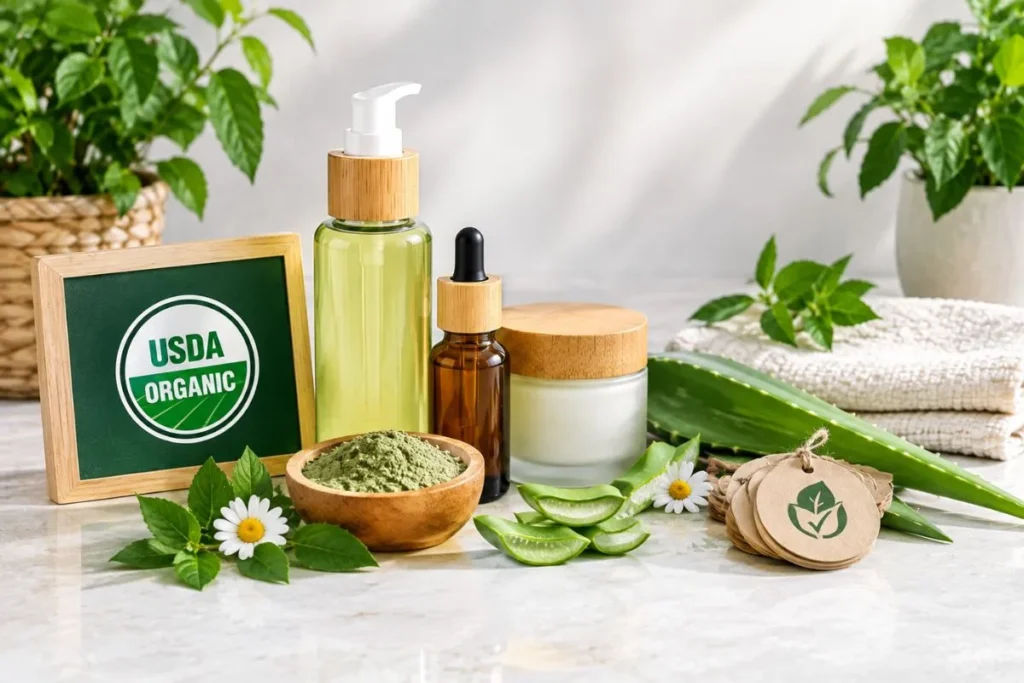
It’s also useful to understand that certification requirements can vary. One product may contain several organic ingredients without the entire finished product being certified organic.
Reading the actual certification details helps you avoid confusing marketing language with independently verified standards.
For readers searching for best natural and organic skincare brands, this step can make comparisons much easier. Instead of relying only on popularity, you can examine how clearly each brand explains its sourcing and production standards.
Consider Your Skin Type
Your skin type should play a major role when choosing skincare. Even a highly regarded organic product may not work well for you if its formula doesn’t match your skin’s needs.
Sensitive Skin
If your skin is easily irritated, focus on simple formulas and avoid introducing several new products at the same time. Look for brands that clearly disclose their ingredients and provide fragrance information.
This is particularly important when searching for the best organic skincare brands for sensitive skin. “Natural” does not automatically mean gentle, so always consider the complete formula.
Dry Skin
Dry skin usually benefits from products designed to reduce moisture loss and keep the skin comfortable. Richer creams, emollient ingredients, and moisturizing oils may work well for some people.
When looking for the best organic skincare brands for dry skin, consider whether the brand offers products such as an organic face moisturizer, facial oil, or gentle cleanser rather than focusing only on the organic label.
Mature Skin
Mature skin may benefit from formulas that focus on hydration, softness, and protection from environmental stressors. Ingredients such as antioxidants and moisturizers can have a useful place in a mature-skin routine.
If you’re searching for the best organic skincare brands for mature skin, look at the complete routine instead of expecting one product to solve every concern. Organic anti-aging skincare can be part of a routine, but the quality of the formula still matters.
Acne-Prone Skin
Acne-prone skin needs careful product selection. Heavy formulas may not suit everyone, while overly harsh products can leave the skin feeling dry and irritated.
When comparing the best organic skincare brands for acne-prone skin, look for lightweight products and check whether the individual product is suitable for your skin. Don’t assume that every plant oil or botanical ingredient will work the same way for every person.
Combination Skin
Combination skin can be tricky because some areas may feel oily while others feel dry. A lightweight moisturizer and gentle cleanser can often make a routine easier to manage.
The goal is not to find the most complicated routine. It’s to find products that keep different areas of your skin comfortable without overloading them.
Look at the Brand’s Sustainability Practices
Skincare doesn’t end with what’s inside the bottle. If sustainability matters to you, take a look at how the brand sources ingredients, packages products, and handles its environmental commitments.
Sustainable skincare brands may use recyclable packaging, refill systems, responsibly sourced ingredients, or reduced packaging. Eco-friendly skincare brands may also focus on reducing waste throughout production and shipping.
Still, don’t assume that a green-looking package automatically means a company is environmentally responsible. Look for specific information rather than vague claims.
You can also consider whether a brand discusses responsible sourcing, packaging materials, and production practices openly. These details can help you distinguish meaningful sustainability efforts from simple green marketing.
Check Cruelty-Free and Vegan Claims
Cruelty-free and vegan are two different claims, so it’s worth checking both if they matter to you.
A cruelty-free skincare brand generally makes a commitment regarding animal testing, while vegan skincare refers to products that do not contain animal-derived ingredients. A product can be vegan without being organic, and an organic product isn’t automatically vegan.
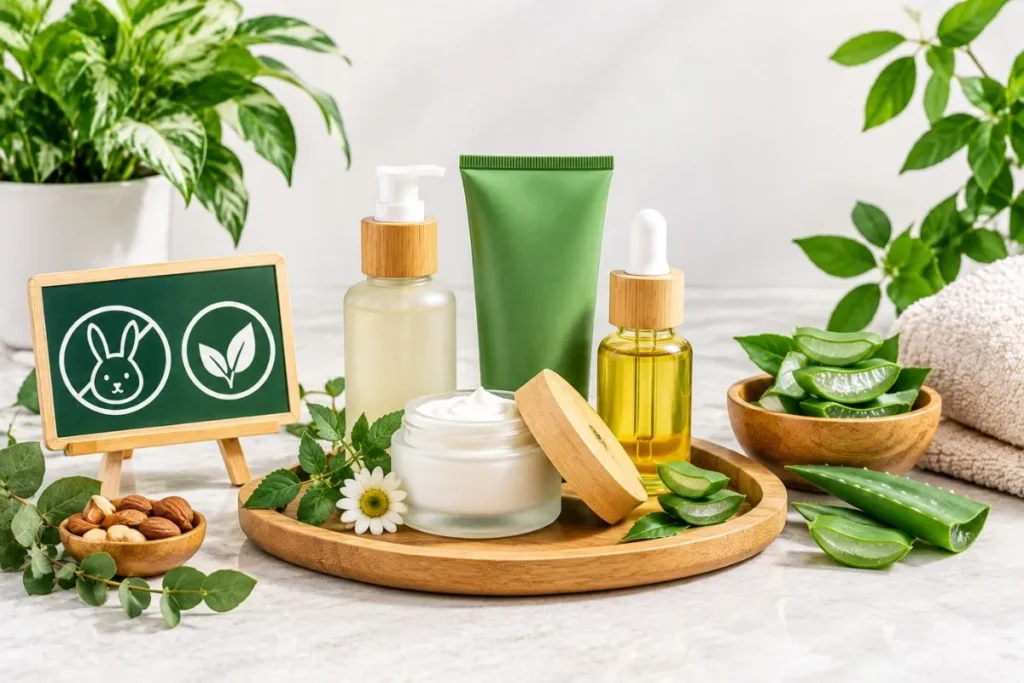
If you’re interested in vegan organic skincare, check both claims separately rather than assuming one guarantees the other.
You can also look for clear information about the company’s policies and any relevant certifications. This makes it easier to compare ethical skincare brands based on information rather than assumptions.
Compare the Brand With Your Budget and Routine
Price is another practical factor. You don’t need an entire shelf of expensive products to create a useful skincare routine.
If you’re looking for affordable organic skincare brands for beginners, start with the basics. A cleanser, moisturizer, and daytime sunscreen can be more useful than buying several specialized treatments at once.
Think about what you actually need before choosing a brand. A company may have excellent products, but if its range doesn’t fit your skin type, budget, or daily routine, it may not be the right choice for you.
Look Beyond the “Organic” Label
The most useful way to compare organic skincare brands is to consider several factors together: ingredients, certifications, skin type, brand transparency, sustainability, cruelty-free policies, vegan options, and price.
This approach also helps when researching organic skincare brand recommendations online. Reviews and popularity can give you ideas, but they shouldn’t replace checking the actual product details.
A simple rule works well: choose the formula first, the marketing second. When you understand what your skin needs and know how to check a brand’s claims, finding the right organic skincare products becomes much easier.
Best Organic Skincare Brands to Know
Many people assume that a skincare brand must be completely organic to deserve a place on a “best” list. That isn’t quite how it works. Some brands have certified organic products, while others focus on certified natural, plant-based, or clean formulas.
So instead of treating every brand as identical, it makes more sense to look at what each one actually offers, how transparent it is, and which type of skincare it may suit.
The following best organic skincare brands and natural beauty brands are worth exploring for different reasons. Some focus strongly on certified organic ingredients, while others stand out for botanical formulas, clean beauty standards, sustainable practices, or targeted facial care.
Certification and product formulas can change, so always check the individual product rather than assuming every item from a brand has the same status.
Juice Beauty
Juice Beauty is a natural skincare brand with a particularly strong focus on certified organic ingredients. The company says its skincare products are made with certified organic ingredients and that its organic ingredients are certified through USDA-approved agencies.
Its range includes facial cleansers, moisturizers, serums, and targeted treatments. The brand also highlights ingredients such as aloe, jojoba oil, hyaluronic acid, plant stem cells, and mineral zinc across its skincare collection.
Best for: Readers who specifically want organic skincare brands with natural ingredients and want to pay close attention to organic sourcing.
What to explore: Organic facial products, cleansers, moisturizers, serums, and targeted skincare.
Dr. Hauschka
Dr. Hauschka has a long history in natural skincare and states that its skincare is 100% certified natural under the NATRUE standard. The company also says it uses organic, biodynamic, and ethically sourced ingredients wherever possible.
The range covers much more than a basic moisturizer. You can find cleansers, facial care, serums, masks, body products, and makeup. The brand also offers products designed for different skin needs, including sensitive skin.
One useful detail is that the brand doesn’t describe every product as vegan. Its official site explains that some individual products contain animal-derived ingredients, while vegan options are also available.
Best for: People interested in certified natural skincare with a strong botanical focus.
What to explore: Cleansing Cream, Quince Day Cream, facial serums, masks, and body care.
Antipodes
Antipodes is another name to consider when searching for certified organic skincare. The brand has a dedicated collection of products independently certified by BioGro New Zealand.
Its certified collection includes products for hydration, pigmentation, blemishes, sensitivity, and signs of aging. Examples include facial oils, creams, cleansers, and serums.
Importantly, Antipodes clearly explains that not every product in its overall range is certified organic. Some formulas contain ingredients that fall outside the certification requirements.
Best for: Readers who want to shop from a brand with a clearly identified certified-organic collection.
What to explore: Divine Face Oil, Grace Gentle Cream Cleanser, Maya Hyaluronic Serum, and other products within its certified collection.
Herbivore Botanicals
Herbivore Botanicals takes a more plant-focused approach to skincare. Its current range includes facial oils, cleansers, moisturizers, serums, eye care, lip care, and body products.
The brand focuses on botanical and plant-active ingredients and organizes products around concerns such as dryness, aging skin, oily or acne-prone skin, and dullness.
Its site also states that its ingredients are natural, vegan, and cruelty-free and that it prioritizes sustainable packaging and processes.
This makes it interesting for readers searching for natural skincare brands rather than looking only for formal organic certification.
Best for: Plant-focused routines and people interested in botanical skincare.
What to explore: Facial oils, vitamin C products, bakuchiol formulas, moisturizers, and botanical cleansers.
Indie Lee
Indie Lee sits more clearly in the clean beauty category than the traditional certified-organic category. The brand describes its products as clean skincare and emphasizes combining nature with science.
Its current lineup includes cleansers, toners, facial oils, moisturizers, serums, and SPF products. The brand also states that it is cruelty-free and uses sustainable practices.
If you’re comparing best clean organic skincare brands, it’s important to recognize this distinction: Indie Lee is worth researching for clean skincare, but that does not mean every product should automatically be described as certified organic.
Best for: Readers who want clean skincare with a mix of botanical ingredients and modern formulation.
What to explore: Brightening Cleanser, CoQ-10 Toner, Squalane Facial Oil, and Barrier Boost Moisture Cream.
Mad Hippie
Mad Hippie is another option for shoppers interested in natural and clean skincare. Its philosophy focuses on using active ingredients while keeping routines relatively simple. The brand says its formulas avoid ingredients such as petroleum, parabens, phthalates, perfumes, dyes, SLS, and PEGs.
Its product range includes vitamin C products, serums, eye treatments, and complete routines for concerns such as dryness and blemishes.
Best for: People who want straightforward natural skincare with active ingredients.
What to explore: Vitamin C Serum, Vitamin C Toning Mist, Super A Serum, and hydrating routines.
Weleda
Weleda is a long-established natural skincare company known for plant-based formulations and botanical ingredients. Its range covers facial skincare, body care, baby care, and other personal-care products.
It can be useful for readers searching for natural beauty brands and traditional botanical skincare. However, as with other brands on this list, check individual product claims if you specifically require certified organic skincare.
Best for: People who enjoy traditional botanical skincare and a wide selection of natural personal-care products.
What to explore: Facial moisturizers, cleansing products, body care, and targeted natural skincare.
Pai Skincare
Pai Skincare is especially interesting for people who want products designed with sensitive or easily irritated skin in mind. The brand is known for gentle skincare and organic ingredients across parts of its range.
For shoppers searching for the best organic skincare brands for sensitive skin, Pai is worth investigating because its product selection is centered around gentle facial care.
Best for: Sensitive and easily reactive skin.
What to explore: Gentle cleansers, moisturizers, facial oils, and calming skincare.
Trilogy
Trilogy is a New Zealand skincare brand with a strong emphasis on natural and certified organic skincare. Its rosehip-focused products have helped make the brand well known in the natural beauty space.
The brand also emphasizes the importance of certification rather than relying only on the word “natural.” Its 2026 educational material explains that certified organic status involves defined standards and independent auditing.
Best for: Readers interested in natural formulas and certified organic options.
What to explore: Rosehip-based facial oils, moisturizers, and targeted facial care.
FAQs
What are the best organic skincare brands?
The best organic skincare brands are those that use organic or naturally derived ingredients, provide clear product information, and offer formulas that match your skin type.
Brands such as Juice Beauty, Dr. Hauschka, Pai Skincare, Eminence Organic Skin Care, and Odylique are worth exploring. Always check the individual product because not every product from a brand may have the same organic certification.
Which organic skincare brands are best for sensitive skin?
For sensitive skin, look for gentle formulas with fewer potential irritants and ingredients suited to your skin’s needs. Pai Skincare is known for products aimed at sensitive skin, while Dr.
Hauschka and Odylique also offer gentle skincare options. Patch testing a new product can help you see how your skin reacts before using it regularly.
What are the best natural and organic skincare brands?
Some brands combine natural and organic ingredients across their product ranges, including Juice Beauty, Dr. Hauschka, Antipodes, Trilogy, and Eminence Organic Skin Care. However, natural and organic are not identical terms.
Check the product label and certification if organic sourcing is important to you.
Are organic skincare products better for your skin?
Organic skincare is not automatically better for every person. A product can contain organic ingredients and still cause irritation if it does not suit your skin. Formula quality, ingredients, skin type, and your individual tolerance all matter.
Choose products based on what your skin actually needs rather than the word “organic” alone.
What is the difference between organic and natural skincare?
Organic skincare generally refers to ingredients produced according to specific organic standards, while natural skincare usually focuses on ingredients derived from natural sources.
The exact meaning of these terms can vary by brand and certification system. Reading the product information can help you understand what a brand actually means by organic or natural.
Are organic skincare products safe for mature skin?
Organic skincare can be suitable for mature skin when the formula provides the hydration and ingredients your skin needs. Look for nourishing moisturizers, gentle cleansers, antioxidants, and other ingredients that support your routine.
Mature skin can also become more sensitive, so introducing new products slowly is a sensible approach.
Which organic skincare brands are good for dry skin?
For dry skin, focus on products that help support the skin barrier and provide lasting moisture. Brands such as Weleda, Pai Skincare, Antipodes, and Juice Beauty offer moisturizing products that may be worth exploring.
Look for ingredients such as plant oils, emollients, and hydrating ingredients rather than choosing a product based only on its organic label.
What are the best organic skincare brands for acne-prone skin?
Acne-prone skin can react differently to skincare products, so choosing a gentle and suitable formula is important. Look for lightweight products and avoid adding too many new products at once.
Some natural skincare brands offer products for blemish-prone skin, but “organic” does not automatically mean a product will treat acne.
What are the best clean and organic skincare products?
The terms clean and organic describe different things, so it is useful to check both claims separately. Look for products with clearly listed ingredients, transparent brand information, and reliable certifications where applicable.
This helps you avoid assuming that a product is certified organic simply because it is marketed as clean beauty.
How can I find trusted organic skincare brands?
Start by checking the ingredient list, product claims, certification information, and brand policies. Look for brands that clearly explain where their ingredients come from and what standards their products follow.
You can then compare the products with your skin type, budget, and skincare goals before buying.
Does vegan skincare always mean organic skincare?
No. Vegan and organic mean different things. Vegan skincare generally means the product does not contain animal-derived ingredients, while organic refers to how certain agricultural ingredients are produced and certified.
A product can be vegan without being organic, and an organic product is not necessarily vegan.
Is natural skincare always better?
Natural skincare is not automatically better for everyone. Some natural ingredients can still irritate sensitive skin, especially concentrated essential oils or fragrances. What matters most is whether the formula is well made, suitable for your skin, and used correctly.
Checking the full ingredient list is more useful than judging a product only by its marketing label.
Conclusion
Choosing from the best organic skincare brands does not have to be confusing. The right choice depends on your skin type, ingredients, budget, and the type of skincare routine you want to build.
Brands such as Juice Beauty, Dr. Hauschka, Pai Skincare, Antipodes, Eminence Organic Skin Care, and others offer different approaches to natural and organic skincare.
Some focus more strongly on organic certification, while others emphasize botanical ingredients, clean formulas, sensitive-skin care, or sustainability.
Before buying, always check the individual product’s ingredients, certification claims, and suitability for your skin. Remember that organic does not automatically mean better for everyone. A simple routine with products your skin tolerates well can be more useful than filling your shelf with too many products.
Take your time, compare your options, and choose products that fit your actual skincare needs. With the right approach, you can build a simple routine that supports healthy, comfortable, and glowing-looking skin.

Name: Shahzadi
I’m passionate about skincare, beauty, and simple self-care. I share practical skincare tips, beauty routines, product insights, and easy ways to build healthy-looking, glowing skin.
My goal is to make beauty and skincare easier to understand, so you can discover routines that fit your everyday life.


