

Finding the right foundation shade isn’t just about choosing a color that looks close to your skin. Many people believe a lighter or darker foundation will make their complexion look better, but the wrong shade can leave your makeup looking unnatural.
Learning how to find my shade of foundation starts with understanding your skin tone and undertone so you can choose a color that blends naturally with your complexion.
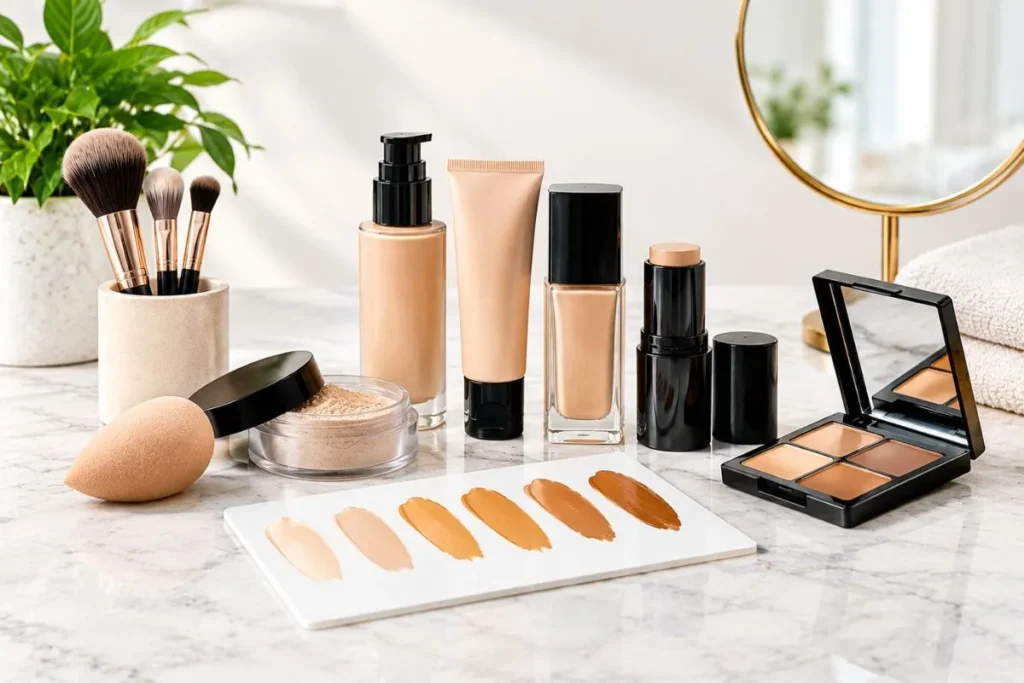
Whether you’re shopping online or testing makeup in a store, a few simple steps can make foundation shade matching much easier. In this guide, you’ll learn how to identify your skin undertone, choose the right foundation color, and avoid common shade-matching mistakes.
By the end, you’ll know how to find your perfect foundation shade for a natural-looking finish.
Understand Your Skin Tone Before Choosing Foundation
Before choosing a foundation, you need to understand your skin tone and undertone. These two things work together to determine which foundation shade looks most natural on your skin.
Knowing the difference can help you narrow down your options and avoid buying a shade that looks too pink, yellow, orange, or gray.
What Is Skin Tone, and How Does It Affect Foundation Shade?
Your skin tone is the color you see on the surface of your skin. It generally falls into categories such as fair, light, medium, tan, olive, or deep. Knowing your skin tone helps you choose the right shade depth when comparing different foundation colors.
Check your complexion in natural daylight without makeup, if possible. Also, compare your face with your neck because the two areas may have slightly different colors due to sun exposure or natural pigmentation.
Choosing a foundation that blends well between your face and neck can help create a more even, natural appearance.
How to Determine Your Skin Undertone
Your skin undertone is the subtle color beneath the surface of your skin. Unlike your skin tone, which can change with sun exposure, your undertone usually stays relatively consistent. Most undertones fall into three categories: warm, cool, and neutral.
Warm undertones often have golden or yellow hints, while cool undertones may look pink or rosy. Neutral undertones have a more balanced appearance without a strong warm or cool cast.
Understanding your undertone makes it easier to choose a foundation color that complements your complexion instead of simply matching its depth.
How to Tell If You Have Warm, Cool, or Neutral Undertones
You can use a few simple clues to help identify your undertone. If gold jewelry tends to complement your skin and your complexion has a golden appearance, you may have warm undertones.
If silver jewelry looks more flattering and your skin has a rosy quality, you may have cool undertones. If both look equally good, you might have neutral undertones.
These clues aren’t exact tests, so don’t rely on just one. Your natural skin color, lighting, and personal preferences can affect how colors appear. When choosing a foundation, compare shades with different undertones and see which one blends most naturally into your skin.
How to Find My Shade of Foundation in Easy Steps
You don’t need to guess your foundation shade or buy several products to find the right match. A common mistake is choosing a color based on how it looks in the bottle or on someone else’s skin.
The better approach is to compare a few shades, check how they blend with your complexion, and see how the color looks after it settles. These seven steps can help you find your perfect foundation shade with more confidence.
Identify Your Natural Skin Tone
Start by identifying the depth of your complexion. Your skin may be fair, light, medium, tan, olive, or deep. This helps you narrow down the foundation shade range before comparing individual colors.

Check your skin in indirect natural daylight without makeup or tinted skincare products. Look at your face and neck rather than relying only on your hands, since their colors may differ.
If your face is lighter or darker than your neck, pay attention to how the foundation blends between the two areas.
Remember that skin tone and undertone are different. Skin tone describes how light or deep your complexion appears, while undertone describes its subtle warm, cool, or neutral quality. Identifying both makes foundation color matching much easier.
Determine Your Skin Undertone
Once you know your skin tone, narrow down your undertone. Most foundation shades are described as warm, cool, or neutral, although some brands offer additional categories such as olive.
Warm undertones often have golden or yellow hints. Cool undertones may look pink or rosy, while neutral undertones have a more balanced appearance. Olive undertones can have a subtle greenish or muted golden quality.
You can use vein color and jewelry comparisons as clues, but don’t treat them as final answers. The most useful test is to try foundation shades with different undertones and see which one blends naturally with your skin.
If a foundation looks too orange, pink, or gray, its undertone may not be the best match.
Narrow Down Your Foundation Shade Range
Now that you understand your skin tone and likely undertone, choose a few shades to compare. Start with the shade descriptions provided by the makeup brand. Look for terms such as fair warm, light neutral, medium golden, or deep cool, depending on your complexion.
A foundation shade chart can help you understand the available options, but remember that shade names and numbers aren’t standardized across brands. A medium shade from one brand may look different from a medium shade from another.
Instead of testing every available color, choose two or three shades close to your estimated match. Include a slightly lighter or darker option if you’re unsure. Comparing nearby shades makes it easier to spot the one that disappears most naturally into your skin.
Test Foundation Shades Along Your Jawline
Testing foundation on your jawline is one of the most useful ways to find the right match. Your wrist or hand may have a different color from your face, so a hand swatch can give you a misleading result.
Apply two or three narrow stripes of foundation along your jawline, keeping the shades separate. Blend each one lightly and compare how it looks against your face and neck. The best shade should blend into your skin without leaving an obvious line or looking noticeably lighter or darker.
Give each shade a moment to settle before deciding. If you’re shopping in a store, ask for samples when available so you can check the color at home. This can be especially helpful when you want to know how to find the right foundation shade for beginners without spending money on several products.
Check Your Foundation Match in Natural Light
Indoor lighting can make foundation appear different from its true color. Warm store lights may make a shade look more yellow or orange, while cool lighting can make it appear pinker or grayer.

After applying your swatches, check them near a window in indirect daylight or outdoors in a shaded area. Avoid relying on harsh direct sunlight, which can also distort how the color appears.
Look at the foundation from different angles. Does it blend into your neck? Does one shade leave a visible border? Does the color complement your natural complexion? These checks can help you identify a foundation that looks natural in everyday settings rather than only under store lighting.
Wait to See Whether Your Foundation Oxidizes
Sometimes a foundation looks like a perfect match when you first apply it but appears darker or more orange later. This change is commonly called foundation oxidation, although the reasons for a color shift can vary by formula and how the product interacts with your skin.
To check for this, apply a small amount and allow it to settle according to the product’s instructions. Compare the color immediately after application and again later. Check whether the shade still blends naturally with your face and neck.
If the foundation consistently becomes too dark or orange, test a different shade or formula. Don’t automatically choose a much lighter foundation to compensate, because the final result may look too pale. Instead, judge the shade based on its appearance after it has settled.
How to Match Foundation to Your Skin Tone and Undertone
Choosing the right foundation involves more than finding a shade labeled light, medium, or deep. Two foundations with the same depth can look completely different because their undertones vary.
Once you understand whether your skin leans warm, cool, neutral, or olive, you can narrow down the options and find a foundation that looks more natural on your complexion.
How to Choose Foundation for Warm Undertones
If your skin has golden, yellow, or warm peachy hints, you may have warm undertones. Foundation descriptions such as warm beige, golden, or yellow-based may be useful starting points.
When comparing shades, look for a color that complements your natural complexion without making your face appear overly orange. A foundation that is too pink or cool may create a noticeable contrast, even if its depth seems correct.
The best way to choose foundation for warm undertones is to test a few nearby shades along your jawline. Check each one in natural light and compare it with your neck. Don’t select a shade simply because it looks golden in the bottle; the finished color should blend naturally into your skin.
How to Choose Foundation for Cool Undertones
Cool undertones often have pink, rosy, or bluish hints. If this sounds like your complexion, try foundation shades described as cool, rosy, or pink-based.
A foundation with a strong yellow or golden cast may look different from the rest of your skin. On the other hand, a shade that is too pink can also appear unnatural. That’s why checking the actual color on your skin is more reliable than trusting the label alone.
To choose foundation for cool undertones, compare two or three shades with similar depth but slightly different undertones. Apply them along your jawline and check the result in daylight.
Choose the one that blends smoothly with both your face and neck without leaving a visible pink or yellow cast.
How to Choose Foundation for Neutral Undertones
Neutral undertones have a relatively balanced appearance, without a strong golden or rosy quality. If both gold and silver jewelry seem to suit you, or warm and cool foundation shades both appear reasonably close, a neutral shade may be worth testing.
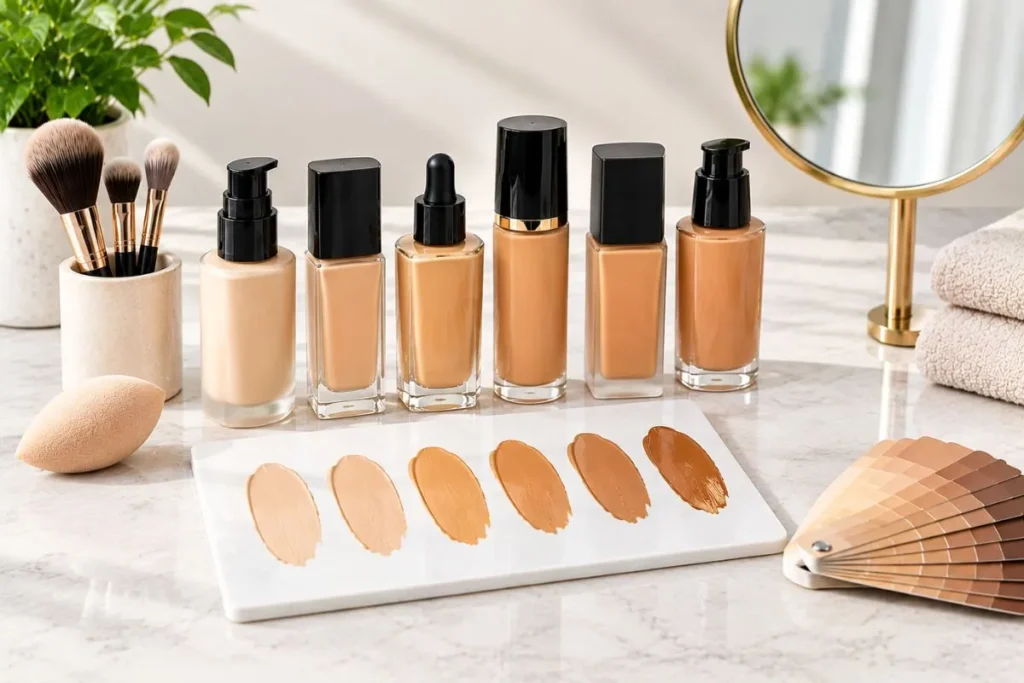
Look for descriptions such as neutral beige or neutral. However, keep in mind that a neutral foundation isn’t automatically suitable for everyone. Some neutral shades lean slightly warm or cool, and brands use different systems to describe their products.
When deciding how to choose foundation for neutral undertones, compare a neutral option with a nearby warm or cool shade. Test all three if possible. The right choice is the one that looks most natural on your skin, not necessarily the one with the most suitable-sounding label.
How to Find Foundation for Olive Undertones
Olive undertones can be tricky to match because the skin may have a muted greenish, golden, or slightly earthy quality. Some people with olive undertones find that standard warm foundations look too orange, while cool shades appear too pink.
If this happens to you, look for foundation shades specifically described as olive or neutral olive when available. Some muted neutral shades may also work, depending on your skin depth and the formula.
Test the foundation along your jawline rather than choosing a shade based only on online swatches. Check whether it blends into your skin or leaves an overly pink, orange, or gray appearance.
Olive undertones can occur across different skin depths, so make sure the shade is also light or deep enough for your complexion.
How to Choose Foundation for Fair, Medium, Tan, and Deep Skin
Your skin depth helps determine the foundation range you should explore, while your undertone helps you choose the most suitable color within that range. Both matter when looking for a foundation that matches your complexion.
If you have fair or light skin, compare lighter shades with warm, cool, and neutral undertones. For medium or tan skin, look at shades that match your depth without appearing too pale, orange, or ashy.
If you have deep skin, choose from shades designed to complement deeper complexions and compare their undertones carefully.
Don’t assume that everyone with a similar skin tone needs the same foundation color. Two people with medium skin, for example, may have completely different undertones. Likewise, fair, tan, and deep skin can each have warm, cool, neutral, or olive undertones.
For the most reliable match, compare shades within your likely range, test them on your jawline, and check the result in natural light. This approach helps you find a foundation that suits your actual complexion instead of relying on broad skin-tone categories alone.
How to Find the Right Foundation Shade for Beginners
You don’t need to be a makeup expert to choose the right foundation. Many beginners assume they need an expensive product or a professional makeup artist to get a perfect match, but that’s not true.
The key is to understand your skin’s needs, compare shades carefully, and choose a formula that feels comfortable. Once you know what to look for, finding a foundation that matches your complexion becomes much easier.
Start With Your Skin Type and Desired Coverage
Before buying foundation, think about your skin type and the finish you want. Your skin type helps you choose a suitable formula, while your skin tone and undertone help you find the correct color. Keeping these factors separate makes foundation shopping less confusing.
If you prefer a natural look, a sheer or lightweight foundation may be enough to even out your complexion without hiding your skin completely. Medium coverage offers more concealment while still looking natural when applied properly.
Full coverage is useful when you want to cover more visible discoloration, but it can make a shade mismatch more noticeable.
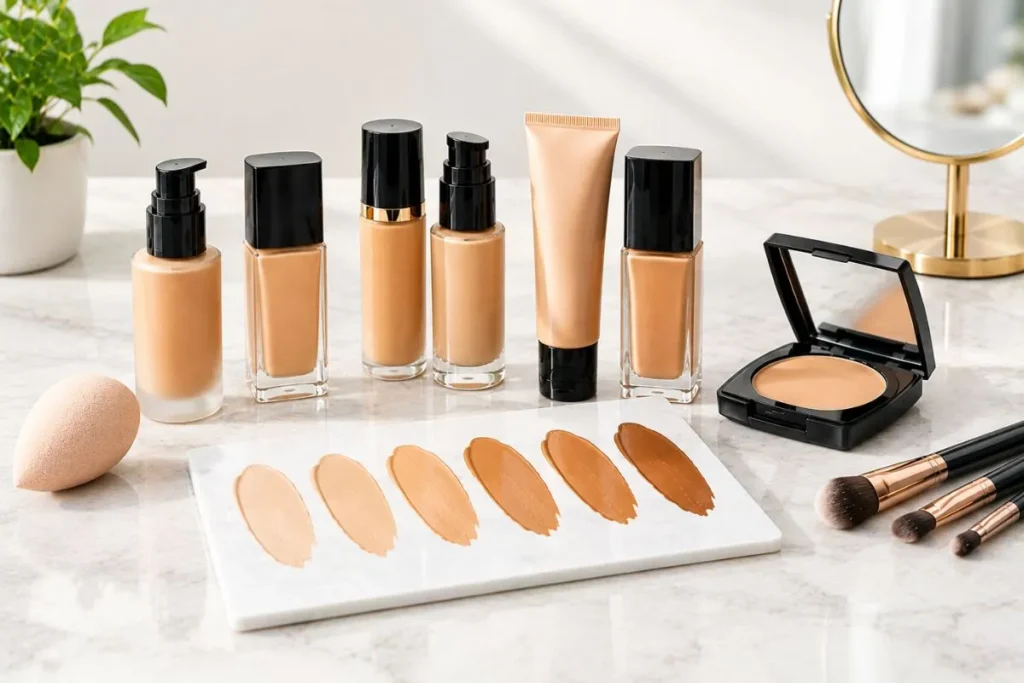
Consider how your skin behaves throughout the day, too. If your skin becomes oily, you may prefer a formula designed to control shine. If it feels dry or tight, a more hydrating foundation may feel comfortable. For combination skin, look for a balanced formula that works well across different areas of your face.
Once you’ve selected a suitable formula, focus on the color. A foundation can have the perfect finish and coverage but still look wrong if the shade or undertone doesn’t match your skin.
Choose Between Liquid and Powder Foundation Shades
Liquid and powder foundations can both provide a natural-looking finish, but they may appear different on your skin. Choosing between them depends on your preferences, skin type, and desired coverage.
Liquid foundation is available in a wide range of finishes, from dewy to matte. It is often easy to apply in thin layers, making it useful when you want to build coverage gradually. When testing a liquid foundation, apply a small amount and blend it fully before deciding whether the color matches.
Powder foundation can offer light to fuller coverage depending on the product and how you apply it. It may suit people who prefer a quicker application or want to reduce visible shine. However, applying several layers can change how the shade looks, so check the finished result rather than judging a heavy swatch.
When comparing liquid foundation shades and powder foundation shades, test the product in the way you plan to wear it. The right shade should blend naturally into your complexion without looking noticeably lighter, darker, or more orange than your skin.
Use a Foundation Shade Chart Correctly
A foundation shade chart can help you narrow down your choices, especially when a brand offers many colors. These charts usually list shades by depth and may include undertone descriptions such as warm, cool, neutral, or golden.
Start by finding the shade range that most closely matches your complexion. Then compare the undertone labels to your estimated undertone. If you are between two shades, check the brand’s swatches and product descriptions to see how the colors differ.
Remember that foundation shade names and numbers are not consistent across makeup brands. A shade called “Natural Beige” by one company may look different from a similarly named shade elsewhere. Don’t assume that your shade in one brand will automatically match another brand’s product.
Online shade charts are useful starting points, but they cannot always show the exact color you’ll see in real life. Lighting, photography, and screen settings can affect how a shade appears. Whenever possible, confirm your choice by testing the foundation on your jawline and checking it in natural light.
FAQs About How to Find My Shade of Foundation
Finding the right foundation shade can feel confusing, especially when you’re shopping online or choosing between several similar colors. You don’t need to guess blindly.
These frequently asked questions explain how to match foundation to your skin tone, identify your undertone, and avoid common mistakes.
How Do I Find My Perfect Foundation Shade?
To find your perfect foundation shade, identify your skin tone and undertone first. Your skin tone determines how light or deep the foundation should be, while your undertone helps you choose the right color.
Test two or three suitable shades along your jawline and check them in natural daylight. The best match should blend seamlessly with your face and neck without looking too pink, yellow, orange, or gray.
How Do I Find the Right Foundation Shade for My Skin Tone?
Start by determining whether your complexion is fair, light, medium, tan, or deep. Next, look for foundation shades that match your skin depth and undertone. Don’t choose a color just because its name sounds suitable.
Test the foundation on your jawline and compare it with your neck. A shade that blends naturally into both areas is usually a good choice.
How Can I Choose Foundation Based on My Skin Undertone?
Most foundation undertones fall into three main categories: warm, cool, and neutral. Warm undertones often suit foundations with golden or yellow hints.
Cool undertones may match better with pink or rosy shades, while neutral undertones usually work well with balanced colors. Some people also have olive undertones, which can appear slightly green or golden.
Compare different undertone options on your skin instead of relying on jewelry or vein tests alone.
How Do I Find My Foundation Shade Without Testing It?
If you cannot test foundation in person, begin with a product you already own that matches your skin well. Check its shade name, undertone, and brand details, then compare them with the new foundation’s shade chart.
Look at swatches on people with a similar skin tone and undertone. You can also use an online foundation shade finder, but treat its recommendation as a starting point rather than a guarantee.
How Can I Find the Correct Foundation Shade Online?
To find the correct foundation shade online, check the brand’s shade chart and compare several shades with your natural complexion. Use clear photos taken in natural daylight without filters, heavy makeup, or beauty effects.
Review swatches from different sources because lighting can change how a foundation color appears. If the brand offers a virtual foundation shade matcher, try it as well. Before purchasing, check the return or exchange policy in case the shade does not match.
Should Foundation Match My Face or My Neck?
Ideally, your foundation should blend naturally between your face and neck. If your face is slightly lighter or darker than your neck, choose a shade that creates a balanced transition rather than matching only one area.
Testing along your jawline helps you see whether the foundation works with both. If you want extra warmth or color, you can use bronzer instead of choosing a foundation that is too dark.
How Can I Tell If My Foundation Is Too Light or Too Dark?
A foundation that is too light may make your face look pale, chalky, or ashy compared with your neck. A shade that is too dark can create an obvious line along your jaw or make your complexion look muddy.
The undertone can also be wrong even when the depth seems correct. Apply a small amount, blend it well, and check the result in natural light to see whether it disappears into your skin.
What Foundation Shade Is Best for Warm, Cool, or Neutral Undertones?
The best foundation shade depends on both your skin depth and undertone. Warm undertones often suit golden or yellow-based foundations, while cool undertones may look more natural with pink or rosy shades.
Neutral undertones generally suit balanced shades that are neither strongly yellow nor strongly pink. If you have olive undertones, look for shades specifically described as olive when available. Always test the actual color because shade labels vary between brands.
Why Does My Foundation Turn Orange After Applying It?
Foundation can look orange because its undertone does not suit your skin or because the formula darkens as it reacts with oils and other products on your skin.
This color change is often called oxidation, although the cause can vary by formula. To prevent this problem, test the foundation before buying it and wait for the color to settle. If it consistently turns orange, try a different shade or formula rather than choosing a lighter color without checking the undertone.
Can I Mix Two Foundation Shades to Get the Right Match?
Yes, you can mix two foundation shades to create a closer match when one is slightly too light and the other is slightly too dark. Choose products with compatible formulas and similar finishes, then mix a small amount on a clean palette or the back of your hand.
Adjust the proportions gradually and test the mixture along your jawline. Remember that your skin tone may change with the seasons, so you might need to adjust the mixture later.
Conclusion:
Learning how to find my shade of foundation doesn’t have to be difficult. The key is to understand your skin tone, identify your undertone, and test foundation shades carefully before making a purchase.
Instead of choosing a color based on its name or appearance in the bottle, look for a shade that blends naturally with your face and neck.
Remember to check your foundation in natural light and give it time to settle before deciding whether it matches. If you’re shopping online, use shade charts, clear product swatches, and virtual shade finders to narrow down your options.
These tools can help, but your skin’s actual appearance is still the best guide.
Most importantly, don’t worry if you need to compare a few shades before finding the right one. Once you understand your complexion and know what to look for, choosing foundation becomes much easier.
With the right shade and formula, you can enjoy a smooth, natural-looking finish that helps you feel confident in your makeup.

Name: Shahzadi
I’m passionate about skincare, beauty, and simple self-care. I share practical skincare tips, beauty routines, product insights, and easy ways to build healthy-looking, glowing skin.
My goal is to make beauty and skincare easier to understand, so you can discover routines that fit your everyday life.


Pingback: 17 +Powerful Tips To Find Your Perfect Concealer Shade That Looks Natural