
Many people think the best sunscreens for rosacea simply mean choosing the highest SPF available. But it’s not that simple. A sunscreen can have excellent UV protection and still feel uncomfortable on sensitive, reactive skin.
If it makes your face sting, burn, feel tight, or look more irritated, you’re unlikely to want to use it every day. For rosacea-prone skin, comfort matters just as much as protection.
That’s why choosing a rosacea-friendly sunscreen deserves a little more attention. In this guide, we’ll look at what makes sunscreen a better choice for redness-prone and sensitive skin, including broad-spectrum protection, mineral filters, fragrance-free formulas, texture, and everyday wear.
Whether you need a best face sunscreen for rosacea, a gentle option for dry skin, or a formula that works with redness and sensitivity, the goal is simple: find reliable sun protection that your skin can comfortably tolerate.
What Makes a Sunscreen Good for Rosacea?
A good sunscreen for rosacea should do more than protect your skin from sunlight. It should also fit comfortably into your routine without adding unnecessary irritation.
Rosacea-prone skin can be reactive, so a gentle formula with broad-spectrum protection is often a smart starting point. Look for products that feel comfortable on your face and avoid ingredients that you already know cause burning or stinging.
Why Sun Protection Matters for Rosacea
Sun exposure is an important concern for people with rosacea because sunlight can aggravate facial redness and may contribute to flare-ups in some people. That makes consistent sun protection for rosacea-prone skin a key part of a sensible daily skincare routine.
Think beyond just sunny beach days. UVA and UVB rays reach your skin during ordinary outdoor activities, too. Walking, driving, shopping, or sitting outside can all add to your overall exposure. Using a broad-spectrum sunscreen helps protect against both UVA and UVB radiation.
A good daily habit can be especially helpful when your skin is already prone to visible redness. Choose a sunscreen you enjoy wearing rather than one that sits unused in your bathroom cabinet.
If the texture feels heavy or uncomfortable, you may skip it. A comfortable daily sunscreen for rosacea makes consistent protection much easier.
What Should You Look for in a Rosacea-Friendly Sunscreen?
Start with broad-spectrum SPF protection. SPF mainly tells you about protection against UVB, while broad-spectrum labeling indicates protection against both UVA and UVB.
For everyday use, SPF 30 or higher is a practical starting point, with SPF 50 offering another option for people who prefer higher labeled protection.
Next, pay attention to the formula itself. A gentle sunscreen for sensitive skin is usually a better fit when your skin reacts easily. Fragrance-free products can be worth considering if fragrance tends to bother your skin.
You may also prefer a non-irritating sunscreen with a lightweight or moisturizing texture, depending on whether your skin is oily, dry, or somewhere in between.
Mineral filters are another option to explore. Sunscreens containing zinc oxide and/or titanium dioxide are commonly described as mineral or physical sunscreens. Some people with reactive skin prefer these formulas because they can feel gentler, although no sunscreen works perfectly for everyone.
If you are prone to clogged pores as well as redness, a non-comedogenic sunscreen may be useful. For dry skin, a moisturizing formula can feel more comfortable. For oily skin, a lightweight or oil-free sunscreen may be easier to wear.
The most important point? Don’t choose a sunscreen only because the label says “sensitive skin.” Check the ingredients, texture, protection level, and how your own skin responds.
The right rosacea-friendly sunscreen is one that gives you dependable protection while remaining comfortable enough to use consistently.
Mineral vs. Chemical Sunscreen for Rosacea
Many people assume that mineral sunscreen is automatically the best sunscreen for rosacea simply because it sounds more natural or gentle. That isn’t always true.
Both mineral and chemical sunscreens can provide effective UV protection, and the better choice often comes down to your skin’s individual sensitivity, the formula, and whether you can comfortably wear it every day.
What Is Mineral Sunscreen?
Mineral sunscreen uses UV filters that sit on the skin’s surface and help protect it from ultraviolet radiation. The two main mineral filters you’ll see are zinc oxide and titanium dioxide.
That’s why you’ll often see terms such as mineral sunscreen for rosacea, physical sunscreen for rosacea, or mineral face sunscreen used for these products.
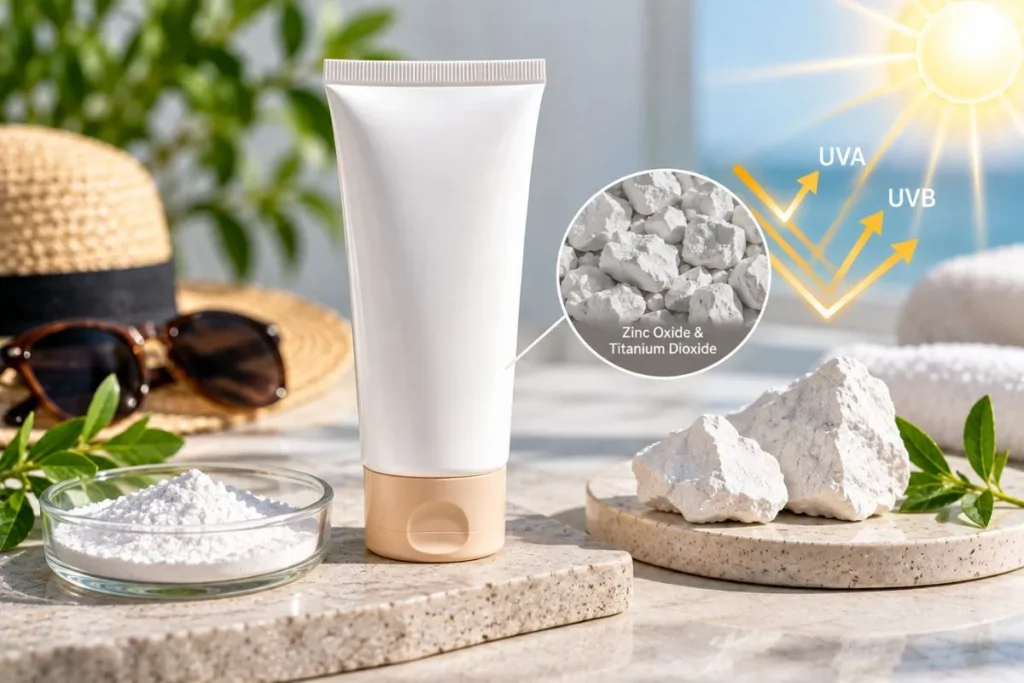
Zinc oxide is especially common in products designed for sensitive or reactive skin. It provides broad-spectrum protection, which means the formula is designed to protect against both UVA and UVB rays. Titanium dioxide is another mineral UV filter that can be used alone or alongside zinc oxide.
For someone searching for the best mineral sunscreen for rosacea-prone skin, the filter itself is only one part of the decision. You also need to consider the complete formula. A mineral sunscreen can still feel heavy, dry, chalky, or uncomfortable depending on its ingredients and texture.
This is particularly important if you have redness-prone skin. You want protection that feels comfortable rather than something you constantly notice on your face.
Is Mineral Sunscreen Better for Rosacea?
Mineral sunscreen can be a good option for people with sensitive or reactive skin, but it is not automatically better for everyone with rosacea.
Some people prefer mineral formulas because they find them more comfortable around easily irritated areas. Zinc oxide sunscreen for rosacea is especially popular because zinc oxide is a well-established mineral UV filter and can provide broad-spectrum protection.
However, “mineral” does not mean “irritation-proof.” Your skin can react to other parts of the formula, including fragrance, preservatives, botanical ingredients, or the overall texture. Two mineral sunscreens can feel completely different even though they use similar UV filters.
That’s why choosing a gentle sunscreen for rosacea requires looking at the whole product rather than focusing on one ingredient.
If your skin becomes uncomfortable easily, start with a simple formula. A fragrance-free sunscreen can be a sensible choice if fragrance is something your skin does not tolerate well. You may also prefer a non-irritating sunscreen that feels smooth and comfortable instead of thick or drying.
And remember, there is no prize for choosing a sunscreen you hate wearing. If a particular mineral formula leaves a noticeable white cast or feels uncomfortable, another formula may work much better for you.
Mineral vs. Chemical Sunscreen: Which Should You Choose?
The mineral-versus-chemical debate can make sunscreen shopping sound much more complicated than it needs to be.
The truth is simple: choose the sunscreen that gives you reliable broad-spectrum protection and that your skin can comfortably tolerate.
Mineral sunscreens use filters such as zinc oxide and titanium dioxide. Chemical sunscreens use different UV filters that absorb ultraviolet radiation. Both approaches can provide effective sun protection when the product is properly formulated and used as directed.
For rosacea-prone skin, your personal experience matters.
If mineral formulas feel comfortable and you like their finish, a physical sunscreen for rosacea may be a great fit. If you find mineral products too thick or difficult to blend, you may prefer a well-tolerated chemical formula instead.
Texture is another big factor. Some mineral sunscreens can leave a white or pale cast, especially when they contain a higher concentration of zinc oxide or titanium dioxide. A tinted formula may help reduce that visible effect. This can make a tinted mineral sunscreen for sensitive skin easier to wear during the day.
On the other hand, some people prefer lightweight chemical formulas because they spread easily and leave less visible residue. But if a particular product causes burning or stinging, it is not the right sunscreen for you, regardless of how lightweight it feels.
Mineral vs. Chemical Sunscreen: A Simple Way to Decide
Choose mineral if:
You prefer zinc oxide or titanium dioxide, want to try a physical sunscreen, or find mineral formulas more comfortable on your reactive skin.
Consider chemical if:
You prefer a very lightweight texture, dislike the potential white cast of some mineral products, and have found a chemical sunscreen that your skin comfortably tolerates.
Try tinted mineral sunscreen if:
You like mineral protection but dislike a visible white cast. Tint can make the finish look more natural and may also help visually soften the appearance of redness.
Look for fragrance-free formulas if:
Your skin is easily irritated by fragranced skincare or you simply prefer a simpler sunscreen formula.
The Bottom Line
There is no universal winner between mineral and chemical sunscreen for rosacea. The best sunscreen for sensitive skin with rosacea is the one that offers dependable broad-spectrum protection without causing unnecessary discomfort.
If you are specifically looking for a best zinc oxide sunscreen for rosacea, mineral formulas are worth exploring. But don’t stop at the word “mineral.” Check the SPF, broad-spectrum protection, ingredients, finish, and how your skin actually responds.
Your ideal sunscreen should protect your skin without becoming another source of irritation. Once you find that balance, wearing sunscreen every day becomes much easier.
Best Sunscreens for Rosacea
Many people believe the best sunscreens for rosacea must be expensive, completely mineral, or labeled specifically for rosacea. Not necessarily. What matters is how well the sunscreen combines broad-spectrum protection with a formula your sensitive skin can comfortably handle.
The right pick can also depend on your skin type, finish preference, redness, and whether you want a tinted or untinted formula.
The following picks cover different needs, so you don’t have to force one sunscreen to work for everyone.
Whether you’re searching for the best sunscreen for rosacea and redness, a gentle daily SPF, a mineral option, or a formula that doesn’t leave an obvious white cast, use the “best for” category to narrow down your choice.
EltaMD UV Skin Recovery Broad-Spectrum SPF 50 Best for Very Sensitive Skin
Best for: Very sensitive, redness-prone, and reactive skin.
If your skin tends to react to almost everything, EltaMD UV Skin Recovery Broad-Spectrum SPF 50 is a strong option to consider. It uses mineral UV protection and is designed with sensitive skin in mind.
Its formula contains zinc oxide and is made without fragrance. It is also non-comedogenic, which can be helpful if your skin is both sensitive and prone to clogged pores.
What makes this option appealing is its focus on skin comfort. It works well for people looking for a gentle sunscreen for rosacea without adding an overly complicated product to their routine.
For someone searching for the best sunscreen for sensitive skin with rosacea, this is one of the first formulas worth investigating.
EltaMD UV Physical Broad-Spectrum SPF 41 Best Tinted Mineral Sunscreen
Best for: Sensitive and oily-to-normal skin that prefers a tinted finish.
A tinted mineral sunscreen can solve two common problems at once: UV protection and visible white cast. EltaMD UV Physical SPF 41 uses zinc oxide and titanium dioxide and comes with a tint that can blend more naturally into the skin.
This makes it particularly interesting if you’re searching for the best tinted sunscreen for rosacea and redness.
The tint doesn’t treat rosacea itself. Instead, it can help create a more even-looking finish while reducing the chalky appearance that some people notice with mineral sunscreen.
It is also fragrance-free and non-comedogenic, making it a practical choice for people who want a mineral sunscreen for rosacea with a more cosmetic finish.
EltaMD UV Restore Broad-Spectrum SPF 40 Best for Dry Sensitive Skin
Best for: Dry, sensitive, and mature-looking skin.
Dry skin can make sunscreen shopping frustrating. Some formulas feel tight or emphasize flaky areas. EltaMD UV Restore SPF 40 offers a more moisturizing approach while maintaining mineral UV protection.
It uses zinc oxide and titanium dioxide and includes moisturizing ingredients such as squalane. That combination makes it worth considering when you’re looking for a best sunscreen for dry sensitive skin with rosacea concerns.
The texture is especially important here. A sunscreen that feels comfortable over dry skin is much easier to use every morning.
If your main concern is dryness rather than excess oil, this can be a useful moisturizing sunscreen for rosacea to compare.
EltaMD UV Active Broad-Spectrum SPF 50+ Best for Outdoor Activities
Best for: Outdoor activities, exercise, and prolonged sun exposure.
If you spend a lot of time outside, your sunscreen needs to fit an active lifestyle. EltaMD UV Active SPF 50+ is a mineral sunscreen designed for higher-exposure situations and offers water resistance for up to 80 minutes.
It uses zinc oxide and titanium dioxide for mineral UV protection.
This option can make sense when you’re looking for a best SPF 50 sunscreen for rosacea that is better suited to active days.
Remember that water resistance does not mean you can apply sunscreen once and forget about it. Swimming, sweating, towel drying, and extended outdoor exposure can all change how long your protection lasts.
La Roche-Posay Anthelios Mineral Gentle Lotion SPF 50 Best for Body
Best for: Sensitive skin that needs mineral SPF on larger areas of the body.
Not every sunscreen has to be a facial formula. If rosacea-prone skin is accompanied by general sensitivity elsewhere, a gentle mineral body sunscreen can be useful.
La Roche-Posay Anthelios Mineral Gentle Lotion SPF 50 uses 100% mineral filters and is designed for sensitive skin. The formula is fragrance-free, oil-free, and non-comedogenic.
Its SPF 50 rating also makes it a useful option for people who prefer higher labeled protection.
If you’re looking beyond a best face sunscreen for rosacea and want a mineral formula for the neck, chest, arms, or other exposed areas, this is worth considering.
EltaMD UV Skin Recovery Green Tint SPF 50 Best for Redness
Best for: People concerned about the appearance of facial redness.
When redness is your biggest cosmetic concern, a green-tinted sunscreen can be interesting. Green tones can visually balance some of the appearance of redness, while the sunscreen provides UV protection.
This type of product can be especially appealing if you’re searching for the best sunscreen for rosacea and redness but don’t want to layer several complexion products over your SPF.
The important distinction is that a green tint is a cosmetic feature. It doesn’t cure rosacea or stop the condition itself.
For everyday wear, however, a tinted formula can make sunscreen feel more like a skincare-and-complexion product rather than another separate step.
EltaMD UV Restore Tinted SPF 40 Best Tinted Option for Dry Skin
Best for: Dry sensitive skin that wants mineral protection with a tint.
If you like the idea of tinted mineral sunscreen but your skin also needs moisture, EltaMD UV Restore Tinted SPF 40 is worth comparing with other options.
The tint can help minimize visible residue, while the moisturizing formula is designed with dry skin in mind.
This is a useful choice for readers looking for a best tinted sunscreen for rosacea and redness without choosing a formula that feels excessively drying.
It’s also a good example of why skin type matters. A sunscreen that works beautifully for oily skin may not feel nearly as comfortable on dry, sensitive skin.
EltaMD UV Pure Broad-Spectrum SPF 47 Best Everyday Mineral Option
Best for: Simple everyday mineral protection.
Sometimes you don’t want a complicated sunscreen. You just want something straightforward that provides mineral UV protection and fits easily into your routine.
EltaMD UV Pure Broad-Spectrum SPF 47 is an option to consider if you’re specifically searching for a daily mineral sunscreen for sensitive skin.
It provides broad-spectrum protection and uses mineral filters. The formula is also designed with sensitive skin considerations in mind.
This makes it a practical candidate for someone who wants a gentle sunscreen for rosacea without necessarily needing a tinted finish or a specialized cosmetic effect.
EltaMD UV AOX Elements Broad-Spectrum SPF 50 Best Mineral Antioxidant Formula
Best for: People who want mineral SPF with antioxidant-focused skincare ingredients.
If you’re looking for more than basic sun protection, EltaMD UV AOX Elements SPF 50 is another formula to consider.
It combines mineral UV protection with antioxidant ingredients in a tinted format. That can make it attractive for people who want their sunscreen to feel more like a complete skincare step.
The tint is also useful for people who dislike the appearance of some mineral sunscreens.
For readers comparing the best mineral sunscreen for rosacea-prone skin, this is a good example of why you should compare the entire formula instead of judging a sunscreen only by its UV filters.
EltaMD UV Stick Broad-Spectrum SPF 50+ Best Mineral Sunscreen Stick
Best for: Convenient reapplication on the go.
A sunscreen stick can be handy when you’re traveling, exercising, or spending time outdoors. It can also make reapplication easier when you don’t want to carry a full bottle of lotion.
EltaMD UV Stick SPF 50+ provides mineral broad-spectrum protection in a portable format.
This type of product is particularly useful as a companion to your primary sunscreen. You can use your regular sunscreen for the initial application and keep a stick nearby for convenient touch-ups where appropriate.
If your priority is convenience, this can be a useful addition to a daily sunscreen for rosacea routine.
EltaMD UV Physical SPF 40 Rosy Tint Best Rosy-Tinted Mineral Sunscreen
Best for: People who prefer a warmer, rosy finish.
Not everyone likes a neutral or green tint. A rosy tint can provide a more natural-looking finish for certain skin tones and may be preferable if you want your sunscreen to look less like traditional mineral SPF.
This option is particularly relevant when comparing the top sunscreens for rosacea based on finish rather than just SPF.
As with other tinted products, the tint is there for appearance. It should not be confused with a treatment for rosacea.
EltaMD UV AOX Mist SPF 40 Best Convenient Mineral Format
Best for: People who value a convenient spray-style format.
A mist can make sunscreen application feel quick and convenient, especially for exposed areas or reapplication. However, sprays require careful application to make sure enough product actually reaches the skin.
EltaMD UV AOX Mist SPF 40 offers mineral UV protection in a convenient format.
If you choose a spray or mist, don’t simply give your face a quick cloud of product and assume you’re fully protected. Follow the product’s directions and apply enough sunscreen to cover the skin evenly.
Convenience should support good sunscreen habits, not replace them.
Best Sunscreen for Rosacea That Does Not Sting
Best for: People whose biggest concern is burning or stinging.
There is no sunscreen that can honestly be guaranteed never to sting every person with rosacea. Skin sensitivity is highly individual.
Instead, look for formulas designed with sensitive skin in mind and avoid ingredients you already know trigger discomfort for you. Fragrance-free and simpler formulas may be worth trying if your skin reacts easily.
When comparing the best sunscreen for rosacea that does not sting, don’t judge the product only by reviews. A sunscreen can be highly rated and still not agree with your individual skin.
If a product repeatedly causes burning, itching, or significant irritation, stop using it and consider discussing persistent reactions with a dermatologist.
Quick Comparison: Top Sunscreens for Rosacea
| Sunscreen | Best For | SPF | Filter Type | Tint | Skin Type |
| EltaMD UV Skin Recovery | Very sensitive skin | 50 | Mineral | No/variant dependent | Sensitive, reactive |
| EltaMD UV Physical | Tinted mineral protection | 41 | Mineral | Yes | Oily-to-normal, sensitive |
| EltaMD UV Restore | Dry sensitive skin | 40 | Mineral | Available tinted/untinted | Dry, sensitive |
| EltaMD UV Active | Outdoor activities | 50+ | Mineral | No | Active, sensitive |
| La Roche-Posay Anthelios Mineral Gentle Lotion | Body protection | 50 | Mineral | No | Sensitive |
| EltaMD UV Skin Recovery Green Tint | Redness appearance | 50 | Mineral | Green tint | Sensitive, redness-prone |
| EltaMD UV Pure | Everyday mineral SPF | 47 | Mineral | No | Sensitive |
| EltaMD UV AOX Elements | Antioxidant-focused formula | 50 | Mineral | Yes | Sensitive |
| EltaMD UV Stick | Convenient reapplication | 50+ | Mineral | No | Sensitive |
| EltaMD UV AOX Mist | Convenient format | 40 | Mineral | No | Sensitive |
How to Pick From These 13+ Sunscreens
Don’t feel like you need to buy several products to find your answer. Start with your biggest concern.
If redness is your priority, compare tinted options. If your skin is very sensitive, focus on gentle formulas and ingredients you already know your skin tolerates.
If you have dry sensitive skin, look for a more moisturizing texture. For oily or acne-prone skin, a lightweight, non-comedogenic option may feel better.
And if you’re specifically searching for the best zinc oxide sunscreen for rosacea, start by comparing mineral formulas that use zinc oxide and then look at the rest of the ingredient list and finish.
The best choice isn’t necessarily the most expensive product or the one with the highest number on the bottle. It’s the sunscreen that gives you dependable protection and is comfortable enough to use consistently.
Frequently Asked Questions
What Are the Best Sunscreens for Rosacea?
The best sunscreens for rosacea are usually those that provide broad-spectrum UV protection while feeling comfortable on sensitive, reactive skin. Look for a formula that suits your skin type and does not cause burning, stinging, or unnecessary irritation.
Mineral formulas containing zinc oxide or titanium dioxide can be worth considering, especially if you prefer a physical sunscreen. However, the complete formula matters more than simply choosing a mineral label.
What Is the Best Sunscreen for Rosacea and Redness?
The best sunscreen for rosacea and redness depends on your skin’s needs. A tinted sunscreen can be a useful choice if you want to reduce the visible appearance of redness and avoid a noticeable white cast.
For particularly reactive skin, focus first on comfortable, gentle protection. A cosmetic tint is helpful, but it should not replace good UV protection.
Is Mineral Sunscreen Better for Rosacea?
Mineral sunscreen can be an excellent choice for some people with rosacea, particularly those who prefer zinc oxide or titanium dioxide.
However, mineral does not automatically mean irritation-free. Other ingredients in the formula can affect how your skin responds. The best mineral sunscreen for rosacea-prone skin is one that your skin tolerates comfortably and that provides adequate broad-spectrum protection.
What Is the Best Mineral Sunscreen for Rosacea-Prone Skin?
Look for a mineral sunscreen that uses zinc oxide and/or titanium dioxide and is designed for comfortable use on sensitive skin.
If you’re comparing several options, pay attention to the SPF, finish, fragrance, texture, and whether the formula is non-comedogenic. A product that checks all these boxes may be easier to use consistently.
What Is the Best Sunscreen for Sensitive Skin With Rosacea?
The best sunscreen for sensitive skin with rosacea should be gentle, comfortable, and suitable for your individual skin type.
If your skin reacts easily, you may want to start with a fragrance-free formula and avoid products containing ingredients that have caused you problems in the past. Always consider the entire formula rather than relying on a “sensitive skin” claim alone.
What Is the Best Fragrance-Free Sunscreen for Rosacea?
The best fragrance-free sunscreen for rosacea is one that combines broad-spectrum protection with a formula your skin can comfortably tolerate.
Fragrance-free can be a useful feature for people who are sensitive to fragranced skincare, but it does not guarantee that a product will work for everyone. Check the full ingredient list and introduce new products carefully.
What Is the Best Zinc Oxide Sunscreen for Rosacea?
The best zinc oxide sunscreen for rosacea should provide broad-spectrum protection while offering a texture and finish that work for your skin.
Zinc oxide is a popular mineral UV filter, but don’t choose a product based on zinc oxide alone. Consider SPF, white cast, hydration, fragrance, and overall skin tolerance before making your final choice.
Is SPF 50 Sunscreen Better for Rosacea?
SPF 50 can be a great option when you want a higher labeled level of UVB protection, but a higher SPF does not automatically make a sunscreen more suitable for rosacea.
The best SPF 50 sunscreen for rosacea is still one that you can apply properly and comfortably. Consistent use, adequate application, and reapplication when needed are all important.
What Is the Best Tinted Sunscreen for Rosacea and Redness?
The best tinted sunscreen for rosacea and redness depends on your skin tone, preferred finish, and sensitivity.
Tinted mineral sunscreens can be particularly useful if you’re concerned about the white cast associated with some mineral formulas. Some tinted products may also make facial redness look less noticeable, giving the skin a more even appearance.
What Is the Best Sunscreen for Rosacea That Does Not Sting?
There isn’t one sunscreen that can guarantee zero stinging for every person with rosacea. Skin sensitivity varies from person to person.
If stinging is your main concern, look for a gentle, fragrance-free formula and avoid ingredients you already know irritate your skin. Test new products cautiously rather than immediately applying an unfamiliar formula over your entire face.
Can Sunscreen Prevent Rosacea Flare-Ups?
Sunscreen cannot cure rosacea, but protecting your skin from UV exposure is an important part of managing sun-related triggers.
If sunlight tends to worsen your redness, consistent sunscreen use can help reduce your exposure to a potential trigger. It works best as part of a broader skincare routine that suits your individual needs.
Can People With Rosacea Use Sunscreen Every Day?
Yes. Daily sunscreen can be an important part of a skincare routine for people with rosacea.
The trick is finding a formula that you actually enjoy wearing. A lightweight mineral sunscreen, moisturizing sunscreen, or tinted sunscreen may work better depending on your skin type and preferences.
Is Tinted Mineral Sunscreen Good for Rosacea?
Tinted mineral sunscreen can be a good option for people who like mineral UV filters but dislike the white cast that some formulas can leave behind.
The tint may also help visually even out the appearance of redness. However, it does not treat rosacea itself. Choose the product based on both its UV protection and how comfortably your skin tolerates the formula.
Should People With Rosacea Use SPF 30 or SPF 50?
Both can provide useful protection when applied correctly. SPF 30 is a common starting point for daily use, while SPF 50 provides a higher labeled level of UVB protection.
If you spend extended periods outdoors, you should also pay attention to broad-spectrum protection, proper application, and reapplication instead of focusing only on the SPF number.
Can Sunscreen Make Rosacea Worse?
A particular sunscreen can cause discomfort or irritation in some people, but that does not mean sunscreen itself is bad for rosacea.
Problems may come from a specific ingredient, fragrance, texture, or another part of the formula that your skin does not tolerate.
If a product consistently causes burning, itching, or significant irritation, stop using it and consider trying a different formula or speaking with a dermatologist.
Conclusion
Finding the best sunscreen for rosacea doesn’t have to be complicated. Start with what your skin actually needs instead of chasing the highest SPF or the most popular product.
Look for reliable broad-spectrum protection, a comfortable texture, and a formula that doesn’t leave your skin feeling irritated.
If you prefer mineral protection, zinc oxide and titanium dioxide formulas are worth exploring. If redness and white cast are your biggest concerns, a tinted option may be more appealing.
For dry skin, choose a comfortable moisturizing formula, while oily or acne-prone skin may do better with a lightweight, non-comedogenic option.
Most importantly, don’t force yourself to use a sunscreen that makes your skin uncomfortable. The best sunscreens for rosacea are the ones that protect your skin and fit easily into your daily routine.
Compare your options, choose a formula that matches your skin type, and make sun protection a consistent part of your skincare routine.

Name: Shahzadi
I’m passionate about skincare, beauty, and simple self-care. I share practical skincare tips, beauty routines, product insights, and easy ways to build healthy-looking, glowing skin.
My goal is to make beauty and skincare easier to understand, so you can discover routines that fit your everyday life.


