
If you have dry skin, you probably know how difficult it is to find a sunscreen that doesn’t leave your face feeling tight, flaky, or uncomfortable. Many sunscreens protect against UV rays but fail to provide the hydration dry skin needs.
Some even leave a white cast or make your skin feel rough after a few hours. The good news is that you don’t have to choose between sun protection and moisture.
The best sunscreens for dry skin are specially formulated with hydrating ingredients that protect your skin from harmful UVA and UVB rays while keeping it soft, smooth, and moisturized throughout the day.
In this guide, you’ll learn everything you need to know about choosing the best sunscreen for dry skin. We’ll explain what makes a sunscreen suitable for dry skin, why hydrating formulas are important, and how to pick the right sunscreen for your skin type.
You’ll also discover the best ingredients to look for, ingredients to avoid, expert buying tips, and the top sunscreen recommendations for sensitive, mature, acne-prone, and extremely dry skin.
By the end of this article, you’ll be able to confidently choose a hydrating sunscreen for dry skin that fits your skincare routine and keeps your skin healthy all year round.
What Makes a Sunscreen Good for Dry Skin?
Not all sunscreens are created equal. Some formulas are designed mainly to protect against the sun, while others also provide long-lasting hydration. If you have dry skin, picking the wrong sunscreen can leave your face feeling tight, flaky, or uncomfortable just a few hours after application.
The best sunscreens for dry skin combine broad-spectrum UV protection with moisturizing ingredients that help your skin stay hydrated all day. Instead of simply sitting on the surface, these products work to reduce moisture loss while shielding your skin from harmful UVA and UVB rays.
Let’s look at what makes a sunscreen truly suitable for dry skin.
What Is a Hydrating Sunscreen?
A hydrating sunscreen is a sunscreen that not only protects your skin from sun damage but also contains ingredients that add and retain moisture. Unlike traditional formulas that may leave the skin feeling dry or chalky, a hydrating sunscreen helps your skin stay smooth, soft, and comfortable.
Most moisturizing sunscreens include ingredients that attract water to the skin or strengthen the skin’s natural moisture barrier.
Some of the most effective hydrating ingredients include:
- Hyaluronic Acid
- Glycerin
- Ceramides
- Aloe Vera
- Shea Butter
- Squalane
- Vitamin E
These ingredients help make a moisturizing sunscreen for dry skin much more comfortable to wear throughout the day.
Hydrating Sunscreen vs. Regular Sunscreen
Although every sunscreen is designed to protect against UV rays, not every formula provides enough hydration for dry skin.
A regular sunscreen may focus mainly on sun protection and can sometimes leave the skin feeling dry, especially if it contains ingredients that absorb excess oil.
A hydrating facial sunscreen, on the other hand, combines sun protection with moisturizing ingredients that help maintain your skin’s natural hydration. This makes it a better choice for people whose skin often feels dry or tight after cleansing or sun exposure.
Why Hydration Matters in Sunscreen
Dry skin naturally loses moisture more quickly than other skin types. Sun exposure can make this problem even worse by weakening the skin’s protective barrier.
A sunscreen with moisturizing ingredients helps:
- Reduce moisture loss
- Keep skin soft throughout the day
- Improve skin comfort
- Support a healthy skin barrier
- Prevent dryness caused by UV exposure
That’s why many dermatologists recommend choosing a sunscreen with moisturizer instead of relying on sun protection alone.
Why Dry Skin Needs a Different Sunscreen
Dry skin has different needs than oily or combination skin. It requires both effective sun protection and continuous hydration.
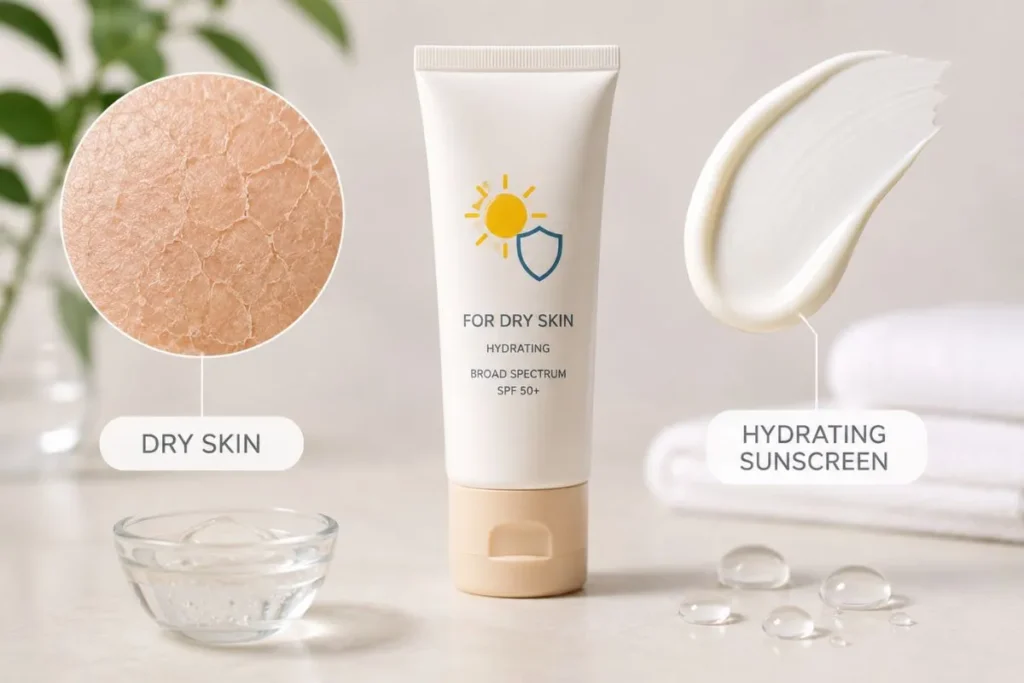
Using the wrong sunscreen can make dryness more noticeable, while the right one can improve how your skin feels every day.
Helps Prevent Moisture Loss
One of the biggest challenges for dry skin is keeping moisture where it belongs.
The best sunscreen for dry skin creates a protective layer that slows water loss while defending your skin against UV damage. This helps your skin stay hydrated for longer, even during hot or windy weather.
Supports the Skin Barrier
Your skin barrier acts as a shield that keeps moisture in and environmental irritants out.
When this barrier becomes weak, your skin may feel rough, flaky, or sensitive.
A good skin barrier sunscreen contains ingredients like ceramides, squalane, and nourishing plant extracts that help strengthen this protective layer while providing daily sun protection.
Keeps Skin Comfortable All Day
Dry skin often feels tight by the afternoon, especially if you’re spending time outdoors.
A daily sunscreen for dry skin with hydrating ingredients helps reduce this uncomfortable feeling by delivering moisture throughout the day.
Instead of feeling dry or flaky, your skin remains soft and smooth even after hours of wear.
Reduces Flaking and Roughness
Flaky skin is one of the most common signs of dehydration.
Using a sunscreen for flaky skin that contains moisturizing ingredients can help improve your skin’s appearance while protecting it from further sun damage.
Although sunscreen isn’t a treatment for dryness, choosing the right formula can make your skin look healthier and feel more comfortable.
Protects Against Premature Aging
Sun exposure is one of the leading causes of premature skin aging.
Without daily SPF, dry skin is more likely to develop:

- Fine lines
- Wrinkles
- Uneven texture
- Dark spots
- Loss of elasticity
A high-quality anti-aging sunscreen protects your skin from UV damage while keeping it hydrated, making it an essential part of any skincare routine.
Works Well as Part of Your Daily Routine
Modern sunscreens are designed to do more than protect your skin.
Many formulas also work as:
- A moisturizing SPF cream
- A lightweight day moisturizer
- A makeup-friendly primer
- An everyday facial SPF
Choosing a product that combines hydration with sun protection can simplify your routine without compromising your skin’s health.
Who Should Use a Hydrating Sunscreen?
A hydrating sunscreen is an excellent choice if you have:
- Dry skin
- Sensitive skin
- Mature skin
- Dehydrated skin
- Dry, flaky skin
- Combination skin with dry areas
It’s also ideal for anyone looking for the best sunscreens for dry skin and sensitive skin, the best sunscreen for extremely dry skin, or the best sunscreen with moisturizer for dry skin.
Why Is Sunscreen Important for Dry Skin?
Many people believe that sunscreen is only necessary on sunny days or during outdoor activities. That’s simply not true. Harmful UV rays can affect your skin throughout the year, even on cloudy days or while you’re indoors near windows.
If you have dry skin, skipping sunscreen can make your skin even drier and speed up signs of aging. The best sunscreens for dry skin not only shield your skin from harmful UVA and UVB rays but also help maintain moisture, making them an essential part of your daily skincare routine.
Common Causes of Dry Skin
Dry skin isn’t always caused by a lack of moisturizer. Several internal and external factors can reduce your skin’s ability to retain moisture. Understanding these causes will help you choose the best sunscreen for dry skin and build a skincare routine that keeps your skin healthy.
Weather Changes
Cold weather, strong winds, and low humidity are some of the biggest reasons people experience dry skin. During winter, moisture in the air decreases, making it easier for your skin to lose hydration.

This is why many people look for the best sunscreen for extremely dry skin or a rich moisturizing sunscreen for dry skin during colder months.
UV Exposure
Many people don’t realize that sunlight itself can contribute to dry skin.
Prolonged exposure to UV rays weakens your skin’s natural barrier, allowing moisture to escape more easily. Over time, this leaves your skin feeling rough, tight, and dehydrated.
Using a broad-spectrum sunscreen every day helps reduce this damage while protecting your skin from harmful UVA and UVB rays.
Aging
As you grow older, your skin naturally produces less oil. This makes it harder for your skin to stay hydrated, increasing the risk of dryness, fine lines, and wrinkles.
A hydrating sunscreen for dry skin with ingredients like hyaluronic acid and ceramides can help mature skin stay soft while protecting it from further sun damage.
Harsh Skincare Products
Some cleansers, exfoliants, and alcohol-based skincare products remove too much of your skin’s natural moisture.
When this happens, your skin becomes more vulnerable to dryness and irritation.
Pairing gentle skincare products with the best sunscreen with moisturizer for dry skin helps restore hydration while protecting your skin every day.
Dehydration
Your skin reflects what’s happening inside your body.
Not drinking enough water, spending time in air-conditioned environments, or consuming too much caffeine can all contribute to dehydrated skin.
While sunscreen can’t replace proper hydration, a hydrating facial sunscreen can help reduce moisture loss throughout the day.
How Sun Damage Makes Dry Skin Worse
The sun doesn’t just increase your risk of sunburn. It also affects your skin’s ability to stay healthy and hydrated.
Here’s how UV exposure can make dry skin even worse.

Increased Moisture Loss
Healthy skin naturally holds water inside its outer layers.
When UV rays weaken the skin barrier, moisture escapes more easily. This leaves your skin feeling dry, uncomfortable, and more prone to flaking.
A quality sunscreen lotion for dry skin helps reduce moisture loss while protecting your skin from daily sun exposure.
Skin Barrier Damage
Your skin barrier acts like a protective shield.
Sun damage weakens this barrier over time, making it harder for your skin to defend itself against pollution, harsh weather, and dehydration.
Choosing a skin barrier sunscreen with hydrating ingredients helps keep this protective layer strong and healthy.
Premature Aging
One of the biggest effects of long-term sun exposure is premature aging.
Without daily sunscreen, UV rays can speed up the appearance of:
- Fine lines
- Wrinkles
- Sagging skin
- Uneven texture
- Dark spots
Using an anti-aging sunscreen every day helps reduce these visible signs while keeping your skin moisturized.
Dull and Rough Skin
Sun-damaged skin often loses its natural glow.
Instead of looking smooth and healthy, it may appear dull, rough, and uneven.
A moisturizing SPF cream helps improve your skin’s appearance by protecting it from UV damage while maintaining hydration.
Benefits of Using the Right Sunscreen
Choosing the right sunscreen offers much more than basic sun protection.
The best sunscreens for dry skin are designed to improve your skin’s comfort while defending it against daily environmental stress.
Locks in Moisture
Hydrating sunscreens contain ingredients like glycerin, hyaluronic acid, ceramides, and squalane that help your skin retain moisture for longer.
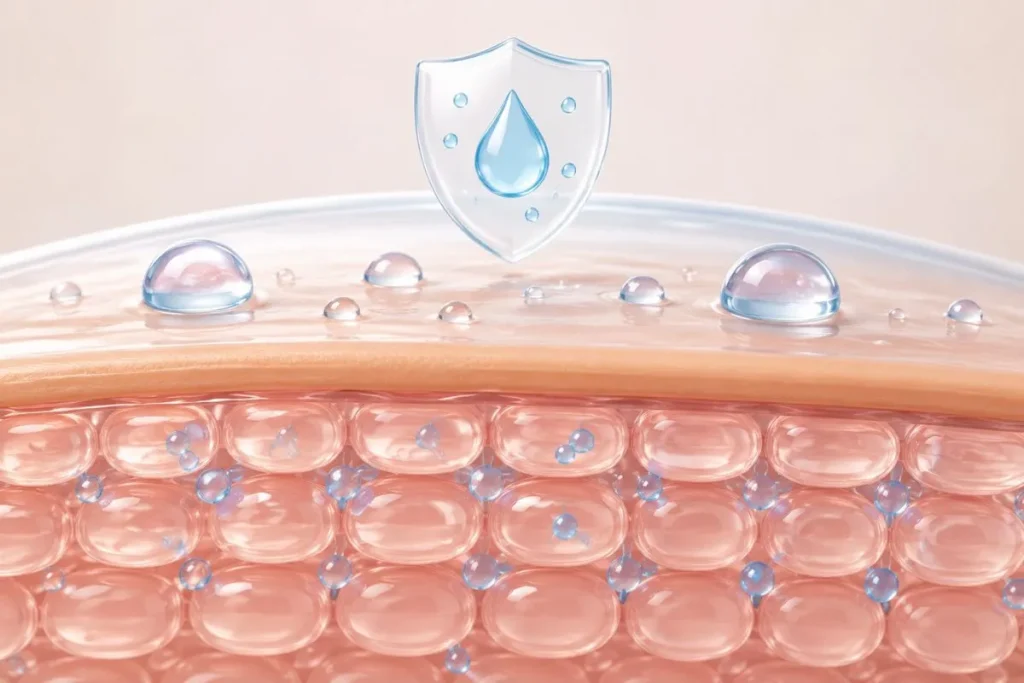
This keeps your skin feeling soft instead of dry throughout the day.
Protects Against Harmful UV Rays
Daily use of a broad-spectrum sunscreen protects your skin from both UVA and UVB rays.
This helps lower the risk of:
- Sunburn
- Premature aging
- Pigmentation
- Skin damage
Consistent protection is one of the simplest ways to maintain healthy skin.
Supports a Healthy Skin Barrier
Many modern face sunscreens for dry skin include ingredients that help strengthen the skin barrier while providing sun protection.
A stronger skin barrier means your skin is better able to hold moisture and defend itself against environmental damage.
Improves Skin Comfort
Dry skin often feels tight and uncomfortable by the middle of the day.
A daily sunscreen for dry skin with moisturizing ingredients keeps your skin feeling comfortable from morning until evening.
Works Well Under Makeup
Many hydrating sunscreens also create a smooth base for makeup.
Instead of clinging to dry patches, foundation applies more evenly when your skin is properly hydrated.
This is especially helpful if you’re searching for the best sunscreen for dry skin under makeup.
Suitable for Daily Use
Modern sunscreen formulas are designed to fit easily into your skincare routine.
Whether you’re staying indoors, commuting to work, or spending time outside, applying sunscreen every morning should become a daily habit.
A moisturizing sunscreen for dry skin offers both protection and hydration in one simple step.
How We Chose the Best Sunscreens for Dry Skin
Many people think that the sunscreen with the highest SPF is automatically the best choice for dry skin. That’s a common misconception. While SPF is important, it isn’t the only factor that matters.
A sunscreen with SPF 100 won’t necessarily keep your skin hydrated or comfortable. The best sunscreens for dry skin combine effective sun protection with moisturizing ingredients, a skin-friendly formula, and a texture that feels comfortable enough to wear every day.
To make this guide as helpful as possible, we carefully evaluated each product using practical criteria instead of relying on marketing claims. Our goal was to recommend sunscreens that protect your skin from harmful UV rays while helping it stay soft, healthy, and hydrated.
Selection Criteria
With so many sunscreens available today, finding the right one can feel overwhelming. Some products focus only on UV protection, while others also provide skincare benefits like hydration and barrier support.
Here are the key factors we considered when selecting the best sunscreen for dry skin.
Broad-Spectrum UV Protection
The first requirement was effective sun protection.
Every sunscreen included in this guide offers broad-spectrum protection, meaning it helps protect your skin from both:
- UVA rays, which contribute to premature aging.
- UVB rays, which are the primary cause of sunburn.
Daily protection from both types of UV rays is essential for maintaining healthy skin.
SPF Level
SPF plays a major role in protecting your skin.
We prioritized sunscreens with SPF 30 or higher because they provide reliable everyday protection for most people.
Depending on your lifestyle and sun exposure, you may benefit from:
- SPF 30 for everyday indoor and outdoor activities.
- SPF 50 for extended outdoor exposure.
The right SPF should always be paired with regular reapplication for maximum protection.
Hydrating Ingredients
Since this guide focuses on dry skin, hydration was one of our top priorities.
We looked for formulas containing ingredients known for helping the skin retain moisture, including:
- Hyaluronic Acid
- Ceramides
- Glycerin
- Aloe Vera
- Shea Butter
- Squalane
- Vitamin E
These ingredients help transform an ordinary sunscreen into a hydrating sunscreen for dry skin that protects and nourishes your skin at the same time.
Skin-Friendly Formula
Dry skin often becomes more sensitive to harsh ingredients.
For that reason, we favored products that are:
- Fragrance-free or lightly scented
- Non-comedogenic
- Dermatologist tested
- Suitable for daily use
- Gentle on sensitive skin
These qualities are especially important if you’re looking for the best sunscreens for dry skin and sensitive skin.
Customer Reviews and User Experience
Real-world feedback helps separate good products from great ones.
We considered reviews from users who consistently mentioned benefits such as:

- Long-lasting hydration
- Comfortable wear
- No white cast
- Smooth application
- Minimal irritation
- Reliable sun protection
Products with consistently positive feedback earned higher consideration.
Dermatologist Recommendations
Whenever possible, we gave preference to products formulated with dermatologist-recommended ingredients.
Many skincare professionals recommend sunscreens that combine effective UV filters with moisturizing ingredients that help strengthen the skin barrier.
If you’re searching for a dermatologist recommended sunscreen for dry skin, you’ll find several strong options throughout this guide.
Ingredient Transparency
We also looked for brands that clearly list their ingredients and explain what each formula is designed to do.
Brands that are transparent about:
- Active sunscreen ingredients
- Moisturizing ingredients
- Skin type recommendations
- Safety testing
- Product certifications
often inspire greater confidence among consumers.
Texture and Finish
The texture of a sunscreen can determine whether you’ll actually enjoy using it every day.
We included a variety of formulas, such as:
- Lightweight lotions
- Moisturizing creams
- Hydrating gel-creams
- Rich creams for very dry skin
This ensures readers can find a face sunscreen for dry skin that suits both their preferences and their skincare routine.
Value for Money
Expensive products aren’t always the best performers.
We compared products based on:
- Ingredient quality
- SPF protection
- Hydration
- Product size
- Price
- Overall performance
This helped us recommend options for readers looking for an affordable sunscreen for dry skin without sacrificing quality.
Who This Guide Is For
Dry skin isn’t the same for everyone. Some people experience mild dryness during winter, while others struggle with dehydration throughout the year.
This guide has been created for anyone looking for reliable sun protection without compromising hydration.
People with Dry Skin
If your skin often feels tight, rough, or uncomfortable after washing your face, you’ll benefit from sunscreens that provide long-lasting moisture while protecting against UV damage.
Our recommendations include some of the best sunscreens for dry skin for everyday use.
People with Sensitive Skin
Sensitive skin needs gentle formulas that minimize irritation.
We’ve included products that avoid unnecessary harsh ingredients and work well for those searching for the best sunscreens for dry skin and sensitive skin.
People with Mature Skin
As skin ages, it naturally loses moisture and elasticity.
That’s why mature skin often benefits from hydrating sunscreens that contain ingredients like ceramides, hyaluronic acid, and antioxidants.
Several recommendations in this guide are ideal if you’re looking for the best sunscreen for dry mature skin.
People with Acne-Prone Skin
Having acne-prone skin doesn’t mean you should skip sunscreen.
We’ve selected lightweight, non-comedogenic formulas that provide hydration without clogging pores, making them suitable for anyone searching for the best sunscreen for dry acne-prone skin.
People with Extremely Dry or Flaky Skin
If your skin develops rough patches or persistent dryness, you’ll need a richer formula that offers extra moisture alongside UV protection.
Several recommendations are especially suitable for readers searching for the best sunscreen for extremely dry skin.
People Who Wear Makeup Daily
A good sunscreen should work well under foundation without pilling or leaving a greasy finish.
We’ll highlight products that double as a smooth makeup base for readers looking for the best sunscreen for dry skin under makeup.
Anyone Looking for Moisture and Sun Protection in One Product
If you want to simplify your skincare routine, this guide is also for you.
Many of the featured products function as both sunscreen and moisturizer, making them perfect if you’re searching for the best sunscreen with moisturizer for dry skin or a moisturizing sunscreen for dry skin.
Best Sunscreens for Dry Skin
Many people believe that all sunscreens feel heavy, greasy, or leave a white cast on dry skin. Fortunately, that’s no longer true. Modern formulas are designed to do much more than protect against harmful UV rays.
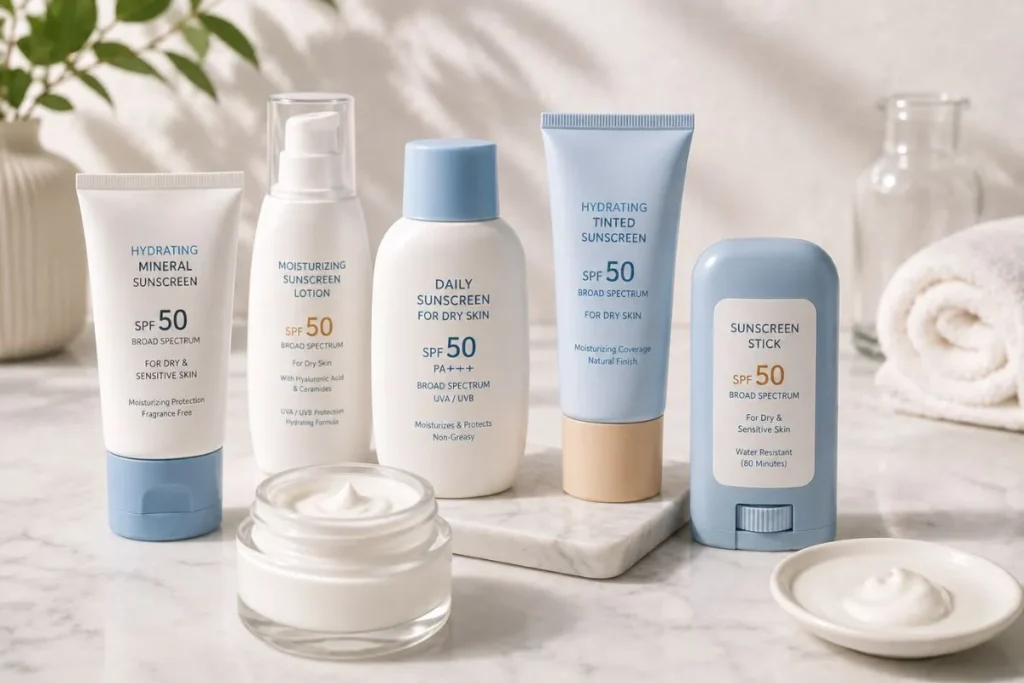
The best sunscreens for dry skin also provide long-lasting hydration, strengthen the skin barrier, and leave your skin feeling soft and comfortable throughout the day. Whether you have sensitive, mature, acne-prone, or extremely dry skin, there’s a sunscreen that fits your specific needs.
Product Overview
Each sunscreen featured in this guide has been carefully selected for its ability to protect against UVA and UVB rays while providing lasting hydration.
We considered ingredient quality, skin compatibility, dermatologist recommendations, customer reviews, and overall value.
Whether you’re looking for a lightweight face sunscreen for dry skin or a rich moisturizing sunscreen for dry skin, every product has been chosen to help you protect and nourish your skin at the same time.
Pros
Every sunscreen has its own strengths, and we’ll clearly explain what makes each one stand out.
Some common advantages include:
- Broad-spectrum UVA and UVB protection
- Long-lasting hydration
- Lightweight, comfortable texture
- No white cast
- Non-greasy finish
- Suitable for daily use
- Works well under makeup
- Dermatologist-tested formulas
- Skin barrier support
- Non-comedogenic ingredients
These benefits make it easier to identify the sunscreen that best matches your skincare routine.
Cons
No product is perfect, and an honest review should always include potential drawbacks.
Depending on the formula, some sunscreens may:
- Feel richer on oily areas
- Cost more than drugstore alternatives
- Require frequent reapplication outdoors
- Leave a slight glow on the skin
- Be better suited for certain skin types
Understanding these limitations helps you make a smarter buying decision instead of relying on advertising alone.
Best For
Different sunscreens work better for different skin concerns.
Each review will clearly mention who the product is most suitable for, including:
- Dry skin
- Sensitive skin
- Mature skin
- Acne-prone skin
- Extremely dry skin
- Dry flaky skin
- Winter skincare
- Daily wear
- Outdoor activities
- Makeup users
This makes it easier to find the best sunscreens for dry skin and sensitive skin, the best sunscreen for dry mature skin, or the best sunscreen for dry acne-prone skin without wasting money on unsuitable products.
SPF Level
SPF is one of the most important factors when choosing sunscreen.
Each review will include the product’s SPF rating and explain where it performs best.
Examples include:
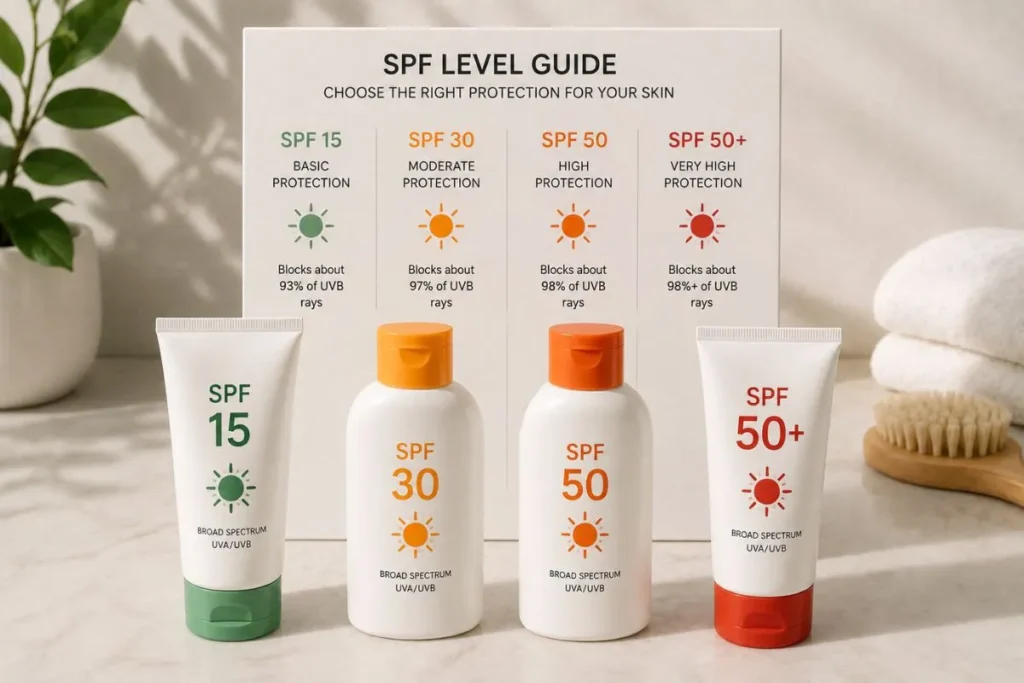
- SPF 30 – Ideal for everyday indoor and moderate outdoor use.
- SPF 50 – Better for extended outdoor exposure and stronger sun protection.
- Broad-Spectrum SPF – Protects against both UVA and UVB rays.
This information helps you choose the right level of protection for your daily routine.
Key Ingredients
The ingredients determine how well a sunscreen protects and hydrates your skin.
Each review will explain the purpose of its main ingredients, including:
- Hyaluronic Acid for deep hydration
- Ceramides for strengthening the skin barrier
- Aloe Vera for soothing dryness
- Shea Butter for nourishment
- Glycerin for moisture retention
- Squalane for lightweight hydration
- Vitamin E for antioxidant protection
- Niacinamide for improving skin texture
These ingredients are commonly found in the best sunscreen with moisturizer for dry skin because they provide both hydration and skin protection.
Texture & Finish
Texture can make or break your experience with sunscreen.
Some people prefer a rich moisturizing cream, while others want a lightweight lotion that disappears into the skin.
Each review will describe whether the sunscreen has:
- Lightweight lotion texture
- Creamy finish
- Gel-cream consistency
- Rich moisturizing cream
- Dewy finish
- Natural finish
- Non-greasy feel
- Makeup-friendly formula
This helps you choose a sunscreen that feels comfortable every day.
Why We Recommend It
Rather than simply repeating product features, we’ll explain why each sunscreen deserves a place on this list.
We’ll evaluate:
- Hydration performance
- UV protection
- Ingredient quality
- Skin comfort
- Daily usability
- Overall value
Whether it’s a hydrating sunscreen for dry skin that delivers all-day moisture or a dermatologist recommended sunscreen for dry skin with advanced skincare ingredients, you’ll know exactly why it stands out.
Rating
To make comparisons easier, every sunscreen will receive an overall rating based on several important factors:
- Sun protection
- Hydration
- Ingredient quality
- Texture
- Ease of application
- Skin compatibility
- Value for money
- Customer satisfaction
These ratings are designed to help you quickly compare products and confidently choose the top sunscreen for dry skin that best fits your skincare needs.
What You’ll Find in the Product Reviews
The upcoming reviews will cover a wide range of sunscreen options so every reader can find the right match.
You’ll discover products for:
- Everyday sun protection
- Extremely dry skin
- Sensitive skin
- Mature skin
- Acne-prone skin
- Winter skincare
- Makeup wearers
- Budget-friendly shopping
- Premium skincare lovers
Frequently Asked Questions (FAQ)
Many people think that once they start using the best sunscreen for dry skin, their skin will stay hydrated all day without any other skincare. That’s not completely true.
While a good sunscreen helps protect your skin and prevent moisture loss, it works best when combined with a consistent skincare routine. Below are the most common questions people ask before choosing the best sunscreens for dry skin.
Which sunscreen is best for dry skin?
The best sunscreen for dry skin is one that provides broad-spectrum UVA and UVB protection while also keeping your skin hydrated.
Look for products that contain moisturizing ingredients such as:
- Hyaluronic Acid
- Ceramides
- Glycerin
- Aloe Vera
- Shea Butter
- Squalane
- Vitamin E
These ingredients help reduce dryness and support a healthy skin barrier while protecting your skin from harmful sun exposure.
Is SPF 30 enough for dry skin?
Yes, SPF 30 is enough for most people when used correctly.
It blocks about 97% of UVB rays and is suitable for everyday activities such as commuting, walking, or working indoors near windows.
However, if you spend long hours outdoors, swim, or exercise in the sun, SPF 50 offers additional protection. Regardless of the SPF you choose, remember to reapply every two hours.
Should I moisturize before applying sunscreen?
It depends on your skin.
If your sunscreen is already a moisturizing sunscreen for dry skin, you may not need a separate moisturizer during the day.
However, if your skin is very dry or flaky, applying a lightweight moisturizer first can improve hydration and create a smoother base before sunscreen.
Many people with extremely dry skin get the best results by using both a moisturizer and a hydrating sunscreen for dry skin.
Is mineral sunscreen better for dry skin?
Mineral sunscreen can be an excellent option, especially for people with sensitive skin.
Mineral formulas usually contain:
- Zinc Oxide
- Titanium Dioxide
These ingredients sit on the surface of the skin and reflect UV rays.
Some mineral sunscreens may feel slightly thicker than chemical formulas, so choosing one with hydrating ingredients like squalane, glycerin, or shea butter can help keep dry skin comfortable.
Can sunscreen replace moisturizer?
Not always.
Some products are designed as a sunscreen with moisturizer, while others focus mainly on UV protection.
If your sunscreen contains hydrating ingredients and keeps your skin comfortable all day, it may be enough for mild dry skin.
For very dry or dehydrated skin, it’s usually better to apply a moisturizer first and then sunscreen.
Which ingredients are best for hydrating dry skin?
The most effective hydrating sunscreens often contain a combination of moisture-attracting and barrier-supporting ingredients.
Some of the best include:
- Hyaluronic Acid
- Ceramides
- Glycerin
- Aloe Vera
- Shea Butter
- Squalane
- Vitamin E
- Niacinamide
These ingredients help create a hydrating facial sunscreen that protects your skin while reducing dryness.
Can people with dry skin wear sunscreen every day?
Absolutely.
Daily sunscreen use is one of the best habits you can develop for healthy skin.
Using the best sunscreens for dry skin every morning helps:
- Protect against UV damage
- Prevent premature aging
- Reduce moisture loss
- Support the skin barrier
- Keep your skin looking healthy
Even on cloudy days, UV rays can still affect your skin, so daily protection is important.
What SPF is best for everyday use?
For most people, SPF 30 is ideal for daily wear.
If you spend extended time outdoors or have increased sun exposure, SPF 50 provides additional protection.
The most important factor isn’t choosing the highest SPF it’s applying enough sunscreen and reapplying it regularly.
How often should I reapply sunscreen?
Most dermatologists recommend reapplying sunscreen every two hours when you’re outdoors.
You should also reapply:
- After swimming
- After heavy sweating
- After towel drying
- During prolonged outdoor activities
Consistent reapplication ensures your sunscreen continues protecting your skin throughout the day.
Can sunscreen help prevent premature aging?
Yes.
Daily sunscreen is one of the most effective anti-aging skincare products you can use.
Regular use helps reduce the risk of:
- Fine lines
- Wrinkles
- Dark spots
- Uneven skin tone
- Loss of elasticity
Using an anti-aging sunscreen with hydrating ingredients provides both protection and long-term skincare benefits.
What is the difference between hydrating sunscreen and moisturizing sunscreen?
The terms are often used interchangeably, but there can be a slight difference.
A hydrating sunscreen usually contains humectants like hyaluronic acid or glycerin that attract water into the skin.
A moisturizing sunscreen often includes nourishing ingredients like shea butter, squalane, or ceramides that help lock moisture into the skin.
Many of the best sunscreens for dry skin combine both types of ingredients for maximum comfort and hydration.
Are fragrance-free sunscreens better for dry skin?
If you have sensitive or easily irritated skin, fragrance-free sunscreens are often the better choice.
Artificial fragrances can sometimes trigger irritation or make dryness worse.
Choosing a gentle, fragrance-free sunscreen with moisturizing ingredients can help keep your skin calm and comfortable.
Conclusion
Finding the best sunscreens for dry skin doesn’t have to be difficult. With so many options available, it’s easy to feel overwhelmed by bold claims and attractive packaging.
The key is to choose a sunscreen that not only protects your skin from harmful UVA and UVB rays but also provides the hydration your skin needs every day.
A well-formulated sunscreen can help prevent dryness, strengthen your skin barrier, and keep your skin feeling soft and comfortable throughout the day.
Throughout this guide, we’ve covered everything you need to know about choosing the best sunscreen for dry skin. From understanding why dry skin needs special care to learning about the best ingredients, selecting the right SPF, avoiding harmful ingredients, and
exploring the top sunscreen recommendations, you now have the knowledge to make a confident decision. Whether you have sensitive, mature, acne-prone, or extremely dry skin, there’s a sunscreen designed to meet your specific needs.
When shopping for your next sunscreen, pay close attention to the ingredient list. Look for hydrating ingredients like hyaluronic acid, ceramides, glycerin, aloe vera, squalane, shea butter, and vitamin E.
These ingredients help maintain moisture while supporting your skin’s natural protective barrier. At the same time, if your skin is easily irritated, try to avoid products that contain excessive alcohol or strong artificial fragrances.
Remember that sunscreen is only one part of a healthy skincare routine. Cleansing gently, moisturizing regularly, drinking enough water, and protecting your skin from excessive sun exposure all work together to improve your skin’s health.
Pairing these habits with a hydrating sunscreen for dry skin can help reduce tightness, flakiness, and signs of premature aging over time.
If you wear makeup daily, choose a face sunscreen for dry skin with a lightweight, non-greasy finish that layers well under foundation. If your skin becomes extra dry during colder months, switching to a richer moisturizing sunscreen for dry skin can provide additional comfort and protection.
Matching your sunscreen to your skin’s changing needs throughout the year will help you achieve the best results.

Name: Shahzadi
I’m passionate about skincare, beauty, and simple self-care. I share practical skincare tips, beauty routines, product insights, and easy ways to build healthy-looking, glowing skin.
My goal is to make beauty and skincare easier to understand, so you can discover routines that fit your everyday life.


