
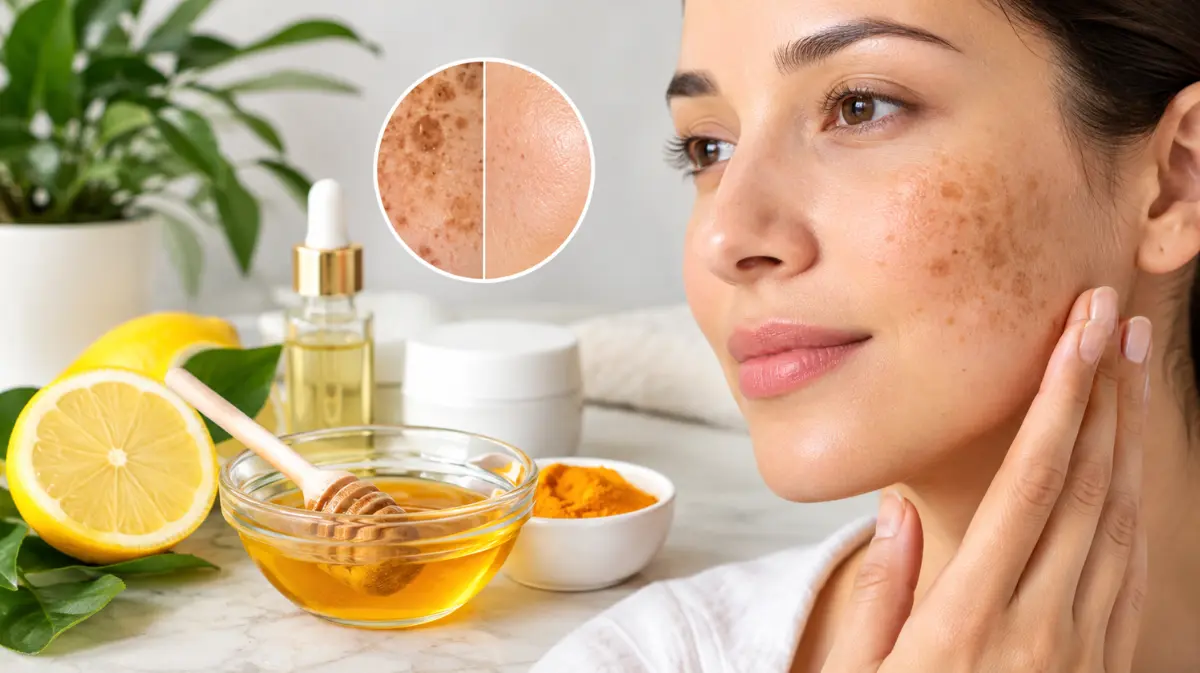
Many people believe that sunspots disappear on their own or that a regular face wash can remove them, but that is not always true. If you want to learn how to get rid of sunspots on face, the first step is understanding what causes these stubborn brown marks.
Sunspots develop after repeated exposure to ultraviolet (UV) rays, which can increase melanin production and lead to visible pigmentation. The good news is that the right skincare routine, daily sun protection, and suitable treatments can help fade some spots and improve your skin tone.

You do not need to use dozens of expensive products to care for sun-damaged skin. Start with broad-spectrum sunscreen, gentle skincare, and proven ingredients that target dark spots.
Some pigmentation improves with consistent at-home care, while more stubborn sunspots may need a dermatologist’s help. With the right approach and realistic expectations, you can work toward a brighter, more even complexion while protecting your skin from further sun damage.
What Are Sunspots on the Face?
Sunspots are flat brown or dark patches that develop on areas of skin exposed to sunlight. They are also known as age spots or solar lentigines and commonly appear on the cheeks, forehead, and nose.
Repeated UV exposure can increase pigmentation over time, making these spots more noticeable. Understanding what sunspots look like and how they differ from other dark marks can help you choose the right skincare approach.
Common Signs of Sunspots on the Face
Sunspots usually appear as flat, clearly visible patches that range from light brown to dark brown. They often have a smooth surface and do not cause pain or itching. You may notice them gradually becoming darker or more noticeable after spending a lot of time outdoors.
These brown spots on the skin commonly develop on the cheeks, forehead, and nose because these areas receive regular sun exposure.
What Causes Sunspots to Develop?
The main cause of sunspots is repeated exposure to ultraviolet (UV) rays from sunlight. UV radiation stimulates melanin production, and over time, pigment can build up in certain areas of the skin.
Age also plays a role because sunspots often become more noticeable after years of accumulated sun exposure. However, they are not limited to older adults. People who spend considerable time outdoors without adequate sun protection may develop sun-induced pigmentation earlier in life.
Sunspots vs. Freckles: What’s the Difference?
Sunspots and freckles can look similar, but they have some differences. Freckles are usually smaller, may appear during childhood, and often become darker in sunny weather before fading when sun exposure decreases.
Sunspots tend to develop after years of UV exposure and may remain visible throughout the year. Both can appear on sun-exposed areas, but their causes and behaviour are not exactly the same.
Sunspots vs. Melasma and Other Dark Spots
Not every dark patch on your face is a sunspot. Melasma often appears as larger, uneven patches on the cheeks, forehead, or upper lip and may be influenced by hormones and sunlight. Post-inflammatory hyperpigmentation, on the other hand, can develop after acne, irritation, or skin injury.
These conditions may require different treatments, so identifying the cause of facial pigmentation is an important step before choosing a dark spot removal cream or other skincare product.
Where Do Sunspots Commonly Appear?
Sunspots usually develop on areas that receive frequent sunlight. The cheeks and forehead are common locations, while the nose can develop brown spots because it is often directly exposed to UV rays.
Sunspots may also appear on the temples and the backs of the hands. Protecting these areas with broad-spectrum sunscreen, protective clothing, and shade can help reduce further sun damage.
Are Sunspots on the Face Harmful?
Most typical sunspots are harmless and do not require medical treatment for health reasons. However, some skin conditions, including certain skin cancers, can resemble ordinary brown spots.
Do not assume that every new or changing mark is simply an age spot. If a spot develops irregular edges, changes colour or size, becomes raised, or starts bleeding, arrange an examination with a dermatologist before trying to treat it at home.
What Causes Sunspots on the Face?
Many people believe that sunspots appear only after years of sun exposure or when they get older. However, these dark patches can develop much earlier, especially if your skin receives frequent UV exposure without proper protection.
The main cause is excess melanin production, but factors such as skin type, tanning habits, and aging can also affect how quickly sunspots appear.
UV Rays and Excess Melanin Production
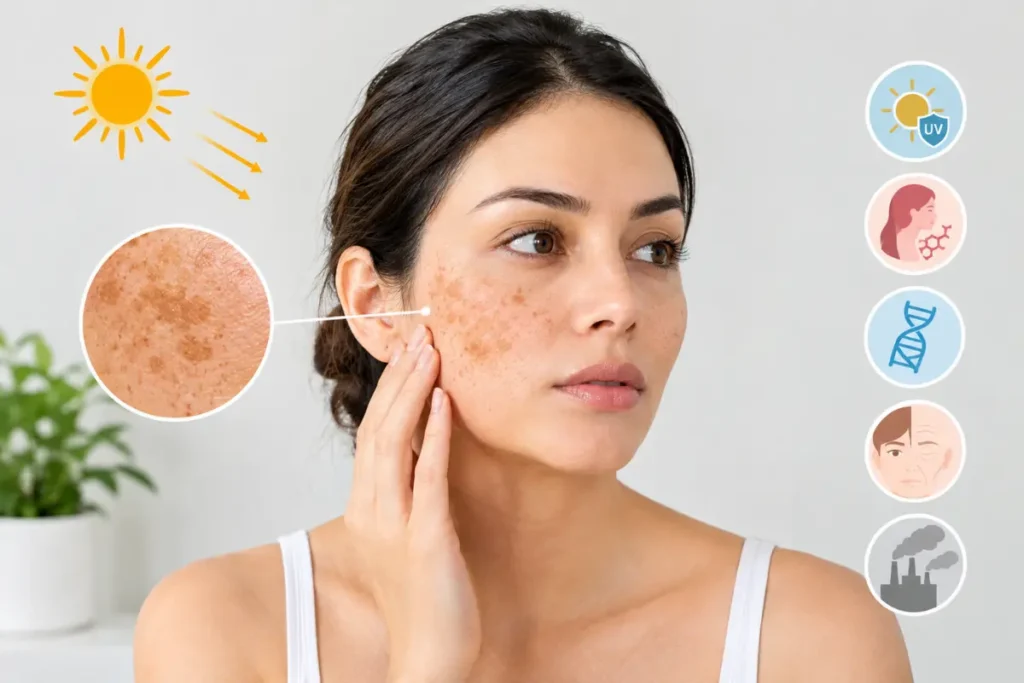
Sun exposure is the leading cause of sunspots on the face. When ultraviolet (UV) rays reach your skin, they stimulate melanocytes, the cells responsible for producing melanin. Melanin gives your skin its natural color and helps protect it from UV damage.
Repeated exposure can cause melanin to collect unevenly in certain areas. Over time, this buildup may appear as brown patches on your cheeks, forehead, nose, or temples. Both UVA and UVB rays can damage your skin, even when the weather feels cool or cloudy.
If you spend a lot of time outdoors without sunscreen, you may notice more sun-related pigmentation as the years pass. Using broad-spectrum sunscreen with SPF 30 or higher every day can help prevent new sunspots and stop existing discoloration from becoming darker.
Aging and Years of Sun Exposure
Age is another common factor behind facial sunspots. As your skin experiences years of sunlight, the effects of UV damage gradually become more visible. This is why these marks are often called age spots, even though they are mainly linked to sun exposure rather than aging alone.
You may notice them becoming more prominent on areas that receive the most sunlight, such as your cheeks, forehead, nose, and the backs of your hands. People who spent a lot of time outdoors without sun protection may develop them earlier.
Although you cannot reverse every effect of aging, a consistent skincare routine can help improve uneven skin tone. Daily sunscreen, gentle cleansing, and suitable ingredients for hyperpigmentation may gradually reduce the appearance of some sunspots.
Tanning and Frequent Outdoor Activities
Regular tanning can increase your risk of developing sunspots. Whether you tan outdoors, spend long hours gardening, drive frequently in strong sunlight, or enjoy outdoor sports, repeated UV exposure can affect your skin over time.
A tan is actually a sign that your skin has responded to UV exposure. Even if your skin does not burn, sunlight can still contribute to pigmentation and premature skin aging.
To protect your face, apply sunscreen before going outdoors and reapply it about every two hours when you remain outside. Reapply sooner after swimming, sweating heavily, or towel-drying. Wearing a wide-brimmed hat and seeking shade during intense sunlight can also help limit further sun damage.
Skin Type and Natural Pigmentation
Your natural skin tone can influence how pigmentation develops and how noticeable dark spots become. People with lighter skin may develop visible sunspots after repeated UV exposure, while people with medium to darker skin tones may be more prone to persistent pigmentation after inflammation or skin irritation.
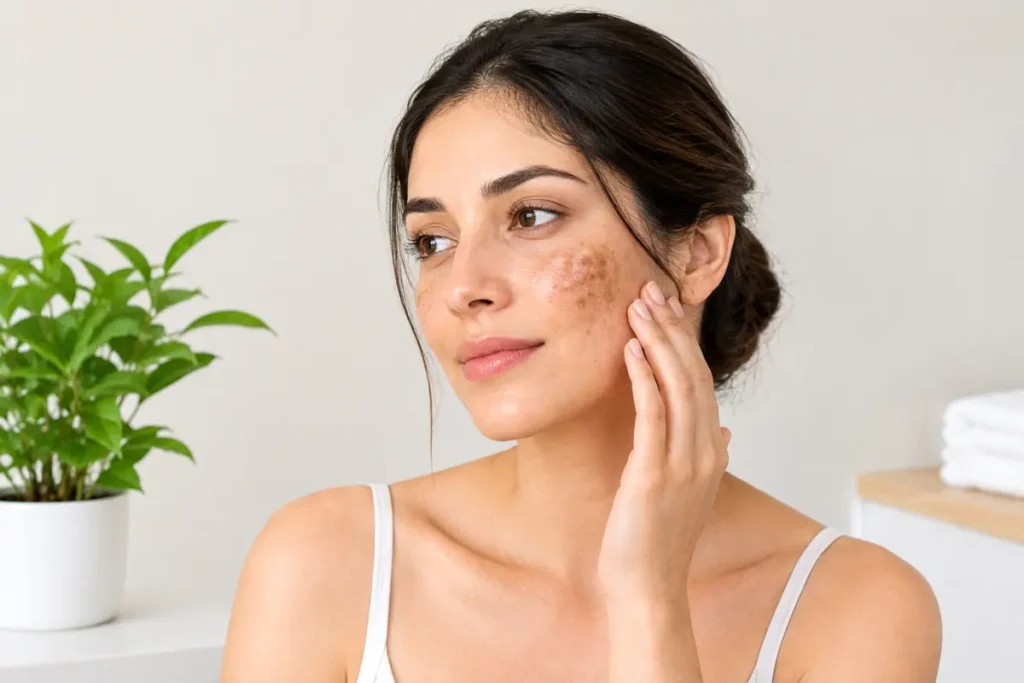
This does not mean that one skin tone is completely protected from sun damage. Sunspots can affect people of all skin colors.
If your skin tends to develop dark marks easily, choose skincare products carefully. Strong exfoliants, harsh scrubs, and irritating treatments can sometimes make pigmentation worse. A gentle routine that supports your skin barrier is often a better starting point when trying to fade sunspots on the face.
Hormonal Changes and Other Forms of Pigmentation
Hormonal changes can contribute to facial pigmentation, but they are more commonly associated with melasma than with typical sunspots. Melasma often appears as larger, irregular brown patches on the cheeks, forehead, or upper lip. Sun exposure can worsen both conditions.
Other dark marks may develop after acne, irritation, eczema, or an injury to the skin. This is known as post-inflammatory hyperpigmentation, and it can look similar to sunspots.
Understanding the cause of your dark patches matters because different types of pigmentation may respond to different treatments. If you are unsure whether you have sunspots, melasma, or another skin condition, a dermatologist can help identify the problem and recommend appropriate care.
Natural Ways to Help Fade Sunspots on the Face
Natural skincare is not always powerful enough to remove sunspots completely, and ingredients from your kitchen are not automatically safe for your face.
However, gentle skincare habits and selected ingredients may help support an even-looking complexion while reducing the risk of further discoloration.
If you want to learn how to get rid of sunspots on your face naturally, focus on sun protection, skin-friendly ingredients, and patience rather than harsh home remedies.
Use Aloe Vera to Soothe the Skin
Aloe vera is known for its soothing and moisturizing properties. It may help calm skin that feels irritated after sun exposure, making it a useful addition to a gentle skincare routine.
Choose a simple aloe vera gel without added fragrance or irritating ingredients. Apply a small amount to clean skin and test it on a small area first to check for a reaction.
However, aloe vera is not a proven treatment for removing established sunspots. It may help keep your skin comfortable, but you should not rely on it alone to fade dark patches. Continue using sunscreen daily to prevent UV exposure from making pigmentation more noticeable.
Try Green Tea for Antioxidant Support
Green tea contains antioxidants called polyphenols that have been studied for their potential benefits in protecting skin from environmental stress. These compounds may help support skin health, although evidence that green tea alone removes existing sunspots is limited.
You can look for a well-formulated skincare product containing green tea extract. Choose products designed for facial use rather than applying hot tea or concentrated homemade mixtures to your skin.
Green tea products should be viewed as supportive skincare, not a replacement for sunscreen or proven treatments for hyperpigmentation. If your main goal is to fade sunspots, combine gentle skincare with consistent UV protection.
Choose Gentle Vitamin C Skincare
Vitamin C is a well-known skincare ingredient that can help brighten the appearance of uneven skin tone. It acts as an antioxidant and may help reduce the appearance of some pigmentation when used consistently in a suitable formulation.

If you want to improve sunspots on your face, consider a facial serum containing vitamin C. Start with a product formulated for your skin type and follow its directions. If your skin is sensitive, introduce it slowly to reduce the risk of irritation.
Apply vitamin C as directed, and use broad-spectrum sunscreen during the day. Vitamin C does not make sun protection unnecessary, and results are gradual rather than immediate. If the product causes persistent burning, redness, or itching, stop using it.
Keep Your Skin Moisturized
Moisturizing does not directly remove sunspots, but it helps maintain the skin barrier and reduces dryness that can make skin look uneven or irritated. Healthy skin is also better able to tolerate skincare products used to improve pigmentation.
Choose a moisturizer suited to your skin type. Lightweight, non-comedogenic formulas may work well for oily or acne-prone skin, while richer creams can help dry skin retain moisture.
Apply moisturizer after cleansing and after using suitable treatment products. Avoid layering too many active ingredients at once, especially if you are trying to fade dark spots. Irritation can trigger additional pigmentation in some people, so a simple routine is often more helpful than using many products together.
Use Sunscreen Every Day
Sunscreen is the most important step when trying to prevent sunspots from getting darker. Without daily sun protection, UV exposure can continue stimulating pigmentation and may reduce the benefits of other skincare treatments.
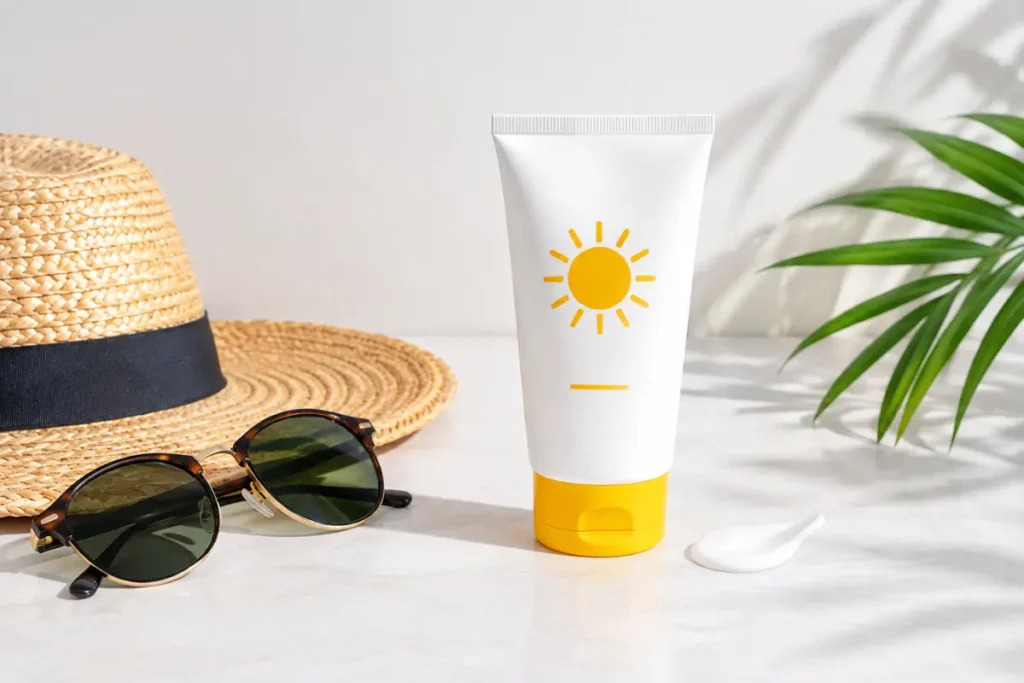
Choose a broad-spectrum sunscreen with SPF 30 or higher. Apply it generously to your face, ears, neck, and other exposed areas. Reapply about every two hours when outdoors, and after swimming or heavy sweating.
Do not skip sunscreen on cloudy days or simply because you spend most of your time near windows. UVA rays can pass through clouds and glass, contributing to skin aging and pigmentation. A wide-brimmed hat and shade provide extra protection.
Avoid Harsh DIY Remedies
Lemon juice, undiluted apple cider vinegar, baking soda, and abrasive scrubs are sometimes promoted as natural ways to remove dark spots. However, these remedies can irritate your skin, damage its protective barrier, or cause chemical burns.
Irritation may leave darker marks behind, particularly in skin that is prone to hyperpigmentation.
Instead of trying aggressive home treatments, use gentle products made for facial skin. If you want to use a new ingredient, patch-test it first and stop if you notice irritation.
Remember that natural does not always mean safe or effective. If your sunspots are persistent, a dermatologist can discuss options such as topical treatments, chemical peels, or laser procedures based on your skin type and the nature of the pigmentation.
Effective Ways to Get Rid of Sunspots on the Face
Many people think that using an expensive dark spot cream is the only way to improve sunspots, but a single product may not be enough. If you want to learn how to get rid of sunspots on face, a consistent skincare routine and the right treatment choices can make a real difference.
Some ingredients help brighten uneven skin tone, while professional treatments may work better for stubborn pigmentation. The best option depends on your skin type, the depth of the spots, and how long they have been present.
Apply Broad-Spectrum Sunscreen Every Day
Sunscreen is one of the most important steps for managing sunspots. Continued UV exposure can make existing brown spots darker and encourage new ones to develop. Even the best dark spot treatment may deliver limited results if you do not protect your skin from sunlight.
Choose a broad-spectrum sunscreen with SPF 30 or higher. Apply it generously to your face, ears, neck, and other exposed areas every morning. Reapply approximately every two hours when outdoors and after swimming or heavy sweating.
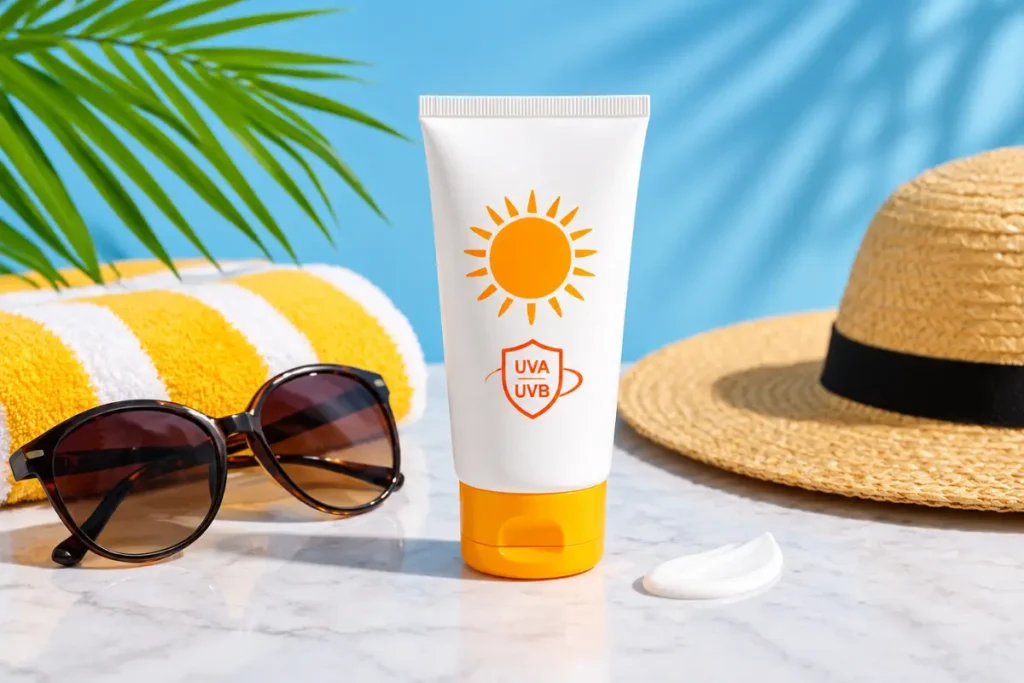
If you have oily or acne-prone skin, a lightweight, non-comedogenic formula may feel more comfortable. For sensitive skin, consider a fragrance-free product. Daily sunscreen helps protect your progress and reduces the risk of further sun damage.
Use a Vitamin C Serum to Brighten Uneven Skin Tone
Vitamin C is a popular skincare ingredient for improving the appearance of dark spots and dull skin. As an antioxidant, it helps protect against environmental stress and may support a more even-looking complexion when used consistently.
Apply a facial vitamin C serum according to its instructions, usually as part of your morning routine before moisturizer and sunscreen. Start with a lower concentration if you have sensitive skin, and introduce the product gradually.
Vitamin C will not remove every sunspot, and results vary from person to person. However, it may help fade some discoloration over time. Pair it with daily sunscreen for a more complete approach to treating sun-induced pigmentation.
Try Retinol to Improve Skin Texture and Pigmentation
Retinol is a vitamin A derivative commonly used to improve skin texture, fine lines, and uneven skin tone. It increases skin cell turnover and may help reduce the appearance of some pigmentation with regular use.
Start by applying a low-strength retinol product two nights per week. Use a small amount on dry skin, followed by moisturizer. If your skin tolerates it well, gradually increase the frequency according to the product instructions.
Retinol can cause dryness, redness, peeling, or irritation, particularly when you first start using it. Avoid combining several strong active ingredients at once, as irritation may worsen discoloration. Retinoids should generally be avoided during pregnancy; ask your healthcare professional about suitable alternatives.
Add Niacinamide to Your Skincare Routine
Niacinamide, a form of vitamin B3, can help support the skin barrier and improve the appearance of uneven skin tone. It may also help reduce the transfer of pigment within the skin, making it a useful ingredient for people dealing with mild hyperpigmentation.
Look for a facial serum or moisturizer containing niacinamide. It is often well tolerated and can fit into both morning and evening skincare routines. You can use it alongside sunscreen and many other skincare ingredients.
For the best results, focus on consistent use rather than applying large amounts. Niacinamide may help make sunspots less noticeable, but it cannot guarantee complete removal of established pigmentation.
Use Glycolic Acid to Exfoliate the Skin
Glycolic acid is an alpha hydroxy acid (AHA) that helps remove dead skin cells from the skin’s surface. It can improve dullness and uneven texture and may gradually help fade some superficial discoloration.
If you want to try glycolic acid for sunspots on your face, choose a product formulated for home use and follow the label carefully. Begin with a low concentration and use it infrequently to see how your skin responds.
Avoid applying glycolic acid to irritated or broken skin, and do not combine it with multiple strong exfoliants in the same routine. Over-exfoliation can cause inflammation and make pigmentation worse.
Sunscreen is particularly important when using exfoliating acids because they can increase sensitivity to sunlight.
Frequently Asked Questions About How to Get Rid of Sunspots on Face
How Long Does It Take to Get Rid of Sunspots on the Face?
The time it takes to fade sunspots depends on their size, depth, and the treatment you use. Some superficial pigmentation may improve after several weeks or months of consistent skincare, while deeper or long-standing sunspots may require professional treatment.
Daily sunscreen is essential because continued UV exposure can make existing spots darker and cause new ones to develop.
Can Sunspots on the Face Go Away Naturally?
Some mild discoloration may become less noticeable over time, but established sunspots often do not disappear completely on their own. Gentle skincare, antioxidant ingredients, and daily sun protection can help improve the appearance of uneven skin tone.
Natural remedies such as aloe vera may soothe the skin, but there is limited evidence that they can remove established sunspots.
What Is the Best Treatment for Sunspots on the Face?
The best treatment depends on your skin type and the nature of the pigmentation. Vitamin C, retinol, niacinamide, and azelaic acid may help improve certain types of dark spots.
For more persistent sunspots, a dermatologist may recommend laser treatment, intense pulsed light (IPL), chemical peels, or prescription creams. A professional assessment can help you choose a suitable option.
How Can I Remove Sunspots on My Face Fast?
Professional treatments, such as certain laser procedures or IPL, may improve suitable sunspots faster than topical skincare. However, results vary, and more than one session may be needed.
At-home products usually require consistent use over several weeks or months. Avoid harsh DIY remedies or unregulated skin-lightening products because they can irritate your skin and make pigmentation worse.
Does Vitamin C Help Fade Sunspots?
Yes, vitamin C may help reduce the appearance of some dark spots and improve uneven skin tone. It also provides antioxidant support against environmental stress.
However, it does not remove every sunspot, and results depend on the formulation and your skin. For better results, use a suitable vitamin C serum consistently and apply broad-spectrum sunscreen every day.
Can Sunscreen Prevent Sunspots From Getting Darker?
Sunscreen can help prevent existing sunspots from becoming darker and reduce the development of new sun-related pigmentation. Choose a broad-spectrum sunscreen with SPF 30 or higher and apply it generously every morning.
Reapply about every two hours while outdoors and after swimming or heavy sweating. Hats, shade, and protective clothing provide additional protection.
Are Sunspots the Same as Age Spots?
Sunspots and age spots are commonly used to describe the same type of pigmentation, medically known as solar lentigines. These flat brown or tan patches usually develop after repeated UV exposure and often appear on the face, hands, and other sun-exposed areas.
However, not every brown mark is an age spot, so changing or unusual spots should be examined by a dermatologist.
Can People With Dark Skin Develop Sunspots?
Yes, people of every skin tone can develop sunspots. However, darker skin tones may be more prone to certain types of persistent hyperpigmentation after inflammation or irritation.
If your skin tends to develop dark marks easily, introduce active ingredients gradually and avoid harsh scrubs or irritating home remedies. A dermatologist can recommend treatments appropriate for your skin tone.
Do Sunspots Come Back After Treatment?
Sunspots can return, and new ones may develop if your skin continues to receive significant UV exposure. Professional treatments may reduce existing spots, but they do not prevent future sun damage.
To maintain results, use broad-spectrum sunscreen daily, limit intense sun exposure, and follow a skincare routine suited to your skin.
When Should I See a Dermatologist About a Sunspot?
See a dermatologist if a spot changes in size, shape, or color, develops irregular edges, becomes raised, bleeds, or does not heal. These changes should not automatically be attributed to sun damage.
A dermatologist can examine the spot, determine whether it is a typical sunspot, and recommend appropriate treatment. Avoid trying to remove an unexplained spot with home remedies or skin-lightening creams.
Conclusion:
Learning how to get rid of sunspots on face starts with understanding what causes them and choosing the right skincare approach. While sunspots may not disappear overnight, consistent use of broad-spectrum sunscreen, suitable ingredients such as vitamin C and retinol, and gentle daily skincare can help improve the appearance of uneven skin tone.
For stubborn brown spots, professional treatments such as chemical peels, IPL, or laser procedures may be worth discussing with a dermatologist.
Remember, you do not need a complicated routine to care for sun-damaged skin. Focus on protecting your face from UV rays, avoid harsh home remedies, and give your chosen treatments enough time to work.
Most importantly, have any spot that changes in size, shape, or color examined by a dermatologist before attempting to treat it. With the right care and realistic expectations, you can work toward a brighter, more even-looking complexion while helping prevent future sunspots.

Name: Shahzadi
I’m passionate about skincare, beauty, and simple self-care. I share practical skincare tips, beauty routines, product insights, and easy ways to build healthy-looking, glowing skin.
My goal is to make beauty and skincare easier to understand, so you can discover routines that fit your everyday life.


Pingback: 32+How Do I Remove Sun Spots? Powerful Ways To Fade Dark Spots Fast
Pingback: 11+ Good Molecules Discoloration Correcting Serum Benefits: Powerful Secrets For Brighter Even-Toned Skin