

Rice bran is often seen as just a leftover part of rice, but it has much more to offer than many people realize. The rice bran benefits for skin go beyond a simple beauty trend, as rice bran oil and rice bran extract contain fatty acids and antioxidant compounds that may help keep skin soft, smooth, and moisturized.
These ingredients are commonly used in skincare products to support a healthy-looking complexion. While rice bran is not a miracle treatment for every skin concern, it can be a useful addition to a well-balanced skincare routine.

If you want to explore natural skincare ingredients, rice bran may be worth considering. In this article, you’ll discover its potential benefits, the science behind its key compounds, and how to use rice bran oil or rice bran powder safely for different skin types.
You’ll also find recommended skincare products that you can check out and purchase if you want to add rice bran or similar moisturizing ingredients to your routine. Let’s start by looking at what rice bran is and why skincare brands use it.
What Is Rice Bran, and Why Is It Used in Skincare?
What Is Rice Bran?
Rice bran is the thin outer layer removed from rice grains during the milling process. Although it is often treated as a by-product of rice production, it contains several naturally occurring compounds, including lipids, fatty acids, vitamin E compounds, and antioxidants.
These components make rice bran an interesting ingredient for skincare and cosmetic formulations.
When used in beauty products, rice bran may appear as rice bran oil, rice bran extract, or rice bran powder. Each form has different properties and uses.
Rice bran oil is mainly valued for its softening and moisturizing qualities, while rice bran extract may be included in cosmetic formulas for its beneficial plant compounds.
Rice bran powder is a different ingredient that may be used in certain cleansing or exfoliating products, depending on how it is processed.
What Is Rice Bran Oil?
Rice bran oil is obtained from the oil-rich portion of rice bran. It contains fatty acids and naturally occurring antioxidant compounds, including tocopherols, tocotrienols, and gamma-oryzanol.
Its composition makes it useful in many cosmetic products, particularly those designed to moisturize and soften the skin.
You may find rice bran oil in facial oils, body lotions, creams, cleansing oils, and moisturizing soaps. When applied as part of a suitable formulation, it can help condition the skin and reduce moisture loss.
This makes rice bran oil for the face a potential option for people who want softer-feeling skin, especially when dryness is a concern. However, the best results depend on the product’s overall formulation and how your skin responds to it.
What Is Rice Bran Extract?
Rice bran extract is made by processing rice bran to obtain selected compounds for use in skincare products. Unlike rice bran oil, which primarily serves as an emollient, an extract may be formulated to deliver specific plant-derived components.

Depending on the extraction method, rice bran extract can contain different amounts and types of beneficial compounds. Cosmetic brands may include it in serums, moisturizers, facial masks, and other products designed to support healthy-looking skin.
Its effects depend on the ingredients present, their concentrations, and the finished product. Therefore, a product containing rice bran extract should not automatically be assumed to deliver every benefit associated with whole rice bran.
Powerful Rice Bran Benefits for Skin
Rice bran is not a magic ingredient that can fix every skin problem overnight. Although the rice bran benefits for skin are promising, especially when it comes to moisture and skin conditioning, results depend on the product you choose and how your skin responds.
Rice bran oil contains fatty acids and antioxidant compounds that make it a useful ingredient in many skincare formulas. Let’s look at 11 +potential benefits and what you can realistically expect from using rice bran in your skincare routine.
Rice Bran May Help Keep Skin Moisturized
Dry skin can feel tight, rough, and uncomfortable, especially after washing your face or spending time in dry weather. One potential benefit of rice bran oil for skin is its ability to soften the skin and help reduce moisture loss.
Its fatty acids give it emollient properties, which means it helps smooth the skin’s surface and improve how it feels.
If your skin often feels dry, a moisturizer containing rice bran oil may be worth trying. The oil can help condition the skin and support moisture retention when used as part of a suitable formulation.
However, it does not replace the need for a good moisturizer, particularly if your skin needs extra hydration. Look for products that combine emollients with water-attracting ingredients, such as glycerin, to help keep your skin comfortable.
Rice Bran May Help Protect Skin From Oxidative Stress
Every day, your skin encounters environmental factors such as sunlight and pollution. These factors can contribute to oxidative stress, which may affect skin cells and contribute to visible signs of skin aging over time.
Rice bran contains antioxidant compounds, including vitamin E compounds and gamma-oryzanol. Antioxidants help counter the effects of unstable molecules called free radicals. This is one reason rice bran extract and rice bran oil appear in some cosmetic formulations designed to support healthy-looking skin.

However, the presence of antioxidants does not mean rice bran oil can prevent all environmental skin damage. Its effectiveness depends on the formulation and how the ingredient behaves in the finished product. For everyday skin protection, broad-spectrum sunscreen remains essential. Rice bran oil should be viewed as a possible addition to your routine, not a substitute for sun protection.
Rice Bran Can Help Make Skin Feel Softer and Smoother
If your skin feels rough or lacks softness, an emollient ingredient may help improve its texture. Rice bran oil works by conditioning the skin’s surface, helping it feel smoother and more comfortable.
This can be particularly useful for people dealing with dry patches on their cheeks, hands, elbows, or other areas. Regular use of a suitable moisturizer containing rice bran oil may help improve the feel of rough skin by reducing dryness.
Keep in mind that smoother-feeling skin does not necessarily mean that deeper skin concerns have been treated. Rice bran oil is mainly useful as a moisturizing ingredient, so choose a product that fits your needs and avoid harsh scrubbing to force faster results.
Rice Bran May Support a Healthy Skin Barrier
Your skin barrier is the outer layer that helps retain moisture and protect your skin from external irritants. When this barrier becomes weakened, your skin may feel dry, tight, flaky, or more sensitive than usual.
Rice bran oil contains fatty acids that give it emollient properties. When included in a suitable skincare product, it can help soften the skin and reduce moisture loss. This may support the skin’s natural barrier by helping it stay comfortable and better moisturized.
If your skin barrier feels compromised, keep your routine simple. Use a gentle cleanser, apply a suitable moisturizer, and avoid excessive exfoliation or products that cause stinging. Rice bran oil may be a helpful supporting ingredient, but it is not a guaranteed treatment for a damaged skin barrier.
Rice Bran May Help Improve the Appearance of Dull Skin
Dull-looking skin can have several causes, including dryness, a rough surface, environmental exposure, and a lack of consistent skincare. Sometimes, the simplest way to improve the appearance of your complexion is to focus on keeping your skin moisturized.

Rice bran oil may help make the skin look fresher by softening its surface and reducing dryness. When the skin is adequately moisturized, it can appear smoother and more radiant. This explains why rice bran skincare products are sometimes marketed for a glowing-looking complexion.
However, rice bran oil is not a guaranteed brightening treatment. It cannot be expected to remove pigmentation or change your natural skin tone. If your goal is brighter-looking skin, combine suitable moisturization with daily sunscreen and consider evidence-based ingredients designed for your specific concern.
Rice Bran May Help Soften the Appearance of Fine Lines
Fine lines can become more noticeable when the skin lacks moisture. This is especially common around the eyes, mouth, and forehead, where the skin naturally moves throughout the day.
One potential rice bran oil benefit for skin is that it helps condition the skin’s surface and reduce dryness. Better moisturization may temporarily make fine lines associated with dry skin appear less noticeable, giving the skin a smoother appearance.
It is important to understand the difference between improving the appearance of fine lines and treating wrinkles themselves. Rice bran oil does not erase established wrinkles or reverse aging.
If you want to care for mature skin, use a suitable moisturizer, wear sunscreen regularly, and consider proven ingredients such as retinoids if they are appropriate for your skin.
Rice Bran May Help Nourish Dry and Flaky Skin
Dry, flaky skin can develop when the skin loses too much moisture or becomes irritated by weather, frequent washing, or unsuitable skincare products. It may feel rough and look uneven, making everyday skincare uncomfortable.
Rice bran oil may help soften dry areas because it forms an emollient layer on the skin. A moisturizer containing rice bran oil can help improve comfort and reduce the feeling of roughness caused by dryness.
For better results, apply your moisturizer according to its directions and avoid washing your face with very hot water. If your skin remains persistently flaky, itchy, red, or inflamed, the cause may be a skin condition that needs specific treatment rather than another facial oil.
Rice Bran May Help Improve the Feel of Rough Skin
Rough skin does not always need strong exfoliation. Sometimes, the surface feels uneven simply because it lacks moisture. In these cases, a gentle moisturizing product may be a better starting point than a harsh scrub.
Rice bran oil can help condition dry skin on areas such as the hands, elbows, knees, and legs. Its emollient properties help soften the surface, making rough areas feel more comfortable with regular use.
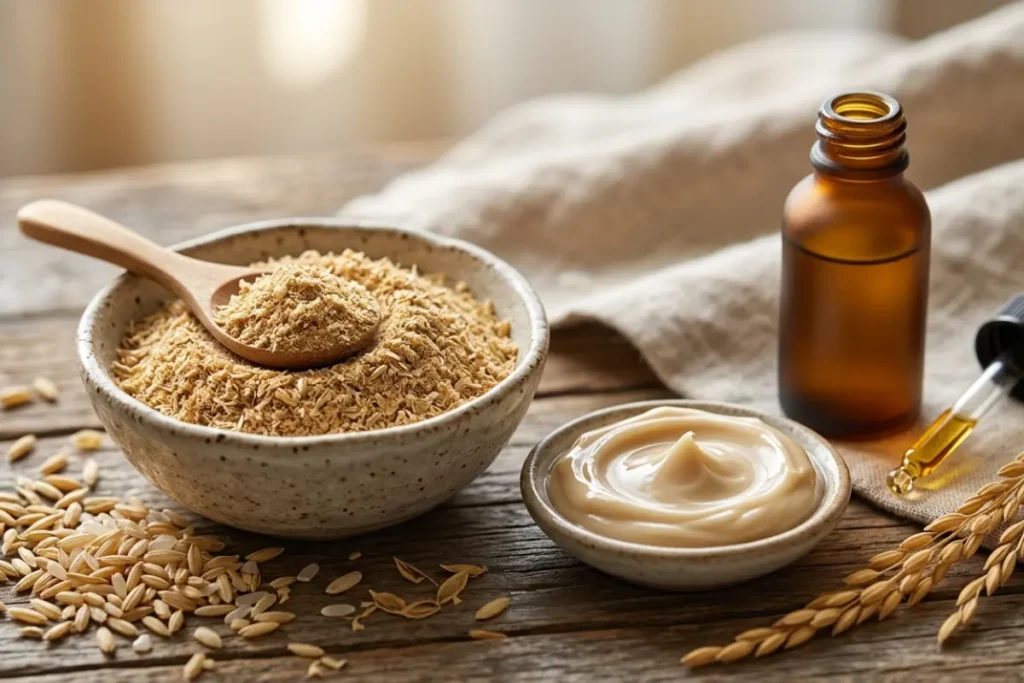
For facial skin, choose a product designed for the face rather than assuming every body oil will work equally well. If roughness comes with persistent bumps, itching, or irritation, consider the underlying cause before adding new products.
What Makes Rice Bran Beneficial for Skin?
The potential benefits of rice bran oil are linked to its natural composition. Its fatty acids help condition the skin, while certain plant compounds provide antioxidant activity. Understanding these ingredients can help you see why rice bran appears in skincare products and which benefits are realistic to expect.
Vitamin E Compounds and Skin Care
Rice bran oil contains vitamin E compounds, including tocopherols and tocotrienols. These compounds have antioxidant properties, which means they help counter oxidative stress caused by unstable molecules called free radicals.
Oxidative stress is one of several factors associated with visible skin aging and environmental skin damage. Antioxidants are therefore useful ingredients in skincare formulations designed to support the skin’s overall condition.
Vitamin E compounds may also contribute to the skin-conditioning properties of certain products. However, their effects depend on the concentration, stability, and complete formulation.
Simply choosing a product because it contains rice bran oil does not guarantee the same antioxidant benefits as a product specifically formulated and tested for that purpose.
Fatty Acids and Skin Moisture
Fatty acids are among the key components that make rice bran oil useful in skin care. They contribute to its texture and help give it emollient properties.
Emollients soften the skin by smoothing the surface and filling small spaces between dry skin cells. This can make the skin feel less rough and more comfortable. Oils can also help reduce water loss, depending on how they are used and what other ingredients are present in the product.
This is why rice bran oil for skin hydration may be worth considering if you regularly experience dryness. For an effective moisturizing routine, you can pair a suitable oil-based product with a moisturizer containing humectants, such as glycerin, which attract water.
Remember that oil and water-based hydration are not the same thing. An oil can help soften the skin and reduce moisture loss, but it does not necessarily provide all the hydration your skin needs on its own.
Ferulic Acid in Rice Bran and Antioxidant Protection
Ferulic acid is a plant-derived compound found in rice bran and other plant sources. It is known for its antioxidant properties and is used in some skincare formulations.
Antioxidants help counter oxidative stress, which is associated with environmental exposure and visible signs of skin aging. This makes ferulic acid an interesting compound in cosmetic research and skincare development.

However, the presence of ferulic acid in rice bran does not mean that every rice bran oil or extract will deliver a clinically meaningful amount. The concentration depends on the raw material and processing method, and the finished product determines how the ingredient performs.
If your main goal is to protect your skin from sun-related damage, do not rely on rice bran or ferulic acid alone. Use broad-spectrum sunscreen consistently, as antioxidant ingredients do not replace the protection provided by sunscreen.
Gamma-Oryzanol and Skin Care
Gamma-oryzanol is a group of compounds naturally found in rice bran oil. It is often discussed because of its antioxidant properties and its role in the composition of rice bran-derived ingredients.
Its presence helps explain why rice bran oil is of interest to cosmetic formulators. Depending on the product, gamma-oryzanol may contribute to the antioxidant profile of the ingredient and its potential use in skin-conditioning formulas.
However, evidence about a compound’s properties does not automatically prove that applying rice bran oil will produce a specific result, such as removing dark spots, eliminating wrinkles, or treating acne. Those claims require evidence from appropriate studies of the actual finished product.
For everyday skincare, it is more helpful to choose a well-formulated product that suits your skin type than to focus only on whether it contains gamma-oryzanol.
Rice Bran Oil and Moisture Retention
Moisture retention is one of the most practical reasons rice bran oil is used in skincare. When the skin loses too much water, it can become dry, flaky, and rough. Emollient oils can help soften the surface and reduce water loss.
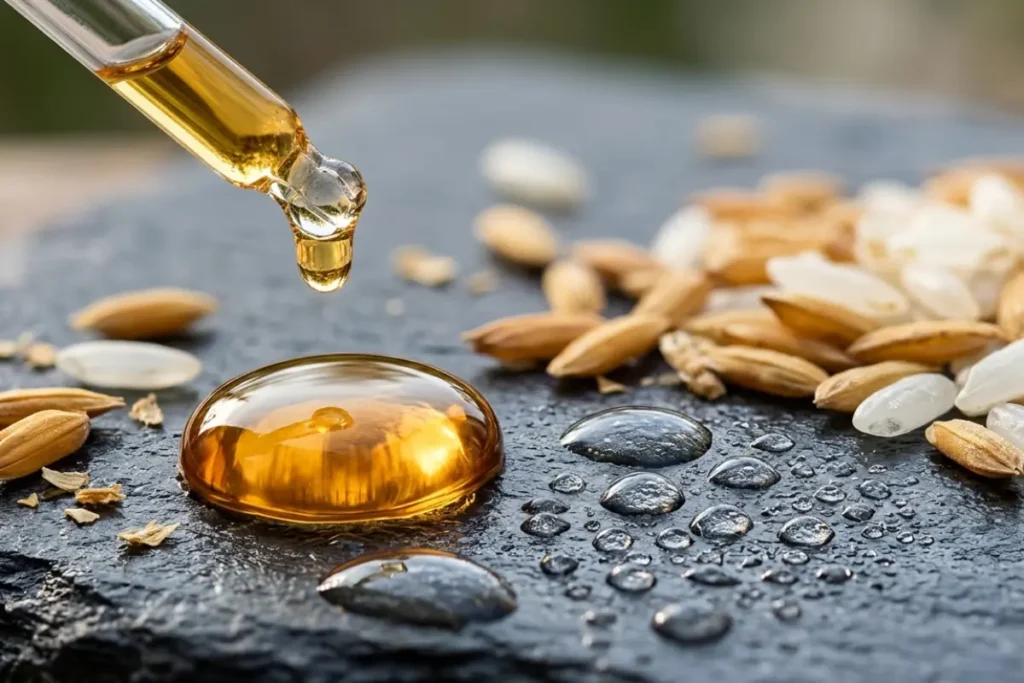
Rice bran oil may therefore be useful in a skincare routine designed to maintain comfortable, moisturized skin. It can be included in a cream, lotion, or facial oil, depending on the formulation and your skin’s needs.
To get more from your routine, apply moisturizer as directed and avoid cleansing products that leave your skin feeling tight. If you use rice bran oil separately, start with a small amount and monitor how your skin responds. People with oily or acne-prone skin may prefer a lighter formulation.
Frequently Asked Questions About Rice Bran Benefits for Skin
What Are the Benefits of Rice Bran for Skin?
Rice bran may offer several skincare benefits, mainly because it contains fatty acids and antioxidant compounds. Rice bran oil can help soften the skin, reduce moisture loss, and improve the feel of dry or rough areas.
Rice bran also contains compounds such as vitamin E and gamma-oryzanol, which have antioxidant properties. However, the results depend on the product’s formulation and your skin type. Rice bran is best viewed as a supportive skincare ingredient rather than a treatment for every skin concern.
What Are the Benefits of Rice Bran Oil for the Face?
Rice bran oil may help keep facial skin soft, smooth, and moisturized. Its emollient properties can help reduce moisture loss, making it a potential option for people with dry or tight-feeling skin. It also contains naturally occurring antioxidant compounds.
You can find it in facial oils, creams, lotions, and cleansers. Choose a product designed for facial use, especially if you have sensitive or acne-prone skin, and patch test it before adding it to your regular routine.
Is Rice Bran Oil Good for Dry Skin?
Rice bran oil may be helpful for dry skin because it helps soften the skin’s surface and reduce moisture loss. A moisturizer containing rice bran oil may improve the feeling of tightness, roughness, and dryness.
For better results, consider a moisturizer that also contains humectants such as glycerin, which attracts water to the skin. If your skin remains very dry, itchy, or irritated, speak with a dermatologist to identify the underlying cause.
How Do You Use Rice Bran Oil for Glowing Skin?
To use rice bran oil for glowing-looking skin, start by gently cleansing your face. Apply a small amount of a facial product containing rice bran oil according to its instructions.
You can use it alongside a suitable moisturizer if your skin needs extra moisture. During the day, finish your routine with a broad-spectrum sunscreen with SPF 30 or higher.
Rice bran oil may help your skin look smoother by reducing dryness, but it does not guarantee brighter skin or remove pigmentation.
Can Rice Bran Oil Help Improve the Appearance of Fine Lines?
Rice bran oil may make some fine lines look less noticeable when those lines are more visible because of dry skin. Its moisturizing properties help soften the skin’s surface, which can create a smoother appearance.
However, this effect is different from treating established wrinkles or reversing skin aging. For long-term skin care, use sunscreen regularly and consider evidence-based ingredients, such as retinoids, if they are suitable for your skin.
Is Rice Bran Oil Suitable for Sensitive Skin?
Rice bran oil may suit some people with sensitive skin, but it is not guaranteed to work for everyone. Reactions can depend on the oil itself, other ingredients in the formula, and your individual skin sensitivity.
Choose a simple product, preferably fragrance-free, and test it on a small area before applying it to your face. Stop using it if you notice persistent redness, itching, swelling, or burning.
Can Rice Bran Oil Cause Pimples or Clogged Pores?
Yes, a rice bran oil product may contribute to breakouts in some people, although individual reactions vary. Whether a product clogs pores depends on its overall formulation and how your skin responds.
If you have oily or acne-prone skin, consider a lightweight facial product labeled non-comedogenic. Introduce one new product at a time so you can identify any reaction. Stop using it if you notice that your breakouts become worse.
Is Rice Bran Powder Good for Skin?
Rice bran powder may be used in certain cosmetic cleansers, masks, and exfoliating products. However, its suitability depends on how it is processed and formulated.
Coarse powder can irritate the skin if rubbed aggressively, especially if your skin is sensitive or acne-prone. Choose a product specifically intended for cosmetic use and follow its instructions. If your main goal is to soften dry skin, a gentle moisturizer may be a better option than a physical scrub.
Can Rice Bran Oil Help With Dark Spots and Uneven Skin Tone?
Rice bran oil contains antioxidant compounds, but there is not enough strong clinical evidence to conclude that applying it alone will reliably fade dark spots or correct uneven skin tone.
Moisturizing may improve the appearance of dry, dull skin, but pigmentation often requires targeted care. Daily broad-spectrum sunscreen is important because sun exposure can darken existing spots. Depending on the cause, ingredients such as niacinamide or azelaic acid may be useful options to discuss with a dermatologist.
Can You Use Rice Bran Oil on Your Face Every Day?
You may be able to use rice bran oil daily if the product is suitable for your skin and does not cause irritation or breakouts. Start with a small amount and follow the product’s directions.
People with dry skin may find an oil-containing moisturizer helpful, while those with oily skin may prefer a lighter formula. There is no need to use more than your skin comfortably tolerates. If you experience irritation, stop using the product.
How Long Does Rice Bran Oil Take to Show Results?
The time it takes to notice a difference depends on your skin and the product you use. You may notice softer-feeling skin soon after applying a moisturizing product, while improvements in dryness may require consistent use.
Changes in fine lines, dark spots, or uneven skin tone are less predictable, and rice bran oil has not been proven to treat these concerns reliably. Use products consistently as directed and avoid expecting overnight results.
Which Is Better for Skin: Rice Bran Oil or Coconut Oil?
Neither rice bran oil nor coconut oil is automatically better for everyone. Both can soften the skin and help reduce moisture loss, but their texture, formulation, and suitability differ.
Coconut oil may feel heavier and can trigger breakouts in some acne-prone individuals. Rice bran oil may be a useful alternative, but it can also be unsuitable for certain skin types. Choose based on your skin’s needs, check the product ingredients, and patch test before regular use.
Conclusion:
The rice bran benefits for skin make this ingredient worth considering if you want to keep your skin soft, smooth, and moisturized. Rice bran oil contains fatty acids that help condition the skin, along with antioxidant compounds such as vitamin E and gamma-oryzanol.
These properties make it a useful ingredient in many skincare products, especially those designed to support moisture retention and improve the feel of dry skin.
Before adding rice bran to your skincare routine, remember that rice bran oil, rice bran extract, and rice bran powder serve different purposes. Choose a product that suits your skin type, check the ingredients, and patch test it before regular use.
If you have oily or acne-prone skin, pay attention to how your skin responds.
For the best results, combine suitable skincare products with gentle cleansing, regular moisturizing, and daily broad-spectrum sunscreen. Rice bran may support healthier-looking skin, but it is not a guaranteed treatment for dark spots, acne, or wrinkles.
Focus on a consistent routine that meets your skin’s needs rather than expecting one ingredient to do everything.

Name: Shahzadi
I’m passionate about skincare, beauty, and simple self-care. I share practical skincare tips, beauty routines, product insights, and easy ways to build healthy-looking, glowing skin.
My goal is to make beauty and skincare easier to understand, so you can discover routines that fit your everyday life.


